

Book guide and evaluation
Industrial Management & Data Systems
English
Unordered
Operations Management
4.6 / 5
0 reviews
1972 November
Published
146
pages
184
views
Industrial Management & Data Systemspp.23—26 operations management excellence, data-driven industrial strategies Discover insights from Industrial Management & Data Systemspp.23—26 to enhance processes and strategic data use. Analytical Summary Industrial Manageme
Before you read
What will you get from this book?
Analytical Summary
Industrial Management & Data Systemspp.23—26 offers an in-depth exploration of the interplay between modern industrial practices and the increasingly pivotal role of data systems in optimizing those practices. Targeted at academics, professionals, and management practitioners, the content navigates the structural, operational, and strategic dimensions of industrial management in an era defined by digital transformation.
Within pages 23 to 26 of this work, readers encounter frameworks that reveal how operational efficiency is achieved through seamlessly integrated data infrastructures. While the full publication year of the edition in question is information unavailable due to no reliable public source, the relevance of its principles remains undiminished for contemporary contexts. The book discusses methodologies that bridge classic management theories with modern analytics, emphasizing sustainable, adaptable, and evidence-based decision-making.
At the analytical core, this segment examines managerial challenges and systemic opportunities within industrial enterprises. Using case-informed discussions, it reflects on the synergy between human oversight and automated systems, shedding light on how well-implemented data strategies reduce redundancies and unlock measurable productivity gains.
Key Takeaways
From Industrial Management & Data Systemspp.23—26, readers can distill actionable insights that resonate across sectors where operational excellence and precise data utilization are top priorities.
First, the text underscores the transformative effect of integrating real-time data into management decision loops. It champions transparency and traceability as foundational to sustainable industrial growth.
Second, it identifies that technology investments must be matched with organizational competence development; data tools are only as powerful as the teams that wield them.
Third, it offers a perspective on risk mitigation, noting that systems designed with adaptive capacity fare better against disruptions in supply chains or resource availability.
Memorable Quotes
“Data is the lifeblood of modern industry, but only when intelligently harnessed does it become a source of competitive advantage.” Unknown
“Efficient industrial management is not about controlling every variable, but about creating systems that learn and adapt.” Unknown
“Technology without strategy merely accelerates inefficiency.” Unknown
Why This Book Matters
The significance of Industrial Management & Data Systemspp.23—26 lies in its ability to connect theoretical rigor with practical realities faced by industrial leaders and data strategists.
In an age where competitive advantage is often determined by a firm's mastery of data systems, this book segment offers foresight and frameworks that withstand technological shifts. Its balanced treatment of operational discipline and analytical innovation makes it a valuable addition to the library of any professional serious about aligning data strategies with industrial goals.
Moreover, the work speaks to interdisciplinary audiences, blending insights from engineering management, business analytics, and organizational leadership. By doing so, it provides a unified language for cross-functional collaboration, ensuring that strategic visions are grounded in actionable, measurable realities.
Inspiring Conclusion
Industrial Management & Data Systemspp.23—26 offers more than just theory; it is a call to action for professionals dedicated to refining industrial processes through the intelligent application of data systems.
By thoughtfully engaging with the principles and examples herein, readers equip themselves to lead initiatives that harmonize human expertise with technological proficiency. The journey through these pages emphasizes that the future of industry rests not solely on innovation, but on strategic integration, resilience, and a commitment to continual improvement.
You are invited to delve deeper into Industrial Management & Data Systemspp.23—26, share its insights within your professional networks, and ignite discussions that drive meaningful change in your organization and beyond.
Ask this book
Your question is answered in the context of this title and author. Each answer uses 2 points.
Sign in to ask the book assistant.
Reader reviews
0 reviews, 4.6 average out of 5
No reviews yet
If you have read this book, help the next reader with your experience.
Write a review
Sign in to publish a review.
Reader questions and answers
Ask a focused question and learn from the community.
Sign in to ask or answer a question.
No questions yet
Be the first to ask a clear, useful question.
What to read next
Related references that continue this learning path.
Platform Engineering: A Guide for Technical, Product, and People Leaders
Camille Fournier,Ian Nowland
2024
View book
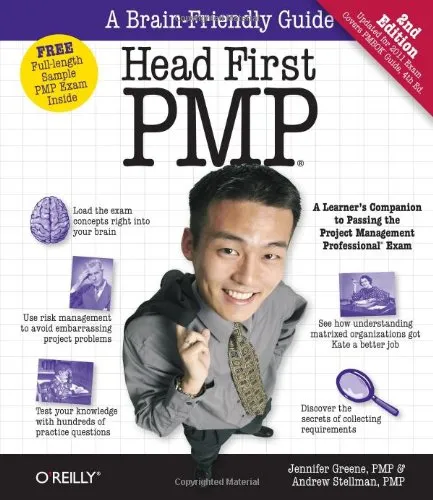
Head First PMP Second Edition: A Learner's Companion to Passing the Project Management Professional Exam
Jennifer Greene PSE,Andrew Stellman
2009
View book