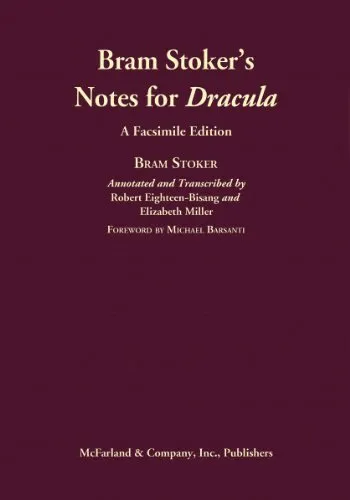
Bram Stoker's Notes for Dracula: A Facsimile Edition
Robert Eighteen-Bisang,Elizabeth Miller
2008
View book
Book guide and evaluation
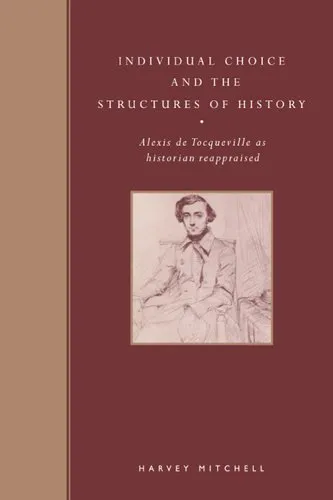
Harvey Mitchell
0 reviews
Published
pages
views
Introduction to 'Individual Choice and the Structures of History: Alexis de Tocqueville as Historian Reappraised' Alexis de Tocqueville, the renowned 19th-century French political thinker and historian, is best known for his seminal works, "Democracy in America" and "The Old R
Before you read
Alexis de Tocqueville, the renowned 19th-century French political thinker and historian, is best known for his seminal works, "Democracy in America" and "The Old Regime and the Revolution." In 'Individual Choice and the Structures of History: Alexis de Tocqueville as Historian Reappraised,' I, Harvey Mitchell, explore the profound insights Tocqueville offered into the tensions between individual autonomy and historical structures. This book endeavors to delve deep into Tocqueville's historiographic methods and the enduring relevance of his ideas in understanding contemporary societal dynamics.
The book reinterprets Tocqueville’s contributions to historiography by examining his unique perspective on two pivotal facets of history: the role of individual agency and the overarching structures that shape societal evolution. Tocqueville posited that history is a complex interplay between personal choices and larger historical currents, a thesis that envelopes much of his historical and political analysis.
Throughout the chapters, 'Individual Choice and the Structures of History' critically evaluates Tocqueville's belief in the power of individual action amidst social and political change, while simultaneously acknowledging the influence of institutional and societal frameworks. It underscores how Tocqueville viewed history not just as a passive recording of events, but as an active, interpretive process influenced by the participants within it.
An in-depth analysis is provided on Tocqueville's narrative style, his approach to uncovering historical causality, and his dualistic lens of contextualizing individual motives and motivations within broader historical paradigms.
"History is not merely a series of predetermined events, but a canvas where individual choices paint destinies."
"In Tocqueville's lens, the past is a prism, casting light on the interplay of human agency and the immutable structures that define epochs."
In an era where the interplay of individual freedom and structural determinism remains a central question, 'Individual Choice and the Structures of History' provides a compelling reexamination of these themes through Tocqueville's eyes. It challenges modern readers and historians to reconsider the balance between personal agency and institutional influences in crafting historical narratives.
This book matters because it reinvigorates Tocqueville's historical insights with a new perspective, proposing that his work offers significant lessons for today's historians grappling with the dilemmas of causality, human agency, and the steadfast structures of society. Through a reevaluation of Tocqueville's historiographic work, it encourages a nuanced understanding of history—one that respects both the unyielding forces of structure and the powerful potential of individual volition.
Your question is answered in the context of this title and author. Each answer uses 2 points.
0 reviews, 4.0 average out of 5
Sign in to publish a review.
Ask a focused question and learn from the community.
Related references that continue this learning path.
Robert Eighteen-Bisang,Elizabeth Miller
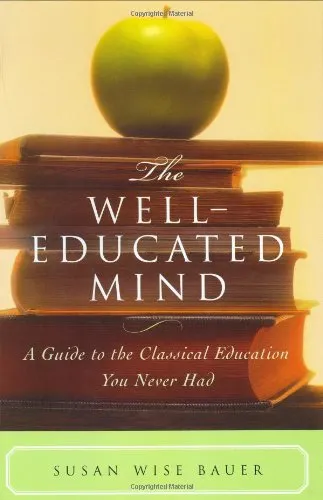
Susan Wise Bauer