
Book guide and evaluation
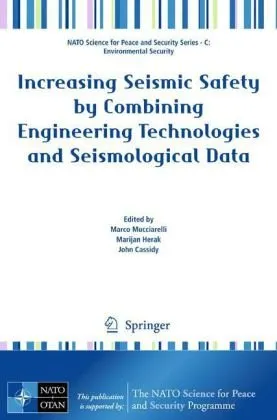
Increasing Seismic Safety by Combining Engineering Technologies and Seismological Data (NATO Science for Peace and Security Series C: Environmental Security)
Marco Mucciarelli,Marijan Herak,John Cassidy
English
Beginner
Physics
4.6 / 5
0 reviews
2008
Published
386
pages
131
views
Introduction to "Increasing Seismic Safety by Combining Engineering Technologies and Seismological Data" Earthquakes are one of the most devastating natural disasters, often causing immeasurable destruction to infrastructure, disruption to livelihoods, and loss of lives. S
Before you read
What will you get from this book?
Introduction to "Increasing Seismic Safety by Combining Engineering Technologies and Seismological Data"
Earthquakes are one of the most devastating natural disasters, often causing immeasurable destruction to infrastructure, disruption to livelihoods, and loss of lives. Society's ongoing quest to mitigate these impacts has driven groundbreaking research that bridges disciplines such as engineering and seismology. Our book, Increasing Seismic Safety by Combining Engineering Technologies and Seismological Data, emerges as a collaborative effort to improve resilience against seismic events through the integration of cutting-edge technologies, data-driven strategies, and international expertise. This work forms part of the esteemed NATO Science for Peace and Security Series C: Environmental Security, underscoring its importance in addressing global seismic risks.
The book serves as a comprehensive resource for researchers, engineers, seismologists, policymakers, and disaster preparedness professionals. It offers insights into the methodologies, scientific advancements, and implementation strategies aimed at improving seismic safety. By bridging engineering solutions and seismological data, this work advocates for a multidisciplinary approach to reducing vulnerabilities and enhancing resilience, particularly in seismically active regions.
Detailed Summary of the Book
Our book explores the dynamics of seismic safety from multiple angles, combining theoretical and practical approaches. It begins by providing insights into the current state of seismic risk assessment, discussing the fundamental principles of earthquake mechanics and their implications for infrastructure and society. This sets the stage for a deeper exploration of modern seismological techniques used to monitor and predict seismic events, from ground motion simulation to real-time earthquake monitoring systems.
One of the key highlights of the book is its detailed analysis of engineering technologies used to enhance building safety and mitigate the effects of earthquakes. Specific sections address structural design innovations, retrofitting of existing infrastructure, and the implementation of advanced materials capable of withstanding seismic forces. Furthermore, the book delves into how seismological data can inform engineering practices, leading to more accurate risk assessments and tailored solutions.
Additionally, the book emphasizes the importance of cross-disciplinary collaboration and international cooperation in achieving seismic safety. It includes case studies from various regions prone to high seismic activity, offering practical insights into what has worked and the lessons learned from real-world scenarios. The fusion of science, engineering, and policy-making is presented as a key strategy for minimizing seismic risks at both local and global levels.
Key Takeaways
- The integration of engineering and seismology is essential for reducing earthquake risks effectively.
- Modern technologies, such as advanced sensors and real-time monitoring systems, have drastically improved our ability to prepare for and respond to seismic hazards.
- Seismic safety is a global challenge that requires international collaboration, sharing of expertise, and adherence to best practices.
- Investments in resilient infrastructure and retrofitting can save countless lives and significantly reduce economic losses during earthquakes.
- Understanding local seismic risks and incorporating them into building codes and emergency planning is vital for effective disaster management.
Famous Quotes from the Book
"Mitigating the impacts of earthquakes is not merely a scientific challenge but a societal responsibility."
"Combining engineering ingenuity with seismological precision opens the door to a safer and more resilient future."
Why This Book Matters
The significance of Increasing Seismic Safety by Combining Engineering Technologies and Seismological Data lies in its unique ability to merge scientific disciplines and practical applications. As seismic activity poses an ever-present threat to millions around the globe, there is a dire need for literature that addresses this challenge comprehensively. This book not only fulfills that role but also serves as a guide for proactive decision-making and preparedness.
By offering a deep understanding of the interplay between engineering and seismology, this work empowers stakeholders to take informed actions. It stresses the urgency of adopting preventive measures rather than reactive responses, emphasizing the value of foresight in reducing the catastrophic consequences of earthquakes. Furthermore, it fosters collaboration among scientists, engineers, and governments to develop robust frameworks for seismic safety.
Ultimately, this book is both timely and timeless in its contribution to global disaster risk reduction efforts. It equips readers with the knowledge and tools needed to face the challenges of seismic hazards head-on and build safer, more resilient communities for generations to come.
Ask this book
Your question is answered in the context of this title and author. Each answer uses 2 points.
Sign in to ask the book assistant.
Reader reviews
0 reviews, 4.6 average out of 5
No reviews yet
If you have read this book, help the next reader with your experience.
Write a review
Sign in to publish a review.
Reader questions and answers
Ask a focused question and learn from the community.
Sign in to ask or answer a question.
No questions yet
Be the first to ask a clear, useful question.
What to read next
Related references that continue this learning path.

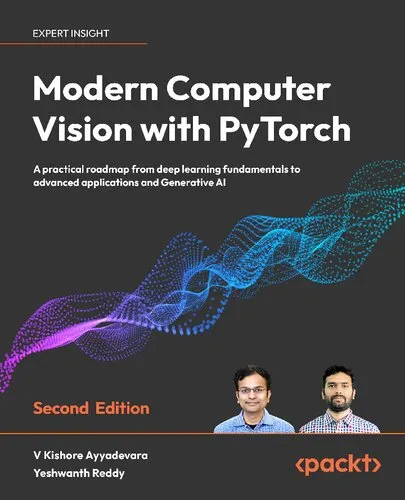
Modern Computer Vision with PyTorch: A Practical Roadmap From Deep Learning Fundamentals to Advanced Applications and Generative AI, 2nd Edition
V Kishore Ayyadevara,Yeshwanth Reddy
2023
View book