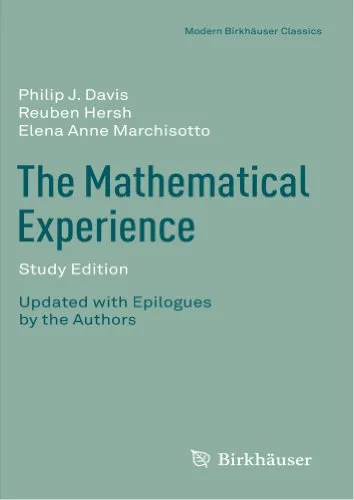
The Mathematical Experience, Study Edition
Philip J. Davis,Reuben Hersh,Elena Anne Marchisotto (auth.)
2012
View book
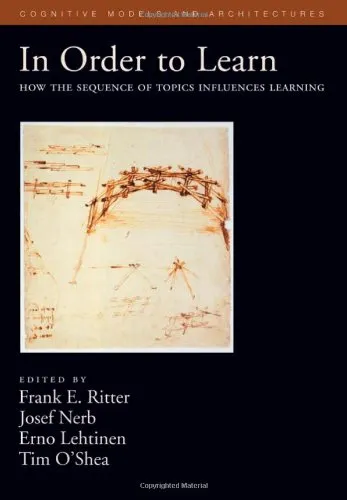
Book guide and evaluation
Frank E. Ritter,Josef Nerb,Erno Lehtinen,Timothy M. O'Shea
0 reviews
Published
pages
views
Introduction Learning is one of the most fundamental processes that shape human development, yet the question of how to structure learning sequences to optimize understanding and retention often remains overlooked. In Order to Learn: How the Sequence of Topics Influences Learn
Before you read
Learning is one of the most fundamental processes that shape human development, yet the question of how to structure learning sequences to optimize understanding and retention often remains overlooked. In Order to Learn: How the Sequence of Topics Influences Learning, authored by Frank E. Ritter, Josef Nerb, Erno Lehtinen, and Timothy M. O'Shea, provides a groundbreaking exploration of how sequencing affects the learning process. This book is an essential read for educators, instructional designers, researchers, and learners alike, as it bridges cognitive science, educational psychology, and practical implementation.
Through a meticulous analysis of research and case studies, this book examines different methods of structuring learning materials, the scientific underpinnings of these strategies, and their resultant impacts on performance, comprehension, and long-term memory. It dives deep into how the order in which information is delivered significantly impacts not only immediate understanding but also how readily students can transfer that knowledge to new contexts.
The book revolves around one central question: "Does the sequence in which topics are learned matter?" Using diverse methodologies and numerous real-world examples from education and training, the authors unravel the complexities of this question. They demonstrate how different instructional sequences can result in drastically different outcomes, even when the same material is covered.
Divided into several chapters, the book systematically explores theoretical frameworks, experimental studies, and practical applications of sequencing. Key topics include "knowledge scaffolding," "task interleaving versus blocking," "the role of prerequisites," and "cognitive load theory as it relates to sequence design." The authors incorporate insights from artificial intelligence (specifically cognitive tutoring systems) and real-world classroom-based research to provide actionable insights.
Importantly, the text also addresses some common myths about learning and highlights the dangers of one-size-fits-all approaches to curriculum design. A recurring theme throughout the book is how tailored approaches to sequencing can lead to more personalized and effective education.
“Learning is not just about acquiring facts; it's about understanding how those facts connect, and that connection is shaped by sequence.”
"The right sequence can make complex ideas feel intuitive, while the wrong one can make even the simplest concepts a struggle."
“Sequencing isn’t merely an organizational tool; it’s a cognitive strategy that shapes how we learn, remember, and apply knowledge.”
In a world where education systems and corporate training programs are under constant pressure to produce better outcomes, In Order to Learn equips educators and trainers with the evidence-based knowledge they need to make informed choices about sequencing. It underscores the fact that learning is not just about what is taught, but how and in what order it is presented.
Beyond its immediate relevance to education, this book also resonates with anyone interested in cognitive science, as it sheds light on the inner workings of human memory, problem-solving, and comprehension. Whether you're a teacher seeking to improve your lesson plans, a corporate trainer designing employee workshops, or a lifelong learner trying to optimize your own learning process, this book offers a wealth of insights that are both practical and thought-provoking.
By tackling the often-overlooked topic of sequence in learning, this book fills a vital gap in educational literature, making it a critical resource for anyone invested in the science and art of learning.
Your question is answered in the context of this title and author. Each answer uses 2 points.
0 reviews, 4.0 average out of 5
Sign in to publish a review.
Ask a focused question and learn from the community.
Related references that continue this learning path.
Philip J. Davis,Reuben Hersh,Elena Anne Marchisotto (auth.)
National Research Council; Committee on DoctoralandPostdoctoral Study in the United States
Maureen T. Hallinan (auth.),Maureen T. Hallinan (eds.)