Data Structures and Algorithms in Python
Michael T. Goodrich,Roberto Tamassia,Michael H. Goldwasser
2013
View book
Book guide and evaluation
Morton John Canty
0 reviews
Published
pages
views
Image Analysis, Classification and Change Detection in Remote Sensing: With Algorithms for Python, Fourth Edition, is focused on the development and implementation of statistically motivated, data-driven techniques for digital image analysis of remotely sensed imagery and it feat
Before you read
Image Analysis, Classification and Change Detection in Remote Sensing: With Algorithms for Python, Fourth Edition, is focused on the development and implementation of statistically motivated, data-driven techniques for digital image analysis of remotely sensed imagery and it features a tight interweaving of statistical and machine learning theory of algorithms with computer codes. It develops statistical methods for the analysis of optical/infrared and synthetic aperture radar (SAR) imagery, including wavelet transformations, kernel methods for nonlinear classification, as well as an introduction to deep learning in the context of feed forward neural networks. New in the Fourth Edition: An in-depth treatment of a recent sequential change detection algorithm for polarimetric SAR image time series. The accompanying software consists of Python (open source) versions of all of the main image analysis algorithms. Presents easy, platform-independent software installation methods (Docker containerization). Utilizes freely accessible imagery via the Google Earth Engine and provides many examples of cloud programming (Google Earth Engine API). Examines deep learning examples including TensorFlow and a sound introduction to neural networks, Based on the success and the reputation of the previous editions and compared to other textbooks in the market, Professor Canty’s fourth edition differs in the depth and sophistication of the material treated as well as in its consistent use of computer codes to illustrate the methods and algorithms discussed. It is self-contained and illustrated with many programming examples, all of which can be conveniently run in a web browser. Each chapter concludes with exercises complementing or extending the material in the text.
Your question is answered in the context of this title and author. Each answer uses 2 points.
0 reviews, 4.9 average out of 5
Sign in to publish a review.
Ask a focused question and learn from the community.
Related references that continue this learning path.
Michael T. Goodrich,Roberto Tamassia,Michael H. Goldwasser
Kent Lee,Steve Hubbard
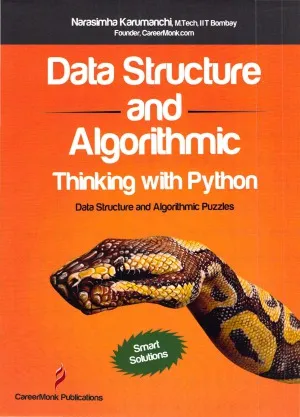
Narasimha Karumanchi