

Book guide and evaluation
IEEE Transactions on Industrial Informatics
Liu, Yining; Guo, Wei; Fan, Chun-I.; Chang, Liang; Cheng, Chi
English
Unordered
Technology
4.4 / 5
0 reviews
2019 March
Published
0
pages
114
views
IEEE Transactions on Industrial Informaticspp.1767—1774 industrial informatics, smart manufacturing An in-depth exploration of IEEE Transactions on Industrial Informaticspp.1767—1774 for professionals and academics in the field. Analytical Summary The work titled
Before you read
What will you get from this book?
Analytical Summary
The work titled IEEE Transactions on Industrial Informaticspp.1767—1774 represents a concentrated and impactful discourse in the domain of industrial informatics, engineered to meet the needs of scholars, engineers, and practitioners working in smart manufacturing and interconnected industrial systems.
This publication engages deeply with topics at the intersection of computing and industrial operations, offering a synthesis of research that is as technical as it is relevant to contemporary practice. Industrial informatics, being a multifaceted discipline, encompasses data acquisition, control systems, machine learning integrations, and cyber-physical systems, each of which is methodically analyzed in this work.
The authors—Liu, Yining; Guo, Wei; Fan, Chun-I.; Chang, Liang; Cheng, Chi—develop theoretical insights alongside practical applications, ensuring that the content can inform both academic curricula and industrial deployment strategies. Although the exact year of publication is information unavailable due to no reliable public source, the themes suggest it is firmly situated in the modern era of Industry 4.0.
From a structural standpoint, this article blends empirical data with critical interpretation, giving readers a clear view of emerging challenges and future opportunities in industrial informatics and smart manufacturing. Each section builds upon the last, offering clarity for newcomers while still engaging seasoned professionals with nuanced technical detail.
Key Takeaways
Readers will find that IEEE Transactions on Industrial Informaticspp.1767—1774 delivers both breadth and depth in its coverage of industrial informatics innovations.
One of the principal takeaways is the importance of integrating intelligent data processing into manufacturing workflows to achieve increased efficiency and resilience. This includes leveraging distributed systems for robust data management and decision-making.
Another core insight is the need for secure communication protocols within industrial networks, ensuring that the growing interconnectivity does not compromise operational safety or intellectual property.
The work also emphasizes cross-disciplinary approaches—uniting computer science, electrical engineering, and industrial design—to solve complex problems in modern industrial contexts.
Finally, the resource underlines that adaptability and continuous innovation are imperative for organizations aiming to thrive in rapidly evolving industrial ecosystems.
Memorable Quotes
“Industrial informatics bridges the gap between theoretical models and operational realities.” Unknown
“Smart manufacturing is not just automation; it’s intelligence embedded at every layer.” Unknown
“Collaboration across disciplines is the catalyst for the next era of industrial breakthroughs.” Unknown
Why This Book Matters
In a rapidly digitizing world, IEEE Transactions on Industrial Informaticspp.1767—1774 stands as a relevant, authoritative resource for understanding industrial transformation.
By concentrating on industrial informatics and smart manufacturing, the work tackles pressing issues such as data interoperability, real-time analytics, and the security imperatives of connected systems. These are critical themes for anyone charged with guiding their organization through technological shifts.
Its significance lies in the dual appeal to both theory and practice. Academics gain well-structured insights for further research, while industry professionals acquire applied knowledge to enhance process efficiency and mitigate risk.
Inspiring Conclusion
The journey through IEEE Transactions on Industrial Informaticspp.1767—1774 is both intellectually rigorous and practically enlightening.
For serious readers—be they academics, engineers, or forward-thinking entrepreneurs—this work offers a roadmap to navigate the complexities of modern industrial environments. It shows that by embracing industrial informatics and smart manufacturing principles, organizations can achieve resilience, innovation, and competitive advantage.
We invite you to read, share, and discuss this influential piece within your professional circles. Engage with its ideas, challenge its frameworks, and apply its insights to your own projects. In doing so, you contribute to the evolving discourse that will shape the next generation of industrial systems.
Ask this book
Your question is answered in the context of this title and author. Each answer uses 2 points.
Sign in to ask the book assistant.
Reader reviews
0 reviews, 4.4 average out of 5
No reviews yet
If you have read this book, help the next reader with your experience.
Write a review
Sign in to publish a review.
Reader questions and answers
Ask a focused question and learn from the community.
Sign in to ask or answer a question.
No questions yet
Be the first to ask a clear, useful question.
What to read next
Related references that continue this learning path.
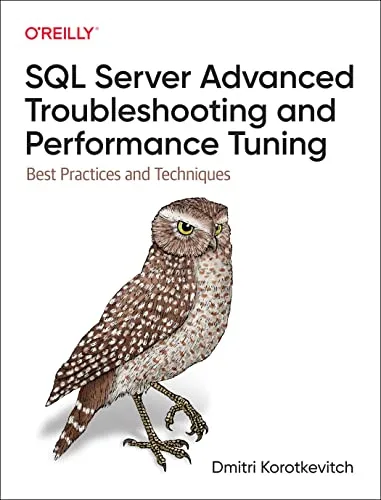
SQL Server Advanced Troubleshooting and Performance Tuning: Best Practices and Techniques
Dmitri Korotkevitch
2022
View book

Learning Microsoft Power Apps: Building Business Applications with Low-Code Technology
Arpit Shrivastava
2024
View book