Book guide and evaluation
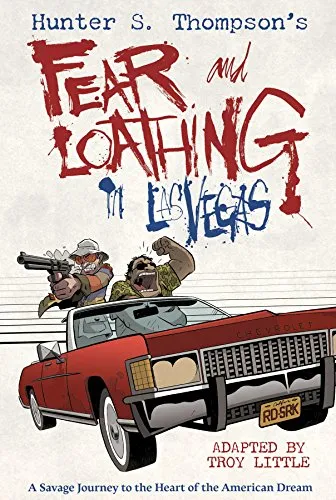
Hunter S. Thompson’s Fear and Loathing in Las Vegas
Troy Little
English
Intermediate
novel
4.7 / 5
0 reviews
2015
Published
173
pages
534
views
Introduction to 'Hunter S. Thompson’s Fear and Loathing in Las Vegas' "Hunter S. Thompson’s Fear and Loathing in Las Vegas" is a legendary piece of American literature that transcends its time to remain relevant and fascinating today. Originally published in 1971, this sem
Before you read
What will you get from this book?
Introduction to 'Hunter S. Thompson’s Fear and Loathing in Las Vegas'
"Hunter S. Thompson’s Fear and Loathing in Las Vegas" is a legendary piece of American literature that transcends its time to remain relevant and fascinating today. Originally published in 1971, this seminal work captures the essence of a generation disillusioned by the failure of the 1960s counterculture. It combines Thompson’s personal ethos with a stylistically aggressive narrative technique to provide a vivid examination of the American Dream’s decay. Whether you have read the book numerous times or are delving into it for the first time, "Fear and Loathing in Las Vegas" is a wild ride into the heart of excess and desperation.
A Detailed Summary of the Book
At its core, "Fear and Loathing in Las Vegas" details the debauched road trip embarked upon by its protagonist, Raoul Duke, an exaggerated version of Thompson himself, and his attorney, Dr. Gonzo. Set against the flashy backdrop of Las Vegas, Duke and Gonzo set out ostensibly to cover a motocross race. However, the true subject of their journey quickly morphs into an exploration of man's darker instincts under the influence of an abundance of drugs. The narrative unfolds as a series of visceral vignettes, veering from the hilariously absurd to the deeply sobering, illustrated by breathtaking prose that challenges traditional literary genres.
Thompson deftly uses this journey to chronicle the collapse of the ’60s optimism, portraying Las Vegas as a microcosm of American excess. This journey spirals into madness, and the narrative blurs the line between reality and hallucination, reflecting the chaotic mental state of the protagonists. Amidst their chaotic escapades and moral ambiguity, "Fear and Loathing in Las Vegas" reflects the search for meaning in a society that appears to have lost its soul.
Key Takeaways
- The Fallacy of the American Dream: The book dissects the elusive American Dream, questioning its validity and exposing its emptiness.
- Psychedelia and Reality: A major theme is the exploration of altered states of consciousness and their impact on perception and reality.
- Cultural Critique: The book acts as a biting social commentary on the disillusionment of 1960s America and critiques the pervasive culture of consumerism.
- Gonzo Journalism: Thompson’s unique immersion into the story he is reporting puts readers into the heart of his experiences, a technique now recognized as Gonzo journalism.
Famous Quotes from the Book
"We were somewhere around Barstow on the edge of the desert when the drugs began to take hold."
"Buy the ticket, take the ride."
"It never got weird enough for me."
Why This Book Matters
"Fear and Loathing in Las Vegas" stands as a crucial cultural artifact and a manifesto of the countercultural movement. Its importance is not only literary but also philosophical and historical, offering insights into the psyche of a nation grappling with its own identity crisis. Thompson’s vivid storytelling and unapologetic narrative style challenge readers to confront uncomfortable truths about themselves and the society they inhabit.
Further, the book remains a masterclass in narrative innovation, a prototype for immersive journalism that places the author at the center of the story. This experiential approach emphasizes authenticity and makes each recounting inherently unique and subjective. "Fear and Loathing in Las Vegas" doesn't just depict a drug-fueled escapade but also invites readers to question the very fabric of reality and aspiration in contemporary culture.
Ask this book
Your question is answered in the context of this title and author. Each answer uses 2 points.
Sign in to ask the book assistant.
Reader reviews
0 reviews, 4.7 average out of 5
No reviews yet
If you have read this book, help the next reader with your experience.
Write a review
Sign in to publish a review.
Reader questions and answers
Ask a focused question and learn from the community.
Sign in to ask or answer a question.
No questions yet
Be the first to ask a clear, useful question.
What to read next
Related references that continue this learning path.
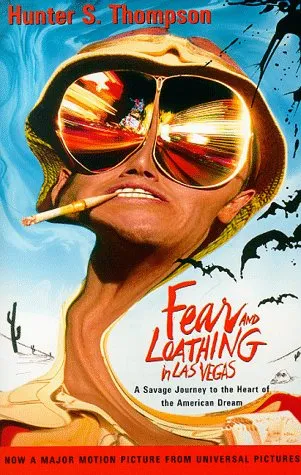
Fear and Loathing in Las Vegas: A Savage Journey to the Heart of the American Dream
Hunter S. Thompson,Ralph Steadman
1998
View book