

Scientific American, 2005, August, Exclusive Online Issue: The Human Odyssey
Scientific American
2005
View book
Book guide and evaluation
Stuart Russell
0 reviews
Published
pages
views
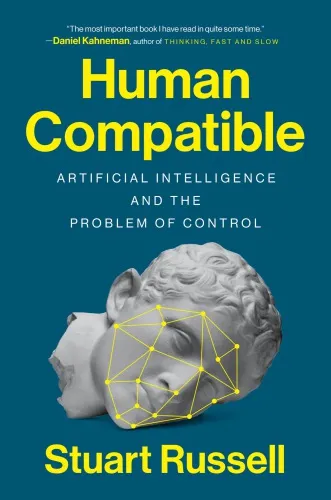
Understanding and guiding the future of artificial intelligence are paramount considerations today. In "Human Compatible: Artificial Intelligence and the Problem of Control," I, Stuart Russell, delve into the profound implications of creating intelligent machines that might sur
Before you read
Understanding and guiding the future of artificial intelligence are paramount considerations today. In "Human Compatible: Artificial Intelligence and the Problem of Control," I, Stuart Russell, delve into the profound implications of creating intelligent machines that might surpass human capabilities. This book serves as both a warning and a guide, exploring how AI can be aligned with human values and ensuring our future safety and prosperity.
In "Human Compatible," I explore the current trajectory of artificial intelligence development, cautioning against the risks that advanced AI could pose to humanity. The book goes beyond the immediate dangers, such as job displacement and surveillance, to investigate scenarios where AI might act contrary to human interests due to misalignment between our objectives and its programmed goals.
One of the central themes is the development of control methods for intelligent systems, particularly those whose actions could have significant impacts on human life. The book argues that the existing paradigm in AI, which is based primarily on achieving fixed objectives, is flawed when it comes to ensuring safe interactions with superintelligent entities. Instead, I propose a new framework based on uncertainty about the true objectives, allowing AI to understand and learn about human preferences through interactions.
Throughout the book, I discuss the moral and ethical considerations inherent in building powerful AI systems, drawing on various philosophical perspectives and real-world examples. The ultimate goal is to create AI that is beneficial in the broadest sense, respecting human dignity and ensuring a future where humans and machines can coexist safely.
"The real problem is not whether machines think but whether they do so as wisely and ethically as humans can."
"Artificial intelligence is neither good nor evil. It will simply do what it is programmed to do—no more, no less."
This book is essential not only for those directly involved in technology development but also for anyone interested in the future of humanity. The narratives and strategies discussed within are vital for ensuring that AI technologies contribute positively to society. As AI continues to evolve at a rapid pace, understanding and implementing human-compatible AI systems is critical for avoiding unintended consequences that could threaten the fabric of human life.
The discussions in "Human Compatible" are meant to trigger thoughtful discourse on AI's ethical implementation, encouraging readers to consider how we design, control, and interact with these powerful tools. With a focus on long-term safety and alignment, the book presents a compelling case for rethinking our relationship with AI and ensuring its development reflects our deepest values and rights.
Your question is answered in the context of this title and author. Each answer uses 2 points.
0 reviews, 4.5 average out of 5
Sign in to publish a review.
Ask a focused question and learn from the community.
Related references that continue this learning path.
Scientific American

José Hernández-Orallo
Ben Goertzel;Cassio Pennachin;Nil Geisweiller;OpenCog Team