
Book guide and evaluation
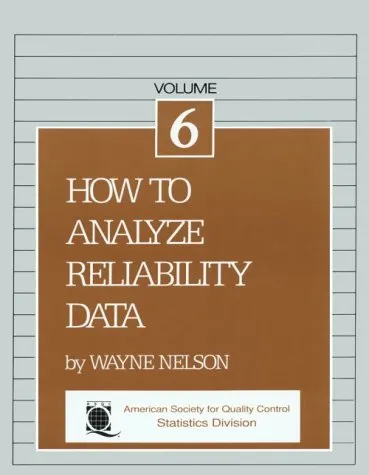
How to Analyze Reliability Data (The ASQC basic references in quality control. Statistical techniques)
Wayne Nelson
English
Beginner
Art
4.4 / 5
0 reviews
1983
Published
57
pages
304
views
Introduction to "How to Analyze Reliability Data" Welcome to an insightful exploration of reliability data analysis, brought to you by "How to Analyze Reliability Data," a cornerstone resource in quality control and statistical techniques. Authored by Wayne Nelson, this book i
Before you read
What will you get from this book?
Introduction to "How to Analyze Reliability Data"
Welcome to an insightful exploration of reliability data analysis, brought to you by "How to Analyze Reliability Data," a cornerstone resource in quality control and statistical techniques. Authored by Wayne Nelson, this book is essential for professionals and researchers in engineering, manufacturing, and statistical analysis who aim to master the art of analyzing and interpreting reliability data. With its practical approach backed by a solid statistical foundation, the book equips readers with the tools necessary for making informed decisions about product quality and system reliability.
Reliability plays a crucial role in ensuring the long-term performance and dependability of products, systems, and services. With rapid advancements in technology and increasing customer expectations, understanding and implementing reliable strategies has become more important than ever. This book precisely addresses those needs by offering a step-by-step guide that breaks down complex methodologies into actionable insights. Meticulously designed as part of "The ASQC Basic References in Quality Control," it balances the practical application of reliability analysis with theoretical rigor, making it accessible to both beginners and experts in the field.
Detailed Summary of the Book
At its core, "How to Analyze Reliability Data" focuses on extracting meaningful insights from reliability data collected during product testing, field performance, and failure analysis. It provides a comprehensive framework of statistical tools and techniques designed to evaluate and improve the reliability of products and systems.
The book covers essential topics such as:
- Introduction to reliability concepts and their impact on quality and performance.
- Failure time data and various statistical distributions used for modeling it.
- Reliability estimation techniques, including nonparametric and parametric methods.
- Accelerated life testing and how to use it for speeding up reliability assessments.
- Practical methods for handling censored and incomplete data.
- Graphical tools such as probability plots for analyzing reliability data visually.
With numerous examples, illustrative exercises, and references to real-world applications, this guide ensures that readers not only understand the theory but can also confidently apply the methods to solve reliability problems effectively.
Key Takeaways
The book leaves its readers with several key insights, such as:
- The ability to select appropriate statistical distributions for reliability data analysis.
- Mastery of techniques for estimating and interpreting reliability characteristics such as mean time to failure (MTTF) and failure rates.
- Comprehension of advanced topics like regression models and analysis of variance in reliability studies.
- Practical knowledge of handling incomplete or censored datasets, a common occurrence in real-world reliability studies.
- Understanding of how accelerated testing can predict product life in normal usage conditions.
- Enhanced decision-making skills to improve product quality and reduce failure risks.
Famous Quotes from the Book
Several key phrases stand out, providing thought-provoking insights and summarizing the heart of the book:
"Reliability is not a one-time endeavor but a continuous improvement process."
"The essence of reliability analysis is to prepare for the uncertainties of the future based on the evidence of the past."
"Each data point tells a part of the story—your job as an analyst is to discover what that story reveals about reliability."
Why This Book Matters
In today's competitive markets, where customer satisfaction is paramount, reliability directly impacts brand reputation, cost efficiency, and operational success. "How to Analyze Reliability Data" serves as a pivotal guide for professionals who understand that reliability cannot be left to chance. Businesses and organizations can no longer afford to ignore the importance of robust reliability data analytics to reduce costs, improve performance, and optimize the customer experience.
Moreover, the book bridges the gap between academia and industry, offering a rare combination of theoretical insights and practical utility. Its importance is not limited to quality engineers or statisticians; it extends to anyone responsible for designing, testing, or maintaining dependable systems. With its clear, systematic approach, it empowers readers to tackle modern challenges in reliability engineering and quality control with confidence.
Whether you’re a newcomer stepping into the world of reliability data or a seasoned veteran looking to sharpen your analytical skills, "How to Analyze Reliability Data" remains an indispensable resource. Its enduring relevance in the quality control domain cements its place as a timeless reference for continuous learning and development.
Ask this book
Your question is answered in the context of this title and author. Each answer uses 2 points.
Sign in to ask the book assistant.
Reader reviews
0 reviews, 4.4 average out of 5
No reviews yet
If you have read this book, help the next reader with your experience.
Write a review
Sign in to publish a review.
Reader questions and answers
Ask a focused question and learn from the community.
Sign in to ask or answer a question.
No questions yet
Be the first to ask a clear, useful question.
What to read next
Related references that continue this learning path.

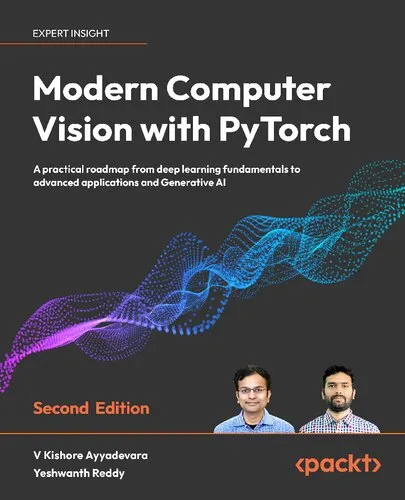
Modern Computer Vision with PyTorch: A Practical Roadmap From Deep Learning Fundamentals to Advanced Applications and Generative AI, 2nd Edition
V Kishore Ayyadevara,Yeshwanth Reddy
2023
View book