

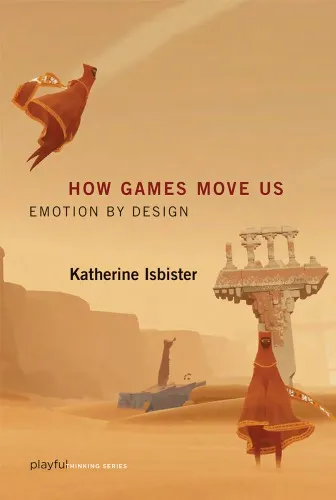
How Games Move Us: Emotion by Design
Katherine Isbister
English
Beginner
Art
4.8 / 5
0 reviews
0
Published
187
pages
237
views
Introduction to "How Games Move Us: Emotion by Design" "How Games Move Us: Emotion by Design" by Katherine Isbister dives deeply into the intricate and profound ways in which video games evoke emotions and establish meaningful connections. This book challenges the view o
Before you read
What will you get from this book?
Introduction to "How Games Move Us: Emotion by Design"
"How Games Move Us: Emotion by Design" by Katherine Isbister dives deeply into the intricate and profound ways in which video games evoke emotions and establish meaningful connections. This book challenges the view of video games as merely recreational pastimes or mindless entertainment. Instead, it sheds light on their potential to make players feel, think, and connect with others in innovative and profound ways.
In this thought-provoking work, Katherine Isbister skillfully examines how the intersection of design, storytelling, and interaction drives emotional engagement in games. Drawing upon her background as a researcher and designer, Isbister provides keen insight into the psychological and emotional frameworks embedded within game mechanics, aesthetics, and narratives. From joy and sadness to empathy and frustration, the book explores the full range of emotional experiences that games can evoke through modern design practices.
Rich with examples, analyses, and anecdotes, "How Games Move Us" establishes video games as a unique cultural medium that transcends entertainment. Whether you're a game designer, an academic, or simply a person interested in understanding the psychological pull of video games, this book provides valuable perspectives on how games foster deep emotional connections.
Detailed Summary of the Book
Throughout "How Games Move Us," Isbister illustrates how video games create nuanced emotional experiences through highly intentional design elements. She breaks down how these designs engage players across several dimensions, including character relationships, social interactions, and immersive worlds.
For instance, the book examines how dialogue systems, facial animations, and character expressions create empathy between players and virtual characters. Furthermore, Isbister delves into how multiplayer dynamics foster feelings of camaraderie and competition. By blending player input with deep narrative and visual design, video games become fertile grounds for immersive storytelling and emotional resonance.
Isbister also takes the reader through an exploration of groundbreaking games like "Journey," "The Walking Dead," and "Flower" to illustrate how emotion-driven design fosters powerful player experiences. These examples highlight why well-crafted games are capable of evoking a spectrum of emotions akin to those experienced through music, film, or literature. The book concludes by looking at the broader implications of emotional engagement, such as developing communal ties and improving empathy in real-world relationships.
Key Takeaways
- Video games elicit emotional responses through the thoughtful integration of interactive mechanics, storytelling, and audiovisual design.
- Games are uniquely positioned to foster empathy because players actively engage and participate in the narrative, as opposed to passively consuming content.
- Social interactions in games, particularly multiplayer experiences, can create bonds and foster collaboration between players.
- The emotional impact of games contributes to their growing recognition as an important creative and cultural medium.
- Designers must understand the psychological and emotional needs of players to create impactful and memorable experiences.
Famous Quotes from the Book
"Video games are not just about escapism; they evoke a tapestry of feelings that make us reflect on who we are and how we connect with the world."
"Through design, developers wield the remarkable ability to sculpt experiences that reach deep into emotional and psychological spaces."
"Great games are characteristically human—they make us care, collaborate, and immerse ourselves in shared stories."
Why This Book Matters
As video games continue to grow as a medium, understanding their capacity to evoke emotion is essential for designers, psychologists, and cultural critics alike. "How Games Move Us: Emotion by Design" occupies a unique and vital space in game design literature by focusing on the emotional connections that games inspire. For development teams, the book serves as a crucial guide to understanding how thoughtful design choices impact players on a deeply human level.
This book also addresses skeptics who may question the value or legitimacy of video games as cultural artifacts. By explaining how games can inspire empathy, compassion, and intellectual engagement, Isbister builds a compelling case for their societal importance. Moreover, her discussion of the emotional resonance of games has implications beyond design—touching on psychology, human interaction, and even ethical decision-making in storytelling.
Ultimately, "How Games Move Us" illuminates the profound emotional and cultural potential inherent in video games. It challenges readers to rethink their perceptions, appreciate the artistry of this interactive medium, and explore how games can improve, connect, and enrich our lives.
Ask this book
Your question is answered in the context of this title and author. Each answer uses 2 points.
Sign in to ask the book assistant.
Reader reviews
0 reviews, 4.8 average out of 5
No reviews yet
If you have read this book, help the next reader with your experience.
Write a review
Sign in to publish a review.
Reader questions and answers
Ask a focused question and learn from the community.
Sign in to ask or answer a question.
No questions yet
Be the first to ask a clear, useful question.
What to read next
Related references that continue this learning path.


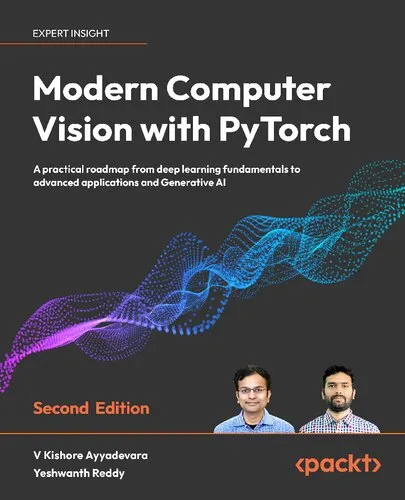
Modern Computer Vision with PyTorch: A Practical Roadmap From Deep Learning Fundamentals to Advanced Applications and Generative AI, 2nd Edition
V Kishore Ayyadevara,Yeshwanth Reddy
2023
View book