Conflict and Compromise: The Strategy, Politics and Diplomacy of the French Blockade, 1914–1918
Marjorie Milbank Farrar (auth.)
1974
View book
Book guide and evaluation
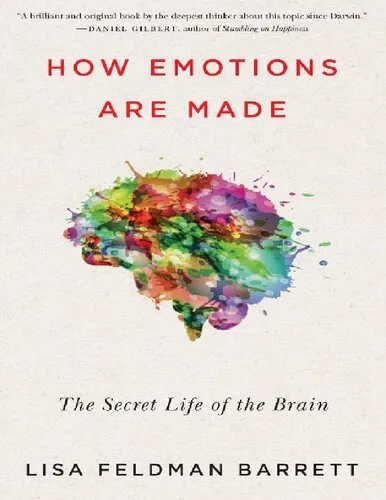
Lisa Feldman Barret
0 reviews
Published
pages
views
How Emotions Are Made: The Secret Life of the Brain "How Emotions Are Made: The Secret Life of the Brain" challenges conventional wisdom about emotions, offering a revolutionary perspective on how human brains construct emotions, and how those emotions influence our experi
Before you read
"How Emotions Are Made: The Secret Life of the Brain" challenges conventional wisdom about emotions, offering a revolutionary perspective on how human brains construct emotions, and how those emotions influence our experiences, decisions, and lives. Written by neuroscientist and psychologist Lisa Feldman Barrett, this groundbreaking book combines insights from neuroscience, psychology, and philosophy to question long-held beliefs about emotions. It redefines the way we understand ourselves, our relationships with others, and how our minds function on a deeply intricate level.
At its core, "How Emotions Are Made" debunks the myth that emotions are universal and hardwired into our brains. Traditional theories suggest that emotions, such as happiness, anger, and fear, are automatic responses to the world around us. These views often portray emotions as reflexive and consistent across all cultures. However, Lisa Feldman Barrett presents the theory of "constructed emotion," which posits that emotions are not pre-programmed but actively created by the brain as it predicts and interprets sensory input.
Using experimental evidence and decades of research, Barrett explains that the brain does not simply react to the world but rather creates our experiences by combining learned concepts, past experiences, and cultural context. Emotions, she argues, are not universal "fingerprints" of experience but are culturally shaped, contextual, and malleable. This means emotions are constructed differently by people depending on their environment, upbringing, and personal experiences.
The book also delves into the mechanics of the brain, explaining concepts such as predictive coding and interoception. Predictive coding describes how the brain makes educated guesses about sensory information to conserve energy, while interoception refers to the brain’s monitoring and regulation of the body's internal states. Together, these processes contribute to the creation of emotions. The book further explores how emotions influence decision-making, creativity, relationships, and even societal norms.
"Emotions aren’t built into your brain at birth. They are just built."
"Our minds are not passive observers of the world, simply detecting what’s ‘out there.’ We are creators of our reality, constantly predicting."
"The limits of your concepts are the limits of your world."
"How Emotions Are Made" is not just a book about neuroscience; it is a philosophical shift in understanding human nature. By reframing emotions as constructs of the brain rather than inborn biological reactions, Lisa Feldman Barrett provides valuable tools to challenge stereotypical notions of emotion in personal and professional relationships.
For instance, her ideas can be applied to emotional regulation, improving communication, and fostering empathy by teaching us to question our assumptions about others' emotions. Additionally, the book has practical implications for areas like mental health, legal systems, and leadership, where emotion-based judgments often play a critical role.
This work reshapes centuries of thinking about the mind and sets a course for new discoveries in neuroscience and psychology, making it an essential read for anyone curious about how the brain works and how a better understanding of emotions can enhance our quality of life.
Your question is answered in the context of this title and author. Each answer uses 2 points.
0 reviews, 4.5 average out of 5
Sign in to publish a review.
Ask a focused question and learn from the community.
Related references that continue this learning path.
Marjorie Milbank Farrar (auth.)

Friedel Bolle,Marco Lehmann-Waffenschmidt (auth.),Professor Dr. Friedel Bolle,Professor Dr. Marco Lehmann-Waffenschmidt (eds.)