

Computational fluid dynamics in fire engineering: theory, modelling and practice
Guan Heng Yeoh,Kwok Kit Yuen
2008
View book
Book guide and evaluation
Jacoby,Henry Owen
0 reviews
Published
pages
views
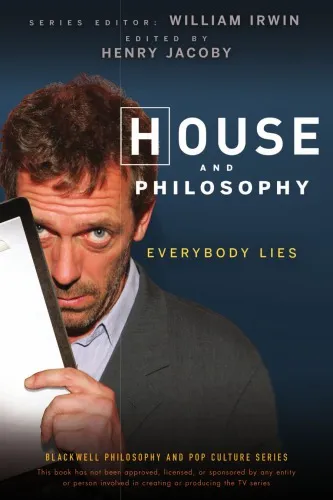
Introduction to "House and Philosophy: Everybody Lies" Lifetimes spent pondering the nature of truth, morality, and human suffering have found an unusual ally in Dr. Gregory House—fictional diagnostician, professional cynic, and central figure of the iconic TV seri
Before you read
Lifetimes spent pondering the nature of truth, morality, and human suffering have found an unusual ally in Dr. Gregory House—fictional diagnostician, professional cynic, and central figure of the iconic TV series House, M.D.. The book "House and Philosophy: Everybody Lies" dives headfirst into philosophical inquiry by intertwining fundamental principles of philosophy with the no-nonsense, brutally honest worldview of Dr. House and his quirky medical team. Presented through a blend of philosophical rigor and pop-cultural relatability, this book offers readers a unique opportunity to explore bigger questions while reveling in the razor-sharp wit and unapologetic honesty of one of television's most complex characters.
"House and Philosophy: Everybody Lies" belongs to the popular Blackwell Philosophy and Pop Culture Series, fusing philosophical discourse with popular entertainment. This book examines the ethical dilemmas, worldview contradictions, and existential crises within the character dynamics and narrative arcs of House, M.D.. Divided into thematically rich chapters, it explores Dr. House's skepticism about human nature, his unwavering belief in scientific methods, and his less-than-stellar interpersonal relationships within the framework of classic and modern philosophical thought.
The book casts House as an unlikely Socratic figure, as he relentlessly seeks truth—even at the expense of emotional comfort. It draws parallels between House's disdain for authority and Nietzsche's critiques of societal norms, while examining his struggle with addiction through a Kierkegaardian lens. It also dives into topics like moral relativism, utilitarianism, and the ethics of deception, asking readers to evaluate whether "truth at all costs" is too high a price to pay.
Each chapter takes a specific aspect of House’s personality or philosophy—for example, his distrust of patients' statements ("Everybody lies")—and juxtaposes it with philosophical ideas from figures like Aristotle, Kant, and Plato. The text continuously challenges readers to think beyond the diagnosis and treatment portrayed in the show, urging them to reflect on the complexities of human nature as revealed by House's controversial behavior and decisions.
While the book includes interpretations of Dr. House’s most memorable lines, the philosophical insights within it are equally impactful. Here are a few standout quotes:
"The truth doesn’t discriminate—it’s neither good nor bad, moral nor immoral. It simply is."
"Dr. House reminds us that sometimes asking hard questions can be more important than agreeable answers."
"Human suffering doesn’t follow rules, and neither should our efforts to understand it."
"House and Philosophy: Everybody Lies" stands as a bridge between two seemingly disparate worlds: the academic study of philosophy and the pop-cultural phenomena of television. It is an entry point into deeper existential inquiry for fans of House, M.D. and offers significant insights for the philosophically inclined looking for an accessible application of theories to real-life dilemmas.
By examining the life of Gregory House—the medic whose irreverence and genius challenge societal norms—the book sheds light on contemporary ethical concerns that often leave us conflicted. Whether debating utilitarianism or confronting the implications of deceit, "House and Philosophy" holds a magnifying glass up to human behavior, showing the nuanced interplay between morality, truth, and survival. More importantly, it reminds readers that intellectual exploration can exist in unexpected places and be profoundly meaningful.
For fans of Dr. House’s character or anyone who has puzzled over the relationship between truth and human imperfection, this book is a thought-provoking and enjoyable read. It’s a reminder that philosophy isn't merely about abstract theories—it’s about understanding how those theories influence the way we perceive ourselves, others, and the world around us.
Your question is answered in the context of this title and author. Each answer uses 2 points.
0 reviews, 4.3 average out of 5
Sign in to publish a review.
Ask a focused question and learn from the community.
Related references that continue this learning path.
Guan Heng Yeoh,Kwok Kit Yuen


Edited by Peter JacksonandLaurence Lockhart