

Scientific American, 2005, August, Exclusive Online Issue: The Human Odyssey
Scientific American
2005
View book
Book guide and evaluation
Harari,Yuval N
0 reviews
Published
pages
views
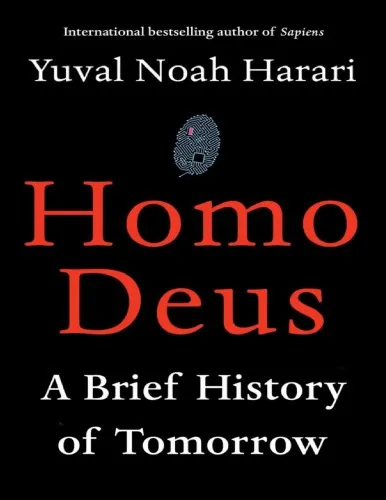
Introduction to 'Homo Deus: A Brief History of Tomorrow' In "Homo Deus: A Brief History of Tomorrow," Yuval Noah Harari explores the future of the human race by scrutinizing the past. Arguably a continuation of his earlier work "Sapiens: A Brief History of Huma
Before you read
In "Homo Deus: A Brief History of Tomorrow," Yuval Noah Harari explores the future of the human race by scrutinizing the past. Arguably a continuation of his earlier work "Sapiens: A Brief History of Humankind," this book delves into the core ambitions and aspirations of humanity as we move forward in the 21st century. Harari raises questions about the future—our potential evolutions, achievements, and challenges—as the digital age redefines human existence. Employing a rich blend of historical anecdotes, philosophical contemplations, and futuristic foresight, the book serves as both a warning and a guiding light for what may lie ahead.
Harari presents a compelling narrative that examines how humans have historically been shaped by various forces like famine, plague, and war—limiting factors which have increasingly been brought under control due to scientific advancement. He proposes that the traditional quests of surviving these existential threats have now morphed into aspirations of transcending our biological limitations. In doing so, Harari targets potential future goals of humanity, such as achieving immortality, bliss, and divinity.
Exploring fields as diverse as biotechnology and artificial intelligence, Harari posits that humanity is on the brink of a new era, one where Homo sapiens could transform into Homo deus—god-like beings with the capabilities to reshape not only their environment but also themselves at a fundamental level. This raises important ethical and philosophical questions about how these capabilities should be harnessed and the potential consequences if they go unchecked.
Each chapter confronts the reader with thought-provoking scenarios, from enhancing human cognition to creating non-organic life. While optimistic about technological progress, Harari also warns of the threats posed by totalitarian regimes and the monopolization of data by elite corporations, painting a complex picture of the future.
"History is something that very few people have been doing while everyone else was ploughing fields and carrying water buckets."
"The most common reaction of the human mind to achievement is not satisfaction, but craving for more."
"Once you really solve a problem like direct brain-computer interfaces, you don’t need to solve Alzheimer’s any more."
"Homo Deus: A Brief History of Tomorrow" is more than just an exploration of possible futures; it is a critical examination of the path humanity is on and the choices that will shape our destiny. This book matters because it challenges readers to reconsider their preconceptions about progress and the human condition. By integrating historical knowledge with cutting-edge technological discourse, Harari not only ignites a dialogue about the potential of mankind but also reminds us of our responsibilities.
The book encourages individuals, policymakers, and societies at large to engage with profound ethical questions, encouraging the careful and considerate application of technology in shaping the future. As we stand on the threshold of unprecedented change, "Homo Deus" helps guide the discourse on how to harness the tools of tomorrow to create a better world for all.
Your question is answered in the context of this title and author. Each answer uses 2 points.
0 reviews, 4.5 average out of 5
Sign in to publish a review.
Ask a focused question and learn from the community.
Related references that continue this learning path.
Scientific American



Library Mindset