


Book guide and evaluation
History and popular memory : the power of story in moments of crisis
Nevskij Aleksandr;Goujian;Yue König Goujian;England König Heinrich V;d'Arc Jeanne;of Arc Saint Joan;Cohen, Paul A.;Goujian
English
Beginner
Historical
5.0 / 5
0 reviews
2014
Published
301
pages
136
views
Introduction to "History and Popular Memory: The Power of Story in Moments of Crisis" "History and Popular Memory: The Power of Story in Moments of Crisis" is a thought-provoking exploration of human history, where past narratives and collective memory intersect during cr
Before you read
What will you get from this book?
Introduction to "History and Popular Memory: The Power of Story in Moments of Crisis"
"History and Popular Memory: The Power of Story in Moments of Crisis" is a thought-provoking exploration of human history, where past narratives and collective memory intersect during critical times of upheaval. Authored by Nevskij Aleksandr, Goujian, Yue König Goujian, and others, this book delves deep into how stories and memories shape our understanding of history and inform the ways we respond to societal trials. By combining historical analysis with cultural critique, the authors unravel the astonishing power of storytelling in shaping collective consciousness, identity, and historical perception.
Featuring meticulously researched examples, the book traverses cultural, geographical, and chronological boundaries, focusing on key historical episodes—such as military crusades, political upheavals, and revolutionary moments. With a compelling narrative, it examines how stories filter our experiences, how history is constructed, and how popular memory plays a critical role in making sense of moments of crisis. Ultimately, the book offers a reflection on the vulnerability of human societies and the enduring impact of the stories we choose to tell.
Detailed Summary of the Book
In "History and Popular Memory," the authors weave together an intricate analysis of how storytelling plays a central role in the construction of history and the consolation of societies facing turmoil. The book is structured around the concept of “crisis narratives”—moments when predominant narratives are contested, reconstructed, or weaponized for social cohesion or division.
Each chapter vividly illustrates this through well-known historical moments and more obscure case studies. For instance, the authors examine the retelling of Jeanne d'Arc's heroic legacy as it was adapted to suit different times and political agendas. They also explore the reinvention of Goujian's story during periods of Chinese political transition and how his memory became a tool for resilience and resistance. By drawing from various cultural frameworks, the book demonstrates the fluid nature of historical memory and its susceptibility to reinterpretation.
The interplay between history and memory is meticulously dissected, revealing how selective retellings can inspire unity or perpetuate conflict. This analysis raises larger philosophical questions on truth, authenticity, and the ethical dimensions of storytelling. The authors invite readers to think critically about how history is constructed, whose voices are amplified, and which memories are preserved or silenced.
Key Takeaways
- The power of storytelling lies in its ability to bring meaning, context, and cohesion to moments of crisis.
- History is not objective or static but rather a living, breathing narrative subject to reinterpretations and manipulations.
- Popular memory serves as both a connecting thread for communities and a battleground for ideological dominance.
- Understanding the relationship between history and memory enables us to critically evaluate dominant narratives and seek alternate perspectives.
- Storytelling can be both a tool of oppression and a source of empowerment, depending on how it is wielded.
Famous Quotes from the Book
"History is not written in stone, but carved into the collective memory, reshaped by those who wield the power of the story."
"A crisis reveals what a society treasures most—its stories, its symbols, and its truths. But it also reveals how fragile these constructs can be."
"To remember is to fight against silence. To forget is to erase the possibility of justice."
Why This Book Matters
"History and Popular Memory: The Power of Story in Moments of Crisis" is a vital contribution to the study of history, anthropology, and sociology. Its interdisciplinary approach makes it an indispensable resource for readers who are passionate about understanding how the past is remembered and reimagined.
In an era characterized by rapid media proliferation and widespread misinformation, this book offers a sobering reminder of the stakes involved in storytelling. It encourages us to approach historical narratives with a healthy skepticism and to question the motivations behind the construction and dissemination of popular memories. The lessons from this book resonate well beyond academia, providing valuable insights into political rhetoric, nationalist movements, and the importance of preserving marginalized voices.
Combining intellectual rigor with relatable storytelling, the book is both educational and inspiring. It challenges readers to see history not as a static record of facts but as an ongoing dialogue between the past and the present, mediated by human emotions, power dynamics, and collective desires.
Ask this book
Your question is answered in the context of this title and author. Each answer uses 2 points.
Sign in to ask the book assistant.
Reader reviews
0 reviews, 5.0 average out of 5
No reviews yet
If you have read this book, help the next reader with your experience.
Write a review
Sign in to publish a review.
Reader questions and answers
Ask a focused question and learn from the community.
Sign in to ask or answer a question.
No questions yet
Be the first to ask a clear, useful question.
What to read next
Related references that continue this learning path.


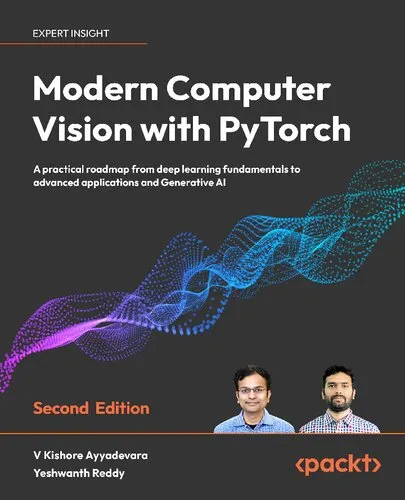
Modern Computer Vision with PyTorch: A Practical Roadmap From Deep Learning Fundamentals to Advanced Applications and Generative AI, 2nd Edition
V Kishore Ayyadevara,Yeshwanth Reddy
2023
View book