
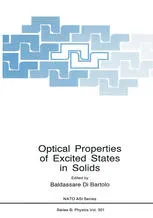
Optical Properties of Excited States in Solids
B. Di Bartolo (auth.),Baldassare Di Bartolo,Clyfe Beckwith (eds.)
1992
View book

Book guide and evaluation
Kahn S.M.,Sunyaev R.A.
0 reviews
Published
pages
views
Introduction to 'High-Energy Spectroscopic Astrophysics' 'High-Energy Spectroscopic Astrophysics' by Kahn S.M. and Sunyaev R.A. is a masterfully written exploration of the captivating and complex world of high-energy astrophysics, with a particular focus on spectroscopic t
Before you read
'High-Energy Spectroscopic Astrophysics' by Kahn S.M. and Sunyaev R.A. is a masterfully written exploration of the captivating and complex world of high-energy astrophysics, with a particular focus on spectroscopic techniques and their applications. This book is designed for researchers, advanced students, and professionals in the astrophysical community who are keen to delve into the processes and phenomena occurring at the highest energy scales in the universe. Combining theoretical insights, practical methodologies, and a wealth of observational data, this book serves as a comprehensive guide to understanding the cosmos through the lens of high-energy spectroscopy.
High-energy astrophysics delves into phenomena such as black holes, neutron stars, supernova explosions, and cosmic rays, where vast quantities of energy are emitted in the form of X-rays and gamma rays. Spectroscopy—the study of the interaction of light and matter—provides the critical framework for deciphering these energetic events. This book bridges foundational principles with cutting-edge research to provide a holistic understanding of the field. From the physics of radiation mechanisms to the interpretation of energy spectra, the book equips readers with the necessary tools and knowledge to engage with one of the most exciting frontiers in modern astrophysical science.
The book begins by introducing the basic principles of high-energy astrophysics, including the sources of X-ray and gamma-ray emissions and the instrumentation used to observe them. A significant emphasis is placed on the theoretical underpinnings of spectroscopic measurements, such as photon-matter interactions, radiation mechanisms, and energy emission processes. The authors guide the reader through the technical aspects of spectroscopic data collection, calibration, and analysis, presenting step-by-step methodologies that are rooted in real-world applications.
Later chapters of the book delve into specific high-energy phenomena, including the observational signatures of black hole accretion disks, neutron star magnetospheres, and supernova remnants. The authors also explore the role of spectroscopy in understanding the large-scale structure of the universe, the physics of galaxy clusters, and the evolution of active galactic nuclei (AGN). Additionally, the book covers the latest advancements in instrumentation and computational tools, positioning these techniques within the broader context of high-energy astrophysical research.
Each chapter is supplemented with illustrative examples, mathematical derivations, and case studies of key discoveries in high-energy astrophysics. By weaving together observational data with theoretical perspectives, the book offers a rich and engaging narrative that enables readers to connect abstract concepts with tangible cosmic phenomena.
"The universe at high energies is a realm where the ordinary laws of physics are stretched to their limits, revealing the most exotic and energetic processes known to science."
"Spectroscopy provides the key to unlocking the secrets of the cosmos—not just what we see, but what we can deduce from the light that travels vast distances to reach us."
"Every photon carries a message, and it is the task of high-energy astrophysicists to decipher the language of light."
High-energy astrophysics represents one of the most dynamic and rapidly evolving fields of modern science, providing insights into some of the most fundamental questions about the universe. 'High-Energy Spectroscopic Astrophysics' is a crucial resource for anyone seeking to understand these profound mysteries. The book not only covers the theoretical foundations but also offers practical applications of spectroscopy, bridging the gap between theory and observation. The authors, Kahn S.M. and Sunyaev R.A., are prominent figures in the field, and their expertise ensures that this book remains an authoritative reference for years to come.
In an era of groundbreaking discoveries, when telescopes like the Chandra X-ray Observatory, XMM-Newton, and other upcoming missions are pushing the boundaries of what is observable, this book serves as a guide to navigating the complexities of high-energy astrophysical research. Whether you are a seasoned astrophysicist or a student embarking on your scientific journey, 'High-Energy Spectroscopic Astrophysics' will ignite your curiosity and deepen your understanding of the universe.
Your question is answered in the context of this title and author. Each answer uses 2 points.
0 reviews, 4.0 average out of 5
Sign in to publish a review.
Ask a focused question and learn from the community.
Related references that continue this learning path.
B. Di Bartolo (auth.),Baldassare Di Bartolo,Clyfe Beckwith (eds.)
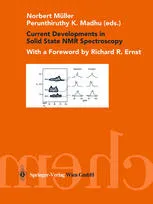
Alexej Jerschow (auth.),Dr. Norbert Müller,Dr. Perunthiruthy K. Madhu (eds.)

David R. DeBoer (auth.),Domingos Barbosa,Sonia Anton,Leonid Gurvits,Dalmiro Maia (eds.)
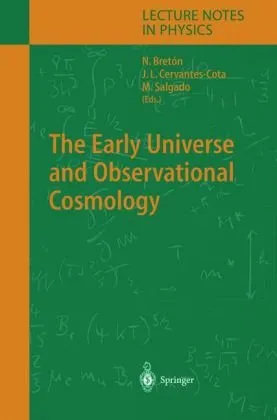
Nora Bretón,Jorge L. Cervantes–Cota (auth.),Nora Bretón,Jorge Luis Cervantes-Cota,Marcelo Salgado (eds.)