
Book guide and evaluation
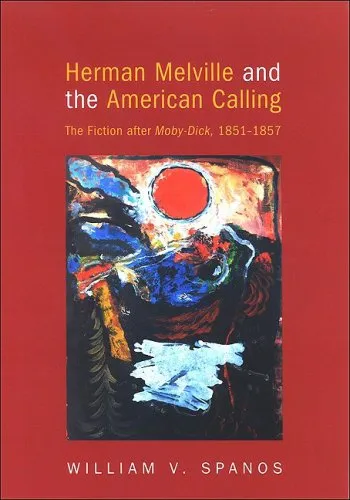
Herman Melville and the American Calling: The Fiction After Moby-Dick, 1851-1857
William V. Spanos
English
Intermediate
novel
4.5 / 5
0 reviews
2008
Published
296
pages
646
views
Welcome to an in-depth exploration of William V. Spanos's compelling work, "Herman Melville and the American Calling: The Fiction After Moby-Dick, 1851-1857." This book delves into the lesser-studied writings of Herman Melville, engaging with the cultural, philosophical, and po
Before you read
What will you get from this book?
Welcome to an in-depth exploration of William V. Spanos's compelling work, "Herman Melville and the American Calling: The Fiction After Moby-Dick, 1851-1857." This book delves into the lesser-studied writings of Herman Melville, engaging with the cultural, philosophical, and political landscapes he navigated in the years following the publication of his seminal novel, "Moby-Dick." Through a profound understanding of Melville's oeuvre, Spanos presents a nuanced analysis of the challenges faced by an evolving America and the artist's role within it.
Detailed Summary of the Book
"Herman Melville and the American Calling" is an intensive examination of Melville's works written after "Moby-Dick," focusing on how they reflect and critique the burgeoning American identity and imperial ambition during the mid-19th century. Spanos meticulously analyzes novels like "Pierre," "Israel Potter," and "The Confidence-Man," revealing how Melville's profound skepticism towards the American dream and its underlying ideologies resonates with contemporary debates about empire, identity, and democracy.
Spanos argues that Melville's post-"Moby-Dick" fiction often confronts the concept of American exceptionalism, highlighting the inherent contradictions in America's vision of itself as a bastion of democracy and freedom. He sees Melville as not only a literary figure but as a critical observer of his time, whose insights into the American ethos remain deeply relevant today.
Key Takeaways
- Melville's later works offer a critical perspective on the notion of American exceptionalism and the moral implications of imperialism.
- Spanos's analysis highlights the intersection between literature and the socio-political climate of 19th-century America.
- The book provides a fresh interpretation of Melville's storytelling techniques, revealing his use of irony, ambiguity, and narrative complexity.
- By situating Melville's work within a broader cultural and philosophical context, Spanos offers insights into the enduring relevance of Melville's critique of American society.
Famous Quotes from the Book
"Melville's fiction serves as a powerful testament to the contradictions at the heart of the American project, offering a profound critique of its imperialist impulses."
"To understand Melville is to engage with the existential questions about human identity and ethical responsibility in the face of historical forces."
Why This Book Matters
Spanos's "Herman Melville and the American Calling" is not only a vital academic resource but also an invitation to reflect on the persistent questions about America's identity and moral compass. In an era where national narratives continue to shape global interactions, Melville's contemplations on democracy, freedom, and identity offer invaluable insights. Spanos's work encourages readers to critically engage with these themes, fostering a deeper understanding of both historical and contemporary cultural dynamics.
The book resonates with scholars, students, and general readers alike who are interested in American literature, history, and critical theory. It challenges us to reconsider the role of the writer as a commentator on his times and to appreciate the depth and foresight of Melville’s vision in unraveling the enigmatic nature of the American spirit.
Ask this book
Your question is answered in the context of this title and author. Each answer uses 2 points.
Sign in to ask the book assistant.
Reader reviews
0 reviews, 4.5 average out of 5
No reviews yet
If you have read this book, help the next reader with your experience.
Write a review
Sign in to publish a review.
Reader questions and answers
Ask a focused question and learn from the community.
Sign in to ask or answer a question.
No questions yet
Be the first to ask a clear, useful question.
What to read next
Related references that continue this learning path.

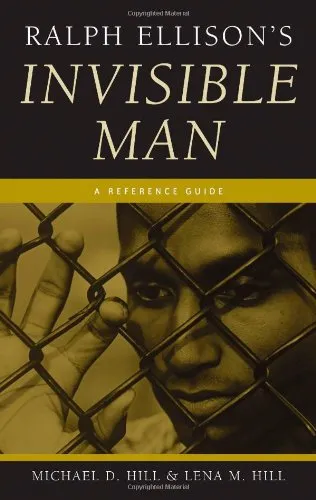
Ralph Ellison's Invisible Man: A Reference Guide (Greenwood Guides to Multicultural Literature)
Michael D. Hill,Lena M. Hill
2008
View book