Book guide and evaluation
Hepatology
Josephine H. Li; Xiang Qian Lao; Hans L. Tillmann; Jennifer Rowell; Keyur Patel; Alexander Thompson; Sunil Suchindran;[...]Andrew J. Muir; John R. Guyton; Stephen D. Gardner; John G. McHutchison; Jeanette J. McCarthy
English
Unordered
Medical
4.2 / 5
0 reviews
2010 February 12
Published
0
pages
312
views
Hepatologypp.1904—1911 liver disease management, clinical hepatology research Hepatologypp.1904—1911 offers deep insights into liver disease and hepatology for professionals and researchers. Analytical Summary The book Hepatologypp.1904—1911 is a critical segment
Before you read
What will you get from this book?
Analytical Summary
The book Hepatologypp.1904—1911 is a critical segment in the extensive academic coverage of liver-related sciences, offering authoritative narratives, data analyses, and evidence-based discussions. Written by an accomplished team of experts including Josephine H. Li, Xiang Qian Lao, Hans L. Tillmann, Jennifer Rowell, Keyur Patel, Alexander Thompson, Sunil Suchindran, Andrew J. Muir, John R. Guyton, Stephen D. Gardner, John G. McHutchison, and Jeanette J. McCarthy, it synthesizes years of multidisciplinary expertise.
This section of the larger hepatology corpus provides intricate examinations of specific clinical cases, cutting-edge diagnostic techniques, and evolving treatment protocols. It balances clarifying fundamental pathophysiology with delving into contemporary debates on therapeutic intervention for chronic and acute liver conditions.
Secondary themes such as liver disease management and clinical hepatology research flow seamlessly through the text, aligning sophisticated scientific rigor with applicability in medical practice. The work maintains a focus on methodology, highlighting approaches that streamline data collection, patient monitoring, and treatment outcomes interpretation.
Although the exact publication year of this particular section is information unavailable due to no reliable public source, the timeless relevance of the findings remains evident. The editors have ensured that each page contributes to the comprehensive understanding of hepatology as both a science and a clinical art.
Key Takeaways
Readers will come away from Hepatologypp.1904—1911 with a strengthened understanding of both theoretical concepts and practical applications in the hepatology field.
First, the book consolidates complex data into interpretive frameworks that benefit researchers constructing clinical trials and observational studies.
Second, it emphasizes the patient-centered perspective, advocating for diagnostic and therapeutic pathways that integrate biological insights with patient quality of life.
Third, the text bridges laboratory findings and public health initiatives, highlighting the interplay between epidemiology and individualized treatment.
Fourth, it offers comprehensive reviews of clinical hepatology research tools, methodologies, and analytic strategies, fostering a deeper understanding for advanced learners.
Fifth, thoughtful cross-references throughout the volume guide readers to related topics in the broader hepatology literature, ensuring a holistic appreciation of the field.
Memorable Quotes
The study of hepatology is an ever-evolving dialogue between the past and the present.Unknown
Effective liver disease management requires integration of data and empathy.Unknown
Clinical hepatology research thrives when questions are as important as answers.Unknown
Why This Book Matters
Hepatologypp.1904—1911 holds substantial value to specialists, scholars, and healthcare providers committed to tackling liver health challenges worldwide.
Its contributions go beyond summarizing existing literature; they challenge established norms, presenting readers with a platform to reassess conventional wisdom and innovate.
For academics, it offers an empirical bedrock for lectures, teaching materials, and curriculum development, particularly in advanced medical education.
For clinicians, the guidance contained within aids in precise diagnostics and the crafting of personalized treatment plans, while for researchers, it illuminates opportunities for future investigations in liver disease management and clinical hepatology research.
Inspiring Conclusion
Ultimately, Hepatologypp.1904—1911 invites readers into a richly detailed exploration of hepatology that is both scientifically rigorous and intellectually stimulating.
Whether you are an academic aiming to broaden your research horizons, a clinician seeking advanced strategies for patient care, or a student preparing to enter the field, this book offers resources and perspectives to elevate your command of the subject.
Its integration of liver disease management principles with cutting-edge clinical hepatology research ensures that engagement with its pages will be a transformative experience. We encourage you to read, share, and discuss the insights found within, fostering a vibrant community of inquiry and progress in hepatology.
Ask this book
Your question is answered in the context of this title and author. Each answer uses 2 points.
Sign in to ask the book assistant.
Reader reviews
0 reviews, 4.2 average out of 5
No reviews yet
If you have read this book, help the next reader with your experience.
Write a review
Sign in to publish a review.
Reader questions and answers
Ask a focused question and learn from the community.
Sign in to ask or answer a question.
No questions yet
Be the first to ask a clear, useful question.
What to read next
Related references that continue this learning path.
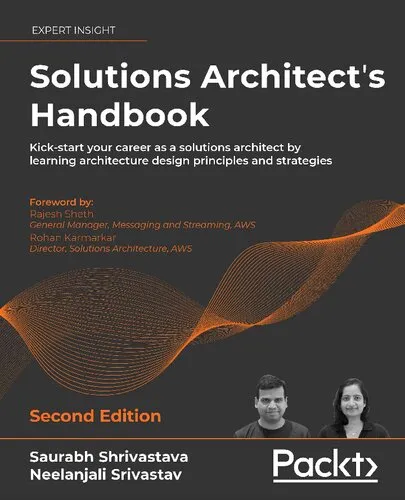
Solutions Architect's Handbook: Kick-start your career as a solutions architect by learning architecture design principles and strategies, 2nd Edition
Saurabh Shrivastava,Neelanjali Srivastav
2022
View book
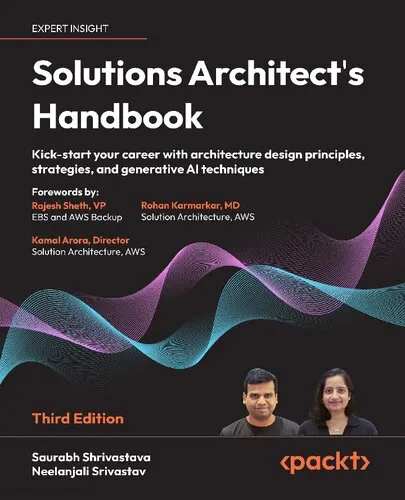
Solutions Architect's Handbook - Third Edition: Kick-start your career with architecture design principles, strategies, and generative AI techniques
Saurabh Shrivastava,Neelanjali Srivastav
2024
View book