

Book guide and evaluation
Haskell Financial Data Modeling and Predictive Analytics
Pavel Ryzhov
English
Beginner
Software Engineering
4.6 / 5
0 reviews
2013
Published
112
pages
427
views
Welcome to a comprehensive guide on harnessing the power of Haskell for financial data modeling and predictive analytics. This book delves into the complexities of using functional programming to solve real-world financial problems. Detailed Summary of the Book In "Haskel
Before you read
What will you get from this book?
Welcome to a comprehensive guide on harnessing the power of Haskell for financial data modeling and predictive analytics. This book delves into the complexities of using functional programming to solve real-world financial problems.
Detailed Summary of the Book
In "Haskell Financial Data Modeling and Predictive Analytics," you'll discover the nuanced world of functional programming with Haskell, applied explicitly to the sphere of finance. The book bridges the gap between theoretical programming concepts and their practical applications in the financial industry. We explore critical aspects such as data collection, aggregation, and analysis, alongside predictive analytics, to forecast financial trends and developments.
The book unfolds over several sections, beginning with an introduction to Haskell's syntax and semantics, which sets the stage for more intricate financial models and simulations. As you progress, you'll find in-depth case studies and examples that illustrate how to apply Haskell's powerful abstractions to build robust models for risk evaluation, portfolio management, and high-frequency trading.
Key Takeaways
- Learn the fundamentals of Haskell with a focus on financial applications.
- Understand how to design and implement predictive models using functional programming techniques.
- Develop the ability to forecast financial trends through practical case studies.
- Enhance your analytical skills with Haskell's strong typing and high-level abstractions.
- Gain insights into the latest financial data modeling methodologies that shape today's trading markets.
Famous Quotes from the Book
"Haskell is not just a language, but a new way of thinking about problems—especially in the realm of finance where precision and abstraction are paramount."
"A functional paradigm allows us to gather insights with reduced complexity, turning mountains of financial data into actionable intelligence."
"Traditionally seen as an academic language, Haskell's entry into finance marks the convergence of mathematical rigor and digital money markets."
Why This Book Matters
In a rapidly digitizing financial world, the need for sophisticated computational tools has never been more pressing. This book positions Haskell as a critical toolkit for professionals and academics eager to engage with cutting-edge financial technologies. It offers a unique perspective by combining Haskell's functional prowess with the practical demands of financial modeling, setting a new standard for computational finance education.
Understanding the intricacies of Haskell Financial Data Modeling and Predictive Analytics equips you with the skills necessary to navigate and lead in an era where data-driven decision-making defines success in financial markets. By focusing on real-world applications, the book serves as a definitive resource for both seasoned developers and finance professionals seeking to expand their analytical toolkit with modern programming paradigms.
Ask this book
Your question is answered in the context of this title and author. Each answer uses 2 points.
Sign in to ask the book assistant.
Reader reviews
0 reviews, 4.6 average out of 5
No reviews yet
If you have read this book, help the next reader with your experience.
Write a review
Sign in to publish a review.
Reader questions and answers
Ask a focused question and learn from the community.
Sign in to ask or answer a question.
No questions yet
Be the first to ask a clear, useful question.
What to read next
Related references that continue this learning path.
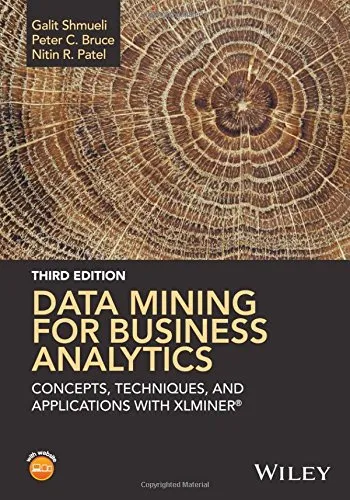
Data Mining for Business Analytics: Concepts, Techniques, and Applications with XLMiner
Galit Shmueli,Peter C. Bruce,Nitin R. Patel
2016
View book
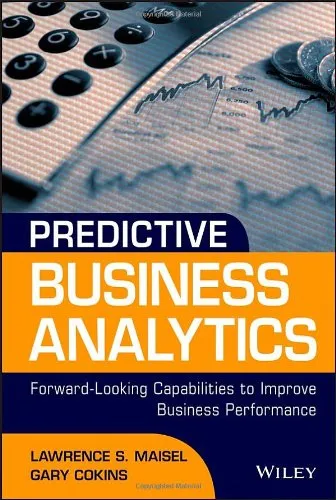
Predictive Business Analytics: Forward Looking Capabilities to Improve Business Performance
Lawrence Maisel,Gary Cokins
2014
View book