
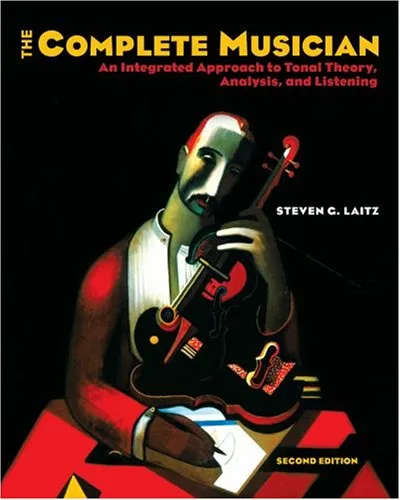
The complete musician: an integrated approach to tonal theory, analysis, and listening
Steven Geoffrey Laitz
2008
View book

Book guide and evaluation
Hugo Riemann
0 reviews
Published
pages
views
Introduction to "Harmony Simplified: Or, The Theory of the Tonal Functions of Chords" Music theory is the backbone of understanding the complexities of tonal harmony, and few works have contributed to this field with as much clarity and insight as Hugo Riemann's "Harmony S
Before you read
Music theory is the backbone of understanding the complexities of tonal harmony, and few works have contributed to this field with as much clarity and insight as Hugo Riemann's "Harmony Simplified." In this seminal work, Riemann introduces readers to his revolutionary theory of tonal functions, transforming the way musicians and theorists approach harmony. This book serves both as an educational resource for students of music and as a thought-provoking study for more advanced scholars of harmonic theory.
First published in the late 19th century, "Harmony Simplified" aims to address the complexities surrounding traditional approaches to harmony and offers a clear and systematic methodology by introducing the concept of tonal functions. Riemann's key innovation lies in his assertion that every chord in a tonal context can be understood as fulfilling one of three basic functions: the Tonic (stability), the Dominant (directional tension), or the Subdominant (preparatory tension).
The book begins by outlining fundamental principles of scale construction and intervals, providing a strong foundation for readers unfamiliar with the basics of music theory. Riemann then transitions into the anatomy of chords, detailing how triads and seventh chords form the harmonic framework of tonal music. As the text progresses, Riemann introduces the theory of tonal functions, emphasizing the interconnectedness of chords within a key and their roles in establishing tonal unity.
Perhaps most importantly, "Harmony Simplified" moves beyond the rigid mechanics of harmony as presented by earlier theorists, offering musicians a dynamic and function-based approach to understanding chord progressions. The book concludes with practical examples that illustrate his theories in real-world applications, making it an essential resource for both students and composers.
"The unity of a harmonic progression is not indebted to individual chords, but to the function they fulfill in the tonal structure."
"Tonal music only truly comes alive when its harmonic relationships are understood through the interplay of function and tension."
"The role of theory is not to constrain creativity but to provide the tools necessary for a deeper understanding of art."
"Harmony Simplified" remains one of the cornerstone texts in the study of music theory due to its transformative approach to harmony. Riemann's function theory not only revolutionized how music was analyzed but also influenced generations of composers and theorists, shaping the modern understanding of tonal structure.
For music students, this book provides an accessible path to mastering the complexities of harmonic analysis, free from overly technical jargon. For professional musicians and composers, it offers a deeper appreciation of how tonal functions underpin the emotional and aesthetic qualities of music. Riemann's work has stood the test of time, remaining essential reading for anyone seeking to explore the profound intricacies of tonal harmony.
What truly sets "Harmony Simplified" apart is its combination of clarity, systematic organization, and profound insight. It bridges the gap between the rigid traditionalist views of harmony and the evolving, more dynamic understanding of tonal function, making it a timeless resource for musicians worldwide.
Your question is answered in the context of this title and author. Each answer uses 2 points.
0 reviews, 4.5 average out of 5
Sign in to publish a review.
Ask a focused question and learn from the community.
Related references that continue this learning path.
Steven Geoffrey Laitz

The Country Music Foundation,Paul Kingsbury