Book guide and evaluation
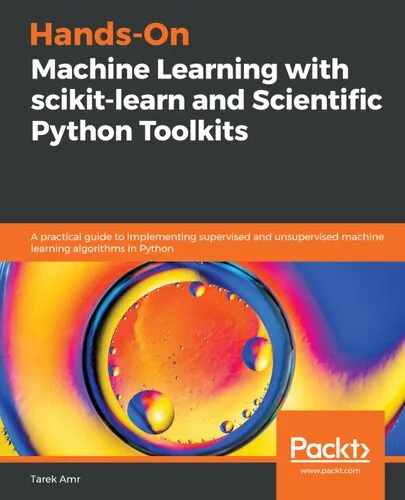
Hands-On Machine Learning with scikit-learn and Scientific Python Toolkits: A practical guide to implementing supervised and unsupervised machine learning algorithms in Python
Tarek Amr
English
Beginner
Machine Learning
4.9 / 5
0 reviews
2020
Published
368
pages
471
views
Integrate scikit-learn with various tools such as NumPy, pandas, imbalanced-learn, and scikit-surprise and use it to solve real-world machine learning problems Key Features Delve into machine learning with this comprehensive guide to scikit-learn and scientific Python Master the
Before you read
What will you get from this book?
Integrate scikit-learn with various tools such as NumPy, pandas, imbalanced-learn, and scikit-surprise and use it to solve real-world machine learning problems Key Features Delve into machine learning with this comprehensive guide to scikit-learn and scientific Python Master the art of data-driven problem-solving with hands-on examples Foster your theoretical and practical knowledge of supervised and unsupervised machine learning algorithms Book Description Machine learning is applied everywhere, from business to research and academia, while scikit-learn is a versatile library that is popular among machine learning practitioners. This book serves as a practical guide for anyone looking to provide hands-on machine learning solutions with scikit-learn and Python toolkits. The book begins with an explanation of machine learning concepts and fundamentals, and strikes a balance between theoretical concepts and their applications. Each chapter covers a different set of algorithms, and shows you how to use them to solve real-life problems. You’ll also learn about various key supervised and unsupervised machine learning algorithms using practical examples. Whether it is an instance-based learning algorithm, Bayesian estimation, a deep neural network, a tree-based ensemble, or a recommendation system, you’ll gain a thorough understanding of its theory and learn when to apply it. As you advance, you’ll learn how to deal with unlabeled data and when to use different clustering and anomaly detection algorithms. By the end of this machine learning book, you’ll have learned how to take a data-driven approach to provide end-to-end machine learning solutions. You’ll also have discovered how to formulate the problem at hand, prepare required data, and evaluate and deploy models in production. What you will learn Understand when to use supervised, unsupervised, or reinforcement learning algorithms Find out how to collect and prepare your data for machine learning tasks Tackle imbalanced data and optimize your algorithm for a bias or variance tradeoff Apply supervised and unsupervised algorithms to overcome various machine learning challenges Employ best practices for tuning your algorithm’s hyper parameters Discover how to use neural networks for classification and regression Build, evaluate, and deploy your machine learning solutions to production Who this book is for This book is for data scientists, machine learning practitioners, and anyone who wants to learn how machine learning algorithms work and to build different machine learning models using the Python ecosystem. The book will help you take your knowledge of machine learning to the next level by grasping its ins and outs and tailoring it to your needs. Working knowledge of Python and a basic understanding of underlying mathematical and statistical concepts is required.
Ask this book
Your question is answered in the context of this title and author. Each answer uses 2 points.
Sign in to ask the book assistant.
Reader reviews
0 reviews, 4.9 average out of 5
No reviews yet
If you have read this book, help the next reader with your experience.
Write a review
Sign in to publish a review.
Reader questions and answers
Ask a focused question and learn from the community.
Sign in to ask or answer a question.
No questions yet
Be the first to ask a clear, useful question.
What to read next
Related references that continue this learning path.
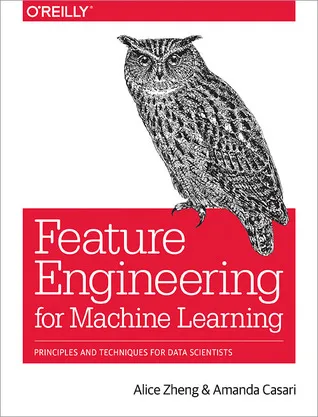
Feature Engineering for Machine Learning: Principles and Techniques for Data Scientists
Alice Zheng,Amanda Casari
2018
View book