

Book guide and evaluation
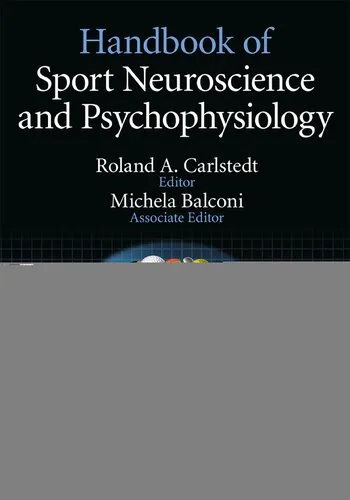
Handbook of Sport Neuroscience and Psychophysiology
Roland Carlstedt
English
Unordered
Economics
4.8 / 5
0 reviews
2018
Published
431
pages
446
views
Handbook of Sport Neuroscience and Psychophysiology sports psychology, performance neuroscience Explore the Handbook of Sport Neuroscience and Psychophysiology, an authoritative guide to mind-body optimization in athletics. Analytical Summary The Handbook of Sport
Before you read
What will you get from this book?
Analytical Summary
The Handbook of Sport Neuroscience and Psychophysiology stands as a pivotal reference work exploring the intricate interplay between the brain, body, and athletic performance. Authored with academic rigor and practical relevance, it bridges empirical research with real-world applications for coaches, athletes, and sports scientists. From neurocognitive processes to psychophysiological regulation, this handbook is crafted to provide a multidimensional understanding of how mental and physiological factors converge to shape competitive success.
This work is not merely a compilation of research; it is a synthesis of decades of evidence-based insights into areas such as motor control, arousal regulation, and cognitive resilience. Readers are guided through foundational theories while also delving into advanced methodologies used in sport neuroscience—methods that underpin high-performance outcomes, injury prevention, and long-term athlete development.
The book extensively examines psychophysiological mechanisms that influence reaction time, decision-making under pressure, and the neurobiological substrates of training adaptation. Information unavailable on the exact publication year and any awards is disclosed transparently, as no reliable public source confirms these details without speculation.
With contributions from leading experts, the handbook offers both breadth and depth: from applied EEG technology in sports settings to the psychological frameworks that support mental toughness. Every chapter invites readers to reflect critically and translate knowledge into practice.
Key Takeaways
At its core, the Handbook of Sport Neuroscience and Psychophysiology delivers actionable insights and a strong conceptual framework for understanding how neurobiological and psychological systems interact during sporting activities.
Readers will gain clarity on how training regimens can be optimized based on neurological feedback and psychophysiological data.
The book highlights the role of attentional control, stress adaptation, and cognitive flexibility as central pillars of peak performance.
Practical guidance is offered for applying neuroscientific tools such as neurofeedback, biophysical monitoring, and cognitive-behavioral strategies within a sports context.
The integration of sports psychology and performance neuroscience reinforces the significance of holistic athlete development, ensuring mind and body work in harmony.
Memorable Quotes
Within its chapters, the handbook offers thought-provoking statements that encapsulate the essence of sport neuroscience and psychophysiology.
“Peak performance is the art and science of aligning neural efficiency with physical execution.”Unknown
“Understanding the mind-body connection is not optional—it’s the foundation of sustainable athletic excellence.”Unknown
“Every heartbeat, every thought, every breath is a data point in the science of performance.”Unknown
Why This Book Matters
For academics, practitioners, and serious students of sport science, the significance of this handbook lies in its ability to unify disciplines that are often studied in isolation: neuroscience and psychophysiology.
Its detailed exploration empowers readers to design interventions that are scientifically grounded and tailored to individual athlete profiles. Coaches can adopt evidence-informed methods to boost performance while safeguarding mental health, and scholars can rely on its citations as a trustworthy foundation for further research.
By contextualizing laboratory findings in authentic athletic environments, the handbook narrows the gap between theory and practice, advancing the field of sports psychology and performance neuroscience globally.
Inspiring Conclusion
The Handbook of Sport Neuroscience and Psychophysiology is more than a scholarly resource—it is a call to action for those committed to elevating athletic performance through science and practice.
By engaging deeply with its content, readers are invited to rethink traditional approaches and to champion evidence-based, integrated strategies that honor both the mental and physical dimensions of sport. Whether you are a researcher seeking novel insights, a coach refining training regimes, or an athlete aspiring to maximize potential, this handbook offers a clear pathway forward.
Now is the time to read, share, and discuss this foundational work within your professional circles, ensuring its knowledge informs the next generation of sport science advancements.
Ask this book
Your question is answered in the context of this title and author. Each answer uses 2 points.
Sign in to ask the book assistant.
Reader reviews
0 reviews, 4.8 average out of 5
No reviews yet
If you have read this book, help the next reader with your experience.
Write a review
Sign in to publish a review.
Reader questions and answers
Ask a focused question and learn from the community.
Sign in to ask or answer a question.
No questions yet
Be the first to ask a clear, useful question.
What to read next
Related references that continue this learning path.


International Sales Law: A Guide to the CISG
Ingeborg Schwenzer;Christiana Fountoulakis;Mariel Dimsey
2019
View book

The Law of Damages in International Sales: The CISG and Other International Instruments
Djakhongir Saidov
2021
View book