
Book guide and evaluation
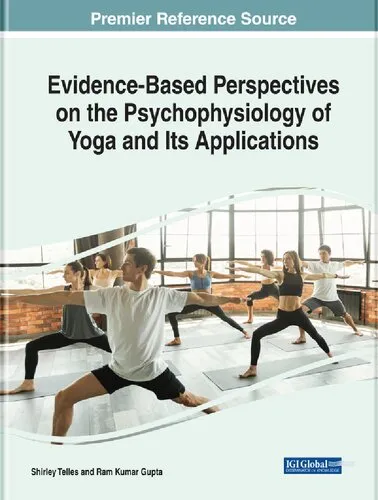
Handbook of Research on Evidence-Based Perspectives on the Psychophysiology of Yoga and Its Applications
Shirley Telles (editor),Ram Kumar Gupta (editor)
English
Unordered
Economics
4.8 / 5
0 reviews
2020
Published
607
pages
402
views
Handbook of Research on Evidence-Based Perspectives on the Psychophysiology of Yoga and Its Applications Yoga science research, mind-body health Explore the Handbook of Research on Evidence-Based Perspectives on the Psychophysiology of Yoga and Its Applications for acad
Before you read
What will you get from this book?
Analytical Summary
The Handbook of Research on Evidence-Based Perspectives on the Psychophysiology of Yoga and Its Applications is a comprehensive academic contribution that delves into the neurophysiological, psychological, and therapeutic dimensions of yoga, grounded in rigorous scientific inquiry. This work is carefully curated to offer a multidisciplinary outlook, suitable for scholars, clinical practitioners, and professionals who aim to understand the measurable impacts of yoga on the human mind and body.
Bringing together the expertise of editors Shirley Telles and Ram Kumar Gupta, the book synthesizes peer-reviewed studies and experimental data to offer a clear picture of how yoga's psychophysiology operates. Whether exploring changes at the autonomic nervous system level, cognitive performance, emotional regulation, or musculoskeletal health, the text presents a thorough narrative supported by empirical evidence.
Secondary themes such as yoga science research and mind-body health are intelligently woven throughout, ensuring the reader gains both a macro and micro perspective on the field. Each chapter emphasizes the importance of methodological rigor, offering critique as well as synthesis—making it invaluable for academic citation and curriculum development.
Key Takeaways
This handbook delivers both breadth and depth in its coverage of yoga's psychophysiological effects, offering practical insights backed by scholarly validation.
Readers will recognize recurrent empirical findings that support yoga as a complementary approach to mental health and physical wellness.
Its structured chapters allow swift identification of key research areas, from neuroendocrine responses to yoga interventions, to investigations into long-term practice and improved quality of life indices.
The content is designed to inspire further research, policy-making, and clinical application in contexts ranging from rehabilitation centers to educational settings.
Memorable Quotes
“Yoga provides a unique bridge between ancient wisdom and modern science, measured through the lens of psychophysiology.”Unknown
“Evidence-based inquiry into yoga’s effects is essential to integrating it into mainstream healthcare.”Unknown
“A commitment to methodological rigor ensures that yoga research contributes meaningfully to scientific discourse.”Unknown
Why This Book Matters
In a landscape often dominated by anecdotal claims, this handbook stands out as a meticulously assembled resource prioritizing evidence-based perspectives.
It addresses critical gaps in literature by documenting yoga's psychophysiological impact through both quantitative and qualitative methodologies. For academics, it offers an indispensable reference point; for clinicians, it presents scientifically supported interventions; and for policy-makers, it outlines potential avenues for health promotion.
Information unavailable regarding awards or recognitions—no reliable public source verifies such distinctions—however, its scholarly precision suggests high value in academic and professional circles.
By integrating global research patterns, the editors encourage cross-cultural and interdisciplinary dialogue, crucial for advancing both yoga practice and scientific understanding.
Inspiring Conclusion
The Handbook of Research on Evidence-Based Perspectives on the Psychophysiology of Yoga and Its Applications invites serious readers to engage deeply with verified scientific knowledge, bridging tradition with contemporary empirical validation.
By bringing together well-designed studies, critical analyses, and practical implications, the book crafts a roadmap for future research and informed practice. Whether you are pursuing an academic degree, refining clinical protocols, or expanding public health strategies, its contributions will catalyze thoughtful action.
This authoritative yet inviting resource challenges readers to not simply absorb information, but to share, discuss, and implement the insights gained—advancing both personal understanding and the broader field of mind-body health.
Ask this book
Your question is answered in the context of this title and author. Each answer uses 2 points.
Sign in to ask the book assistant.
Reader reviews
0 reviews, 4.8 average out of 5
No reviews yet
If you have read this book, help the next reader with your experience.
Write a review
Sign in to publish a review.
Reader questions and answers
Ask a focused question and learn from the community.
Sign in to ask or answer a question.
No questions yet
Be the first to ask a clear, useful question.
What to read next
Related references that continue this learning path.

International Sales Law: A Guide to the CISG
Ingeborg Schwenzer;Christiana Fountoulakis;Mariel Dimsey
2019
View book

The Law of Damages in International Sales: The CISG and Other International Instruments
Djakhongir Saidov
2021
View book