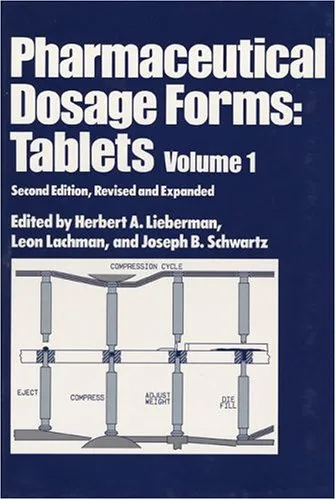
Pharmaceutical Dosage Forms: Tablets, Vol. 1
Herbert Lieberman,Leon Lachman,Joseph B. Schwartz
1989
View book
Book guide and evaluation
Sarfaraz Niazi
0 reviews
Published
pages
views
Introduction to the Handbook of Pharmaceutical Manufacturing Formulations - Semisolid Products (Volume 4 of 6) The "Handbook of Pharmaceutical Manufacturing Formulations - Semisolid Products (Volume 4 of 6)" is a comprehensive resource that delves deep into the intricaci
Before you read
The "Handbook of Pharmaceutical Manufacturing Formulations - Semisolid Products (Volume 4 of 6)" is a comprehensive resource that delves deep into the intricacies of pharmaceutical formulations specific to semisolid products. Designed as an essential guide for industry professionals, researchers, and students in the field of pharmacy, this book offers a meticulously detailed roadmap for the development, manufacturing, and regulatory requirements of semisolid pharmaceutical products. Whether you are a beginner exploring the world of pharmaceutical formulations or an experienced scientist seeking advanced insights, this volume equips you with the tools and knowledge to navigate this specialized domain successfully.
The book is part of a six-volume series that collectively forms an authoritative reference guide on pharmaceutical manufacturing. Volume 4 emphasizes semisolid dosage forms such as creams, ointments, pastes, gels, and similar products that occupy a critical niche in pharmaceutical therapy.
Semisolid formulations are pivotal in delivering therapeutic benefits in a topically applied or transdermal dosage form. This book systematically addresses the complete lifecycle of semisolid product formulations, from conceptualization to the market. Each chapter provides actionable insights into critical aspects, including formulation strategies, excipient selection, manufacturing techniques, quality control processes, packaging, and stability testing.
This volume is structured to balance theoretical principles and practical applications. Readers will find prototypes of manufacturing formulas, practical guidance on developing cold-chain compliant products, and adaptive methods for incorporating active pharmaceutical ingredients (APIs) in varied semisolid bases. Furthermore, there is an emphasis on achieving compliance with Good Manufacturing Practices (GMP) and strict adherence to global regulatory guidelines.
The content enables readers to understand and optimize various parameters, including viscosity, rheology, and penetration behavior, which are essential for formulating effective semisolid products. Additionally, the book offers a wide range of formulations catering to both prescription and over-the-counter (OTC) drugs, ensuring its relevance across therapeutic categories.
The Handbook of Pharmaceutical Manufacturing Formulations - Semisolid Products delivers invaluable knowledge and insights into the pharmaceutical manufacturing industry. Key takeaways include:
This volume empowers formulators and manufacturers by equipping them with the knowledge required to develop semisolid products that are effective, patient-compliant, and market-ready.
"The goal of every semisolid formulation is not only to deliver a therapeutic response effectively but also to ensure patient compliance through optimized usability and aesthetic appeal."
"A semisolid product is not merely a blend of ingredients but a carefully engineered system designed to serve a specific therapeutic purpose."
"The art of pharmaceutical formulation demands a harmony of science, technology, and art to meet the rigorous expectations of efficacy, stability, and quality."
The Handbook of Pharmaceutical Manufacturing Formulations - Semisolid Products (Volume 4) holds immense significance for multiple reasons. It consolidates decades of expertise into easily accessible knowledge, making it a critical resource in the pharmaceutical field. Semisolid formulations are ubiquitous in both prescription and consumer healthcare products. By providing precise methods for development and manufacturing, this book fills a crucial gap in the existing literature.
The book's focus on regulatory compliance ensures that companies and professionals can align their production processes with global standards, mitigating risks associated with non-compliance. Furthermore, it serves as a springboard for innovation, enabling organizations to improve upon existing products or design novel ones that cater to unmet patient needs.
Ultimately, this volume is more than just a technical guide—it is a cornerstone in the professional development of any pharmaceutical scientist, researcher, or manufacturer. Whether you are involved in formulation design, process optimization, or quality assurance, the insights from this book can help you excel in your role and contribute to creating safer, more effective products for patients worldwide.
Your question is answered in the context of this title and author. Each answer uses 2 points.
0 reviews, 4.5 average out of 5
Sign in to publish a review.
Ask a focused question and learn from the community.
Related references that continue this learning path.
Herbert Lieberman,Leon Lachman,Joseph B. Schwartz
Larry, L.A.andLieberman, H.andSchwartz, J.B.