
Book guide and evaluation
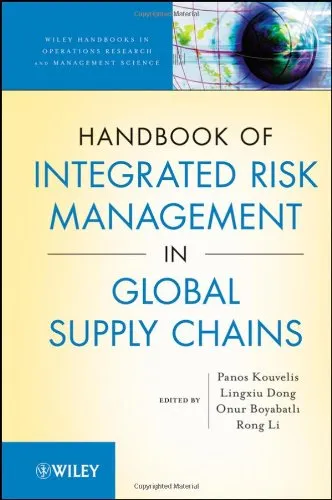
Handbook of Integrated Risk Management in Global Supply Chains (Wiley Handbooks in Operations Research and Management Science)
Panos Kouvelis,Lingxiu Dong,Onur Boyabatli,Rong Li
English
Beginner
Economics
4.9 / 5
0 reviews
2011
Published
604
pages
162
views
Introduction to the Handbook of Integrated Risk Management in Global Supply Chains In today’s interconnected and complex global marketplace, supply chain networks are more critical and fragile than ever before. The Handbook of Integrated Risk Management in Global Supply Chains
Before you read
What will you get from this book?
Introduction to the Handbook of Integrated Risk Management in Global Supply Chains
In today’s interconnected and complex global marketplace, supply chain networks are more critical and fragile than ever before. The Handbook of Integrated Risk Management in Global Supply Chains provides a comprehensive exploration of risk management within supply chains, offering frameworks, methodologies, and strategies to address uncertainties and disruptions that affect global businesses. Whether you are an academic researcher, business leader, or practitioner, this rigorous yet accessible resource provides the tools and insights you need to navigate the challenges of modern supply chain management and risk mitigation.
Authored by Panos Kouvelis, Lingxiu Dong, Onur Boyabatli, and Rong Li, the book is part of the esteemed Wiley Handbooks in Operations Research and Management Science series. It fills a critical knowledge gap by integrating the theoretical foundations of risk management with practical supply chain applications. Through a multidisciplinary approach, the book fosters understanding of emerging risks and innovative solutions, making it an essential guide for managing global supply chain challenges in a volatile world.
Detailed Summary of the Book
The handbook is a carefully curated compilation of research and analysis that examines risk management in global supply chains from various dimensions. It covers a diverse range of topics, including demand uncertainty, financial risks, geopolitical shifts, environmental considerations, and supply disruptions caused by events such as pandemics or natural disasters.
One of the core strengths of the book lies in its integration of research-based frameworks and actionable strategies. Each chapter is authored by leading experts who delve into specific issues like mitigation strategies, quantitative decision-making models, and the role of advanced technologies such as machine learning and blockchain in risk management.
Throughout the book, case studies and real-world examples are used to bridge the gap between theory and practice. Topics such as supplier diversification, inventory control under uncertainty, and risk-sharing contracts highlight the tangible ways businesses can build resilient supply chains. Readers also gain valuable insights into how global companies adapt to regulatory shifts, climate change pressures, and disruptions caused by unforeseen circumstances like the COVID-19 pandemic.
Key Takeaways
- A holistic approach to identifying, quantifying, and mitigating risks in global supply chains.
- In-depth understanding of how supply chain disruptions create ripple effects across industries.
- Practical frameworks for designing resilient supply chains that can withstand both predictable and unforeseen risks.
- The role of digital transformation, such as AI and machine learning, in modernizing risk management strategies.
- Proven techniques for fostering collaboration across the entire supply chain ecosystem, from suppliers to end customers.
Famous Quotes from the Book
"Resilience in supply chains is not an abstract concept; it’s the foundation for sustainable competitive advantage in turbulent times."
"Effective risk management is core to the survival and growth of global supply chains. It’s no longer a choice—it’s a necessity."
Why This Book Matters
Risk management is increasingly becoming a top priority for organizations worldwide as they confront the growing frequency, scale, and scope of disruptions. The Handbook of Integrated Risk Management in Global Supply Chains is a timely contribution to academia and industry, offering a comprehensive guide to building resilient supply chains in uncertain environments. Here’s why this book matters:
- Timeliness: With the rise in global uncertainties, this book provides actionable insights into overcoming key challenges posed by supply chain disruptions caused by economic crises, pandemics, and other crises.
- Interdisciplinary Approach: Combining methodologies from operations research, finance, and technology, the book bridges academic research and practical implementation.
- Future-Focused: It explores the integration of digital technologies like blockchain, IoT, and AI, ensuring that readers stay ahead in adopting modern tools for effective risk management.
- Global Perspective: The focus on global challenges and solutions makes this book relevant to businesses of all scales, from multinational corporations to small and medium enterprises with ambitions of globalization.
By reading this book, you will be better equipped to understand and mitigate risks across your entire supply chain, empowering your business to thrive even in the face of uncertainty.
Ask this book
Your question is answered in the context of this title and author. Each answer uses 2 points.
Sign in to ask the book assistant.
Reader reviews
0 reviews, 4.9 average out of 5
No reviews yet
If you have read this book, help the next reader with your experience.
Write a review
Sign in to publish a review.
Reader questions and answers
Ask a focused question and learn from the community.
Sign in to ask or answer a question.
No questions yet
Be the first to ask a clear, useful question.
What to read next
Related references that continue this learning path.

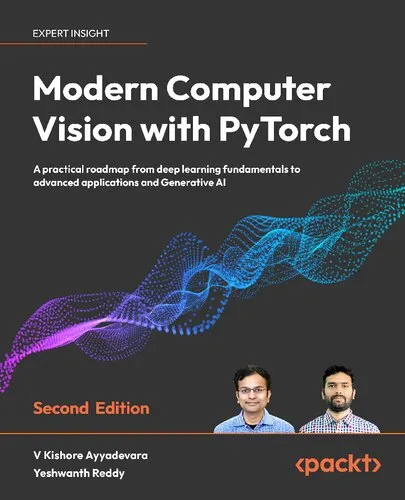
Modern Computer Vision with PyTorch: A Practical Roadmap From Deep Learning Fundamentals to Advanced Applications and Generative AI, 2nd Edition
V Kishore Ayyadevara,Yeshwanth Reddy
2023
View book