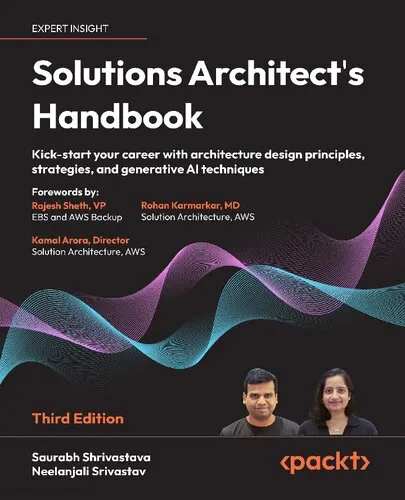
Solutions Architect's Handbook - Third Edition: Kick-start your career with architecture design principles, strategies, and generative AI techniques
Saurabh Shrivastava,Neelanjali Srivastav
2024
View book
Book guide and evaluation
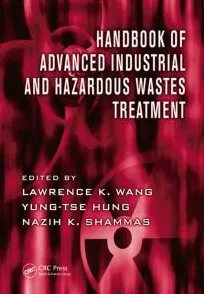
Lawrence K. Wang,Yung-Tse Hung,Nazih K. Shammas
0 reviews
Published
pages
views
Introduction to 'Handbook of Industrial and Hazardous Wastes Treatment, Volume II' The "Handbook of Industrial and Hazardous Wastes Treatment, Volume II," is a meticulously crafted resource designed for professionals, academics, and policymakers seeking practical and technical
Before you read
The "Handbook of Industrial and Hazardous Wastes Treatment, Volume II," is a meticulously crafted resource designed for professionals, academics, and policymakers seeking practical and technical guidance in the complex field of waste treatment. Authored by experts Lawrence K. Wang, Yung-Tse Hung, and Nazih K. Shammas, this volume serves as a comprehensive manual providing in-depth insights into advanced methodologies and emerging technologies in the management and treatment of industrial and hazardous wastes. With its multidisciplinary approach, this book addresses critical issues, equipping readers to mitigate environmental challenges effectively while adhering to regulatory standards.
As environmental concerns grow and stricter regulations come into effect, industry stakeholders face mounting pressure to adopt sustainable and effective waste treatment practices. This second volume builds upon the foundational principles established in the first and expands its scope, delving deeper into specialized topics and the integration of innovative solutions. The handbook balances rigorous scientific details with real-world applications, making it a vital reference across various domains, including environmental engineering, waste management, and policy development.
This volume provides a detailed exploration of cutting-edge technologies and strategies for treating industrial and hazardous wastes. It tackles a broad spectrum of topics, ranging from chemical and biological treatment processes to sustainable waste minimization practices, offering actionable solutions for industries of all types and sizes.
In this book, the authors delve into emerging areas such as advanced oxidation processes, waste-to-energy systems, and green chemistry approaches to waste management. Detailed case studies and examples are interwoven throughout the chapters, demonstrating how these methodologies are applied in the treatment of specific waste streams. It also evaluates the economic and regulatory implications of waste treatment plans, helping decision-makers balance cost efficiency and compliance with environmental standards.
With a clear focus on innovation, this comprehensive handbook promotes sustainable practices and showcases the importance of transitioning toward circular economy principles. Readers will find step-by-step descriptions of processes, flow diagrams, and operational parameters needed to plan, develop, and monitor waste treatment systems effectively.
"A sustainable future requires industries to adopt waste treatment practices that are not only effective but also eco-conscious, balancing technological innovation with environmental stewardship."
"The management of hazardous wastes is no longer an optional endeavor—it is a global necessity, vital for public health, ecosystem preservation, and the protection of future generations."
The "Handbook of Industrial and Hazardous Wastes Treatment, Volume II," is an essential cornerstone in the realm of environmental engineering and industrial waste management. At a time when industries are under tremendous pressure to reduce their environmental footprint, this book provides the scientific foundation and practical expertise needed to meet these challenges head-on.
Each chapter not only disseminates knowledge but also inspires innovative thinking, encouraging readers to look beyond traditional approaches and embrace sustainable paradigms. By bridging the gap between theoretical constructs and practical engineering solutions, this handbook is indispensable for environmental consultants, plant managers, and students preparing to tackle real-world waste treatment issues.
Ultimately, this book is more than just a technical manual—it is a call to action for industries worldwide. It stands as a testament to the ability of science and human ingenuity to pave the way for a cleaner, greener, and safer world.
Your question is answered in the context of this title and author. Each answer uses 2 points.
0 reviews, 4.5 average out of 5
Sign in to publish a review.
Ask a focused question and learn from the community.
Related references that continue this learning path.
Saurabh Shrivastava,Neelanjali Srivastav
Hal Arkowitz PhD,Henny A. Westra PhD,William R. Miller Phd,Stephen P Rollnick PhD
Hal Arkowitz PhD,William R. Miller Phd,Stephen Rollnick PhD