
Book guide and evaluation
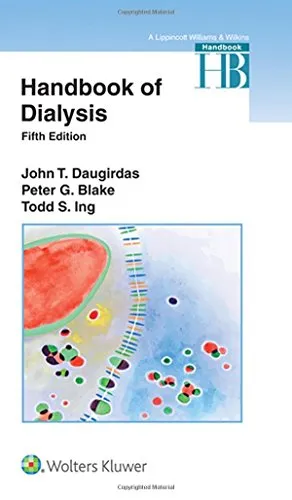
Handbook of dialysis
John T. Daugirdas MD,Peter G. Blake MB FRCPC FRCPI,Todd S. Ing MB FRCP
English
Beginner
Personal Development
4.6 / 5
0 reviews
2015
Published
814
pages
606
views
Introduction to the Handbook of Dialysis The "Handbook of Dialysis" is a comprehensive guide dedicated to nephrology professionals, students, and anyone interested in understanding the complexities of dialysis. With its insightful explanations and thorough discussi
Before you read
What will you get from this book?
Introduction to the Handbook of Dialysis
The "Handbook of Dialysis" is a comprehensive guide dedicated to nephrology professionals, students, and anyone interested in understanding the complexities of dialysis. With its insightful explanations and thorough discussions, this book is an indispensable resource for those dealing with end-stage renal disease (ESRD) and related dialysis treatments. Authored by the esteemed John T. Daugirdas, Peter G. Blake, and Todd S. Ing, this handbook stands as a beacon in the realm of renal care.
Detailed Summary of the Book
The "Handbook of Dialysis" serves as a detailed compendium, covering both the underlying principles and practical aspects of dialysis treatment. The book delves into different dialysis modes, including hemodialysis and peritoneal dialysis, discussing each mode's mechanisms, benefits, and complications. Readers will find comprehensive chapters on the physiology of renal failure and how these principles apply to dialysis therapy. The authors present complex concepts in a straightforward manner, making them accessible to professionals at varying levels of expertise.
Additionally, the book offers insight into the latest technological advancements in dialysis machinery and treatment protocols. Readers will benefit from discussions on vascular access, patient management, and common complications. With up-to-date research and clinical guidelines, it provides a perfect blend of theory and practical application.
Key Takeaways
- Comprehensive overview of dialysis modalities and patient management.
- In-depth understanding of ESRD pathophysiology and treatment imperatives.
- Latest practice guidelines and technological advancements explained.
- Holistic approach to patient care, including psychosocial aspects.
- Guidelines for complication management and troubleshooting.
Famous Quotes from the Book
"Understanding dialysis is not just about replacing kidney function—it’s about optimizing life for those affected by renal disease."
"In the complex journey of managing ESRD, knowledge is our most powerful tool."
Why This Book Matters
The "Handbook of Dialysis" matters profoundly to the medical community and beyond. It addresses the critical needs of clinicians, nurses, and healthcare providers responsible for the care of patients with ESRD. By bridging the gap between theory and practice, this book empowers its readers with the tools and knowledge necessary to deliver high-quality renal care. The authors, recognized leaders in nephrology, have provided a meticulously written resource that reflects years of expertise and dedication.
More than just a clinical guide, the handbook serves as a mentor and companion to many practicing clinicians, ensuring confidence and competence in dialysis practice. In an ever-evolving field, staying current with the latest research and techniques is crucial, and this book provides just that. Thus, this handbook is indispensable for anyone committed to improving outcomes in dialysis patients.
Ask this book
Your question is answered in the context of this title and author. Each answer uses 2 points.
Sign in to ask the book assistant.
Reader reviews
0 reviews, 4.6 average out of 5
No reviews yet
If you have read this book, help the next reader with your experience.
Write a review
Sign in to publish a review.
Reader questions and answers
Ask a focused question and learn from the community.
Sign in to ask or answer a question.
No questions yet
Be the first to ask a clear, useful question.
What to read next
Related references that continue this learning path.
Comprehensive Clinical Nephrology: Expert Consult
Richard J. Johnson,John Feehally,Jürgen Floege
2014
View book
Chronic Kidney Disease, Dialysis, and Transplantation: A Companion to Brenner and Rector's The Kidney - Expert Consult: Online and Print (Pereira, ... Disease, Dialysis, and Transplantation), Third Edition
Jonathan Himmelfarb MD,Mohamed H. Sayegh MD FAHA FASN ASCI AAP
2010
View book
Brenner & Rector's the Kidney, 9th Edition
Maarten W. Taal,Glenn M. Chertow,Philip A. Marsden,Karl Skorecki,Alan S. L. Yu
2011
View book