

Applied Nonlinear Dynamics: Analytical, Computational, and Experimental Methods
Ali H. Nayfeh,Balakumar Balachandran
1995
View book
Book guide and evaluation
Merle A. Sande
0 reviews
Published
pages
views
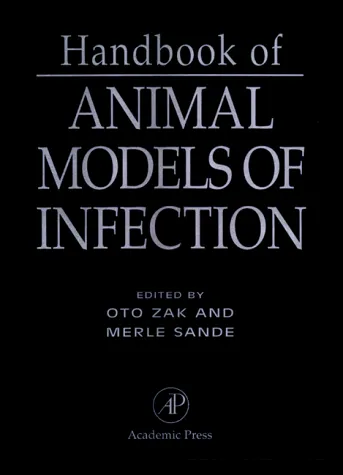
Introduction to the Handbook of Animal Models of Infection: Experimental Models in Antimicrobial Chemotherapy The "Handbook of Animal Models of Infection" is a comprehensive guide for researchers, clinicians, and scientists in the field of microbiology and infectious disease
Before you read
The "Handbook of Animal Models of Infection" is a comprehensive guide for researchers, clinicians, and scientists in the field of microbiology and infectious diseases. This book provides a detailed examination of experimental models using animals to study antimicrobial chemotherapy, offering valuable insights into infection dynamics, drug efficacy, and host-pathogen interactions. It is an essential resource for anyone working on developing novel therapeutic interventions to combat infectious diseases.
In the fight against infectious diseases, the use of animal models is indispensable for understanding how pathogens behave in living organisms and how potential therapies perform under in vivo conditions. This book explores these animal models in great detail, organizing its content to cater to scientific professionals and academic researchers alike. The text balances scientific rigor with accessibility, covering a wide range of microbial infections caused by bacteria, viruses, fungi, and parasites. Each chapter delves into a specific infection model and provides a thorough methodology, discussing the merits and limitations of each model.
The book is structured to guide readers from foundational principles, like selecting appropriate animal species and establishing infectious doses, to nuanced topics, such as ethical considerations and advancements in alternative methods to reduce reliance on animal testing. Discussions include small rodents like mice and rats, as well as larger animals like non-human primates, depending on the disease being studied.
Additionally, this handbook emphasizes its practical utility by focusing on preclinical evaluation of new therapeutic agents. Readers gain insights into how experimental outcomes can be translated into real-world clinical treatments. Topics such as pharmacokinetics, drug resistance, and the role of host immunity are explored with the depth required to understand their implications for human health.
"Animal models of infection are not mere tools, but windows into the complex interplay between pathogens and the host environment."
"The success of antimicrobial chemotherapy relies on bridging the gaps between the laboratory, the animal model, and the clinical setting."
"Ethics and science are intertwined; the humane treatment of animal test subjects upholds the integrity of research."
Despite advances in molecular biology and computational modeling, animal studies remain a cornerstone of infectious disease research. The "Handbook of Animal Models of Infection" serves as a pivotal resource for researchers investigating the mechanisms of infection, immunity, and antimicrobial efficacy. With the increasing threat of antibiotic resistance and emerging pathogens, the need for reliable and ethically sound preclinical models has never been more pressing.
What sets this book apart is its ability to provide actionable knowledge for scientists at every stage of their careers. It addresses not only scientific and technical aspects but also navigates pressing issues like reducing reliance on animal testing by introducing alternative methods where possible.
Ultimately, this book exemplifies the scientific community's commitment to advancing global health while maintaining ethical standards. It is an invaluable reference for laboratories, pharmaceutical companies, and academic institutions worldwide, ensuring that the development of therapies for infectious diseases is driven by robust, reproducible, and compassionate research methods.
Whether you are a microbiologist, a pharmaceutical researcher, or simply curious about the intricacies of antimicrobial development, this handbook offers a wealth of knowledge that underscores the importance of translational science in modern medicine. It is both a guide and a call to action for the scientific community to push the boundaries of understanding while adhering to the highest ethical standards.
Your question is answered in the context of this title and author. Each answer uses 2 points.
0 reviews, 4.0 average out of 5
Sign in to publish a review.
Ask a focused question and learn from the community.
Related references that continue this learning path.
Ali H. Nayfeh,Balakumar Balachandran

Weinong W. Chen (auth.),Tom Proulx (eds.)
Sanichiro Yoshida (auth.),Helena Jin,Cesar Sciammarella,Cosme Furlong,Sanichiro Yoshida (eds.)

Daniel Knorr,Andrew Schoch,Joseph L. Lenhart (auth.),Vijay Chalivendra,Bo Song,Daniel Casem (eds.)