Book guide and evaluation
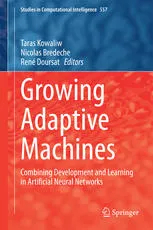
Growing Adaptive Machines: Combining Development and Learning in Artificial Neural Networks
Taras Kowaliw,Nicolas Bredeche,René Doursat (eds.)
English
Beginner
Artificial Intelligence (AI)
4.2 / 5
0 reviews
2014
Published
266
pages
318
views
The pursuit of artificial intelligence has been a highly active domain of research for decades, yielding exciting scientific insights and productive new technologies. In terms of generating intelligence, however, this pursuit has yielded only limited success. This book explores t
Before you read
What will you get from this book?
The pursuit of artificial intelligence has been a highly active domain of research for decades, yielding exciting scientific insights and productive new technologies. In terms of generating intelligence, however, this pursuit has yielded only limited success. This book explores the hypothesis that adaptive growth is a means of moving forward. By emulating the biological process of development, we can incorporate desirable characteristics of natural neural systems into engineered designs and thus move closer towards the creation of brain-like systems. The particular focus is on how to design artificial neural networks for engineering tasks.The book consists of contributions from 18 researchers, ranging from detailed reviews of recent domains by senior scientists, to exciting new contributions representing the state of the art in machine learning research. The book begins with broad overviews of artificial neurogenesis and bio-inspired machine learning, suitable both as an introduction to the domains and as a reference for experts. Several contributions provide perspectives and future hypotheses on recent highly successful trains of research, including deep learning, the Hyper NEAT model of developmental neural network design, and a simulation of the visual cortex. Other contributions cover recent advances in the design of bio-inspired artificial neural networks, including the creation of machines for classification, the behavioural control of virtual agents, the design of virtual multi-component robots and morphologies and the creation of flexible intelligence. Throughout, the contributors share their vast expertise on the means and benefits of creating brain-like machines.This book is appropriate for advanced students and practitioners of artificial intelligence and machine learning.
Ask this book
Your question is answered in the context of this title and author. Each answer uses 2 points.
Sign in to ask the book assistant.
Reader reviews
0 reviews, 4.2 average out of 5
No reviews yet
If you have read this book, help the next reader with your experience.
Write a review
Sign in to publish a review.
Reader questions and answers
Ask a focused question and learn from the community.
Sign in to ask or answer a question.
No questions yet
Be the first to ask a clear, useful question.
What to read next
Related references that continue this learning path.
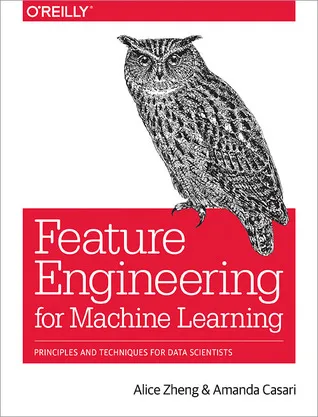
Feature Engineering for Machine Learning: Principles and Techniques for Data Scientists
Alice Zheng,Amanda Casari
2018
View book
![Cover of Pattern Recognition and Machine Learning [SOLUTIONS]](https://s3.refhub.ir/images/thumb/Pattern_Recognition_and_Machine_Learning__SOL_4571.webp)