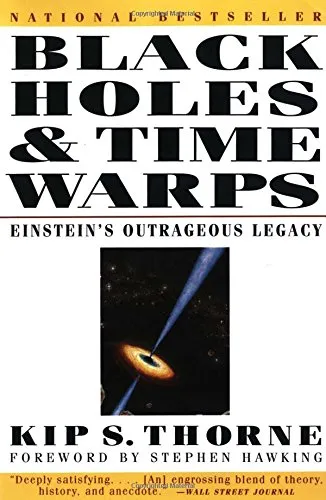
Black Holes and Time Warps: Einstein’s Outrageous Legacy
Kip S. Thorne,Stephen Hawking
1995
View book
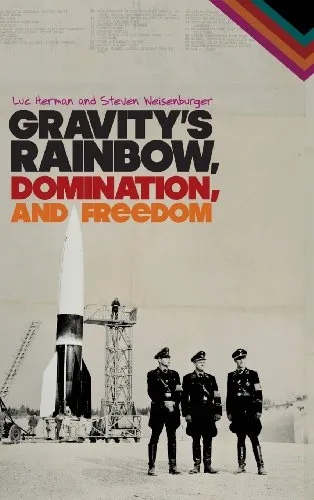
Book guide and evaluation
Herman, Luc;Weisenburger, Steven;Pynchon, Thomas
0 reviews
Published
pages
views
Welcome to the immersive world of 'Gravity's Rainbow, Domination, and Freedom,' a landmark analysis that delves deep into the complex narrative and thematic intricacies of Thomas Pynchon's seminal novel. Published as a collaborative effort between literary analysts Herman Luc
Before you read
Welcome to the immersive world of 'Gravity's Rainbow, Domination, and Freedom,' a landmark analysis that delves deep into the complex narrative and thematic intricacies of Thomas Pynchon's seminal novel. Published as a collaborative effort between literary analysts Herman Luc and Steven Weisenburger, this book provides a comprehensive exploration of the themes of domination and freedom against the backdrop of Pynchon's chaotic and richly constructed narrative.
In 'Gravity's Rainbow, Domination, and Freedom,' Herman Luc and Steven Weisenburger offer an incisive examination of how Pynchon’s sprawling text critiques the mechanisms of control that pervade modern society. The book elucidates how Pynchon uses the historical context of World War II and the subsequent rise of the military-industrial complex as a symbol for exploring freedom's constraints amidst burgeoning technological and administrative systems. Throughout this essayistic work, the authors dissect Pynchon's vivid characters, convoluted plotlines, and intricate symbolism, revealing the complex interplay between chaos and structure.
Luc and Weisenburger navigate through the enigmatic nature of Pynchon’s prose, unearthing insights into how his depiction of post-war anxiety and paranoia resonate with contemporary themes of surveillance and loss of privacy. By focusing on the thematic dualism of domination and liberation, the book unveils Pynchon's nuanced critique of society’s relentless advance towards technological dystopia, while simultaneously exploring avenues of hope and human agency.
"In an era defined by its relentless advance in technology and data surveillance, Pynchon's insights into the domination-freedom dichotomy are not merely historical artifacts, but prescient warnings and meditations on our current predicament."
"The labyrinthine narratives and complex characters serve not only to engage the reader but also as metaphors for the multifaceted nature of human control and freedom."
The analysis provided in 'Gravity's Rainbow, Domination, and Freedom' becomes ever more critical as contemporary society grapples with the implications of digital surveillance and control. Where Pynchon’s original work foresaw a world increasingly governed by data and technological prowess, Luc and Weisenburger's exploration tackles these premonitions head-on, making it indispensable for anyone seeking to understand the conflicted relationship between technological progress and personal freedom.
This book is an essential companion for scholars, students, and readers of Pynchon alike, offering a robust framework for engaging with one of literature’s most provocative texts. By meticulously dissecting and interpreting the complex themes of 'Gravity’s Rainbow,’ the authors illuminate how literature can reflect and challenge the systems of power that shape our everyday experiences.
In conclusion, 'Gravity's Rainbow, Domination, and Freedom' not only enriches our understanding of Pynchon's masterpiece but also serves as a compelling commentary on the ongoing negotiation between control and liberation in a world increasingly defined by technological infrastructure and policy. This exploration is a vital contribution to literary discourse, encouraging us to reflect on the societal structures that define our very existence.
Your question is answered in the context of this title and author. Each answer uses 2 points.
0 reviews, 4.0 average out of 5
Sign in to publish a review.
Ask a focused question and learn from the community.
Related references that continue this learning path.
Kip S. Thorne,Stephen Hawking