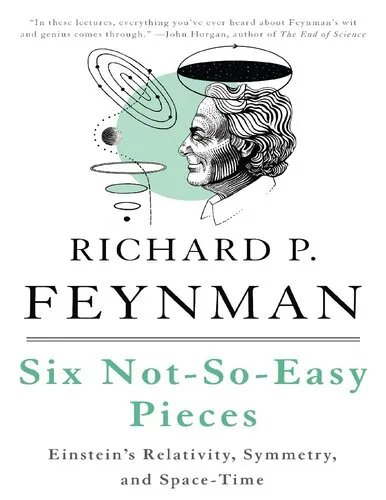
Six Not-So-Easy Pieces: Einstein’s Relativity, Symmetry, and Space-Time
Richard P. Feynman &Robert B. Leighton &Matthew Sands
2011
View book
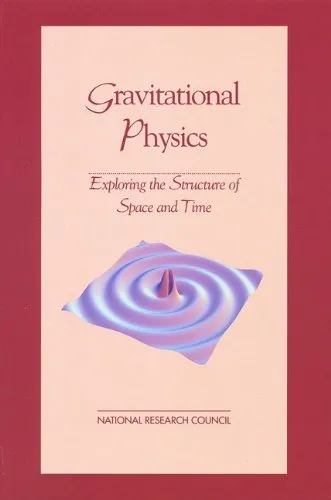
Book guide and evaluation
Committee on Gravitational Physics,National Research Council
0 reviews
Published
pages
views
Introduction Welcome to Gravitational Physics: Exploring the Structure of Space and Time, an essential volume in the Physics in a New Era series that delves into one of the most profound and fundamental areas of scientific inquiry: the nature of spacetime and the forces th
Before you read
Welcome to Gravitational Physics: Exploring the Structure of Space and Time, an essential volume in the Physics in a New Era series that delves into one of the most profound and fundamental areas of scientific inquiry: the nature of spacetime and the forces that shape it. This book, thoughtfully crafted by the Committee on Gravitational Physics, National Research Council, provides a comprehensive overview of the scientific advancements, challenges, and future directions in gravitational physics—a discipline that lies at the heart of understanding the cosmos.
In this work, readers are immersed in the intricate interplay of theoretical constructs and experimental techniques aimed at studying the universe's most extreme environments, from black holes and neutron stars to the vast influence of dark energy. Carefully structured and deeply insightful, this book serves as a guiding light for physicists, researchers, and curious readers striving to explore the fabric of space and time and uncover its mysteries. The material is presented with an accessible yet rigorous approach that bridges the gap between professional physicists and informed enthusiasts.
As humanity gazes further into the universe, the principles of gravitational physics serve as the foundation for interpreting observations from ground-based observatories, space-based telescopes, and cutting-edge experiments. This book recognizes the profound relevance of this research, not only within the scientific community but also in shaping the future of technology and philosophical understanding of our place in the cosmos.
Gravitational Physics: Exploring the Structure of Space and Time provides a detailed and authoritative exploration of the current state of gravitational science. It begins with an introduction to Einstein's general theory of relativity, offering foundational knowledge for readers. The narrative then progresses toward discussing contemporary research topics, including gravitational-wave astronomy and the astounding breakthroughs achieved through experiments like LIGO and Virgo.
The book also delves into the study of astrophysical phenomena, such as black holes, neutron stars, and the cosmic microwave background. It explores the interplay between gravitational physics and other fields, including particle physics, cosmology, and quantum mechanics. Furthermore, the text emphasizes the challenges of observing and measuring faint gravitational signals and how advancements in instrumentation have overcome these hurdles.
Structured to provide an evolving perspective, the authors address future directions of gravitational research, highlighting vital areas like the detection of primordial gravitational waves, understanding the role of dark energy, and the search for a unified theory of quantum gravity.
“Gravitational waves are the ripples in the fabric of spacetime, carrying messages from the darkest and most violent corners of the cosmos.”
“The study of gravitational phenomena is not only a quest for understanding the universe but also an endeavor that pushes the limits of human creativity and technological capability.”
“In the interplay between the immense forces of gravity and the fabric of space, lies the secret to humanity’s greatest questions about our place in the cosmos.”
The critical importance of Gravitational Physics: Exploring the Structure of Space and Time lies in its ability to illuminate one of the most profound scientific frontiers of our era. Gravitational physics stands at the confluence of multiple disciplines, offering new insights and fostering groundbreaking innovations.
By reading this book, students, researchers, and enthusiasts will not only gain a deep understanding of the universe's mechanics but also encounter the philosophical implications of gravitational discoveries. The pursuit of answers to gravitational mysteries impacts fundamental science, promotes technological advancement, and fuels the boundless human curiosity to explore the unknown.
With the global scientific community united under ambitious programs like the Laser Interferometer Space Antenna (LISA) and next-generation gravitational-wave observatories, this field offers promises of transformative discoveries. This book is an invaluable resource for connecting readers to this dynamic and ever-growing realm of physics.
Your question is answered in the context of this title and author. Each answer uses 2 points.
0 reviews, 4.5 average out of 5
Sign in to publish a review.
Ask a focused question and learn from the community.
Related references that continue this learning path.
Richard P. Feynman &Robert B. Leighton &Matthew Sands
Gene Mosca,Todd Ruskell