

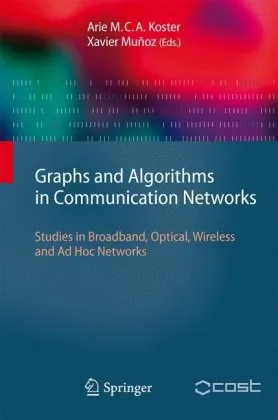
Graphs and Algorithms in Communication Networks: Studies in Broadband, Optical, Wireless and Ad Hoc Networks
Arie M.C.A. Koster,Xavier Muñoz (eds.)
English
Beginner
Software Engineering
4.5 / 5
0 reviews
2010
Published
442
pages
291
views
Introduction Welcome to Graphs and Algorithms in Communication Networks: Studies in Broadband, Optical, Wireless and Ad Hoc Networks, a book that bridges the theory of graph algorithms with their practical application to modern communication networks. The accelerating ev
Before you read
What will you get from this book?
Introduction
Welcome to Graphs and Algorithms in Communication Networks: Studies in Broadband, Optical, Wireless and Ad Hoc Networks, a book that bridges the theory of graph algorithms with their practical application to modern communication networks. The accelerating evolution of network technologies, including broadband, optical, wireless, and ad hoc systems, necessitates cutting-edge methodologies to design, optimize, and maintain these systems. This book provides a comprehensive exploration of how graph theory and algorithmic principles underpin the critical processes driving advancements in communication networks.
Graphs and algorithms are the building blocks of modern communication networks, serving as tools to solve complex problems ranging from routing and resource allocation to traffic management and network resilience. By blending theoretical research with practical real-world applications, this book aims to equip readers with foundational knowledge and innovative approaches to address challenges in both conventional and next-generation networks.
Detailed Summary
The book delves deeply into the intersection of graph theory, algorithms, and communication network design. Divided into various chapters, it provides readers with a structured approach to understanding pivotal areas such as network optimization, topology design, survivability, and energy efficiency.
The sections focus on key technologies such as broadband and optical networks, which play a vital role in providing high-speed data transmission. The challenges of wireless communication networks, where the dynamic nature of connectivity necessitates algorithms for scalability and robustness, are thoroughly examined. Moreover, ad hoc networks, consisting of self-configurable nodes with no centralized control, are extensively covered due to their rising importance in IoT and disaster recovery scenarios.
From foundational concepts to advanced methodologies, the book emphasizes the application of mathematical models and optimization techniques. Readers will explore topics related to traffic flow management, graph coloring for frequency assignments, multicast trees in content distribution, and fault-tolerant network designs. As the integration of software and network systems becomes prevalent, this book also reflects on the critical need for algorithmic solutions to network virtualization and the efficient allocation of computational resources.
Key Takeaways
- Understand the foundational principles of graph theory and their role in network design and optimization.
- Learn how to apply algorithms to solve practical problems in broadband, optical, wireless, and ad hoc networks.
- Gain insights into resource allocation, network survivability, routing efficiency, and energy-aware protocols.
- Explore case studies and practical examples that connect theoretical concepts to real-world applications.
- Develop the ability to tackle modern challenges like scalability, resilience, mobility, and distributed systems using algorithmic solutions.
Famous Quotes from the Book
"The design of communication networks is the art of balancing robustness, efficiency, and scalability within the constraints of real-world systems."
"Graph theory is not just a tool but a lens through which the complex interplay of communication networks can be understood."
"Every algorithm we develop for networks is a small step toward bridging the gap between theoretical possibility and practical necessity."
"In the era of ubiquitous connectivity, algorithms are the silent enablers of seamless communication."
Why This Book Matters
As communication networks grow increasingly complex and interconnected, the need for innovative, efficient, and robust solutions becomes paramount. Graphs and Algorithms in Communication Networks serves as a critical resource for researchers, practitioners, and students looking to deepen their understanding of the algorithms that drive these networks.
This book is particularly significant for anyone working in telecommunications, computer science, or related fields. It not only provides a systematic presentation of concepts but also sheds light on the latest advancements shaping the future of the industry. By addressing both theoretical foundations and practical challenges, it fosters a holistic understanding of the topic.
Moreover, the interdisciplinary approach of the book contributes to broader scientific advancements by offering tools and techniques applicable across domains like transportation systems, distributed computing, and even biological networks. If you're looking for an essential guide to master the art and science of communication networks, this book is an invaluable addition to your library.
Ask this book
Your question is answered in the context of this title and author. Each answer uses 2 points.
Sign in to ask the book assistant.
Reader reviews
0 reviews, 4.5 average out of 5
No reviews yet
If you have read this book, help the next reader with your experience.
Write a review
Sign in to publish a review.
Reader questions and answers
Ask a focused question and learn from the community.
Sign in to ask or answer a question.
No questions yet
Be the first to ask a clear, useful question.
What to read next
Related references that continue this learning path.



Modern Computer Vision with PyTorch: A Practical Roadmap From Deep Learning Fundamentals to Advanced Applications and Generative AI, 2nd Edition
V Kishore Ayyadevara,Yeshwanth Reddy
2023
View book