Book guide and evaluation
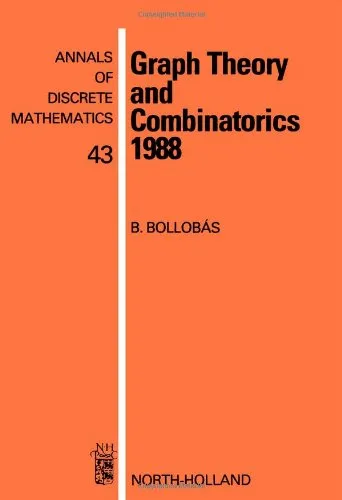
Graph Theory and combinatorics 1988, Proceedings of the Cambridge Combinatorial Conference in Honour of Paul Erdös
B. Bollobás (Eds.)
English
Beginner
Graph Theory
4.0 / 5
0 reviews
1989
Published
419
pages
615
views
Introduction Welcome to the proceedings of the esteemed Cambridge Combinatorial Conference of 1988, revered for its tribute to the legendary mathematician, Paul Erdős. This compilation encapsulates the pioneering work presented by leading experts in the fields of graph theory
Before you read
What will you get from this book?
Introduction
Welcome to the proceedings of the esteemed Cambridge Combinatorial Conference of 1988, revered for its tribute to the legendary mathematician, Paul Erdős. This compilation encapsulates the pioneering work presented by leading experts in the fields of graph theory and combinatorics. With a particular emphasis on honoring Paul Erdős's profound contributions to mathematics, this book gathers insights from both established and emerging scholars, effectively addressing the past, present, and future of combinatorial mathematics.
Detailed Summary of the Book
The book, "Graph Theory and Combinatorics 1988," presents a curated collection of research papers that were discussed during the Cambridge Combinatorial Conference. Each paper is a testament to the cutting-edge developments in the domains of graph theory and combinatorics at that time. The proceedings capture various themes including graph colorings, extremal graph theory, enumeration problems, and Ramsey theory, each area reflecting Erdős’s significant influence.
Opening with a reflection on Erdős's work, the book moves to address complex subjects through contributions from prolific mathematicians such as Béla Bollobás, Frank Harary, and John H. Conway. The discussions extend across theoretical foundations and innovative applications, offering both depth and breadth in understanding the advancement of combinatorial research. This volume not only serves as a scholarly repository but also as a source of inspiration for future research, thanks to its forward-looking perspective.
Key Takeaways
The book offers several key insights that are crucial for any scholar or enthusiast delving into graph theory and combinatorics:
- Interdisciplinary Approach: The proceedings underline the interconnected nature of different mathematical disciplines, emphasizing the importance of integrating insights across them.
- Mentorship and Collaboration: Reflecting on Erdős’s nurturing of young talents, the book exemplifies the significance of collaborative efforts in advancing mathematical thought.
- Innovative Problem-Solving: Through varied contributions, readers gain exposure to innovative methods and problem-solving techniques vital for tackling complex combinatorial issues.
- Legacy of Paul Erdős: Celebrating Erdős’s legacy, the book serves as both a testament to his work and a motivational force for new academic endeavors in graph theory and combinatorics.
Famous Quotes from the Book
“A good mathematical problem is one you don’t know if you can solve.”
"Combinatorics is the art of counting without counting."
Why This Book Matters
"Graph Theory and Combinatorics 1988" holds a significant place in mathematical literature for several reasons:
Tribute to a Legend: Paul Erdős’s influence is inescapable in the realms of graph theory and combinatorics. By dedicating this conference and its proceedings to his work, the book pays homage to his enduring legacy.
Inspiration for Future Research: The compendium acts as a catalyst for upcoming research, enabling new generations of mathematicians to build upon the foundations laid by their predecessors.
Comprehensive Compilation: By documenting complex discussions and theories from leading experts, this book serves as a comprehensive resource for understanding the advances in these mathematical fields during the late 20th century.
Promoting Mathematical Inquiry: Through its diverse topics and rigorous analyses, the book encourages readers to pursue mathematical inquiry, fostering a culture of curiosity and discovery.
Ask this book
Your question is answered in the context of this title and author. Each answer uses 2 points.
Sign in to ask the book assistant.
Reader reviews
0 reviews, 4.0 average out of 5
No reviews yet
If you have read this book, help the next reader with your experience.
Write a review
Sign in to publish a review.
Reader questions and answers
Ask a focused question and learn from the community.
Sign in to ask or answer a question.
No questions yet
Be the first to ask a clear, useful question.
What to read next
Related references that continue this learning path.