
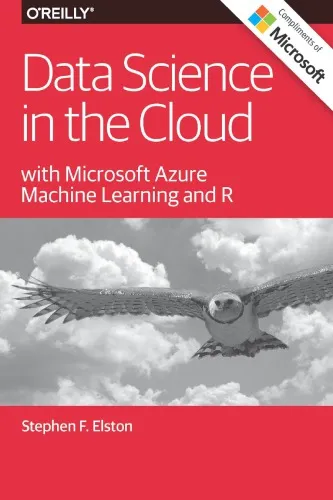
Data Science in the Cloud: with Microsoft Azure Machine Learning and R
Stephen F. Elston
2015
View book
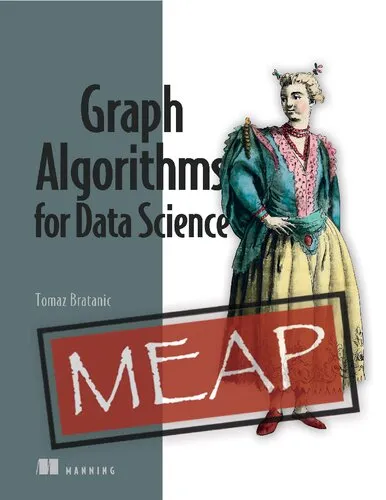
Book guide and evaluation
Tomaž Bratanič
0 reviews
Published
pages
views
Introduction to 'Graph Algorithms for Data Science Second Edition Version 6' The world of data science is constantly evolving, and at its frontier is the fascinating universe of graph algorithms. "Graph Algorithms for Data Science Second Edition Version 6" is an essential
Before you read
The world of data science is constantly evolving, and at its frontier is the fascinating universe of graph algorithms. "Graph Algorithms for Data Science Second Edition Version 6" is an essential guide for data scientists, engineers, students, and professionals who seek to bridge the intricate world of graph theory with practical data science applications. This comprehensive book not only explores fundamental graph algorithms but also delves deep into their implementation and real-world applications, enhancing your ability to make data-driven decisions.
The book begins by setting the stage with an introduction to graph theory's basic concepts and how they relate to the burgeoning field of data science. The initial chapters serve as a primer on the mathematical foundations of graphs, including vertices, edges, and the various types of graphs—undirected, directed, weighted, and unweighted.
As you progress, the book delves into the implementation of essential graph algorithms such as Dijkstra’s algorithm for shortest paths, PageRank for ranking nodes, and community detection methods. The emphasis is on understanding how these algorithms can be effectively employed to solve complex data science challenges.
The latter parts of the book explore cutting-edge advancements and applications. Insights on graph databases and their role in handling vast networks of data offer a modern perspective. Further, practical case studies showcase the application of graph algorithms in industries ranging from social media to bioinformatics.
Throughout the book, you will encounter exercises and examples that not only reinforce learning but also inspire innovation. Each chapter builds on the previous ones, fostering a deeper understanding of how graph algorithms can unlock the potential hidden within massive datasets.
“In the realm of data, graphs are the maps that guide us through complexity.”
“Every connection tells a story; every algorithm unveils a new chapter.”
“Graph algorithms turn chaos into clarity and data into decisions.”
In an era defined by data, understanding the hidden relationships and patterns within complex datasets is critical. This book serves as a catalyst for innovation, providing you with the tools and knowledge to navigate and decipher the labyrinth of big data through the lens of graph algorithms.
Graph algorithms are integral to advancements in machine learning, artificial intelligence, and data analysis. As data becomes more interconnected, the competencies gained from this book will allow you to analyze and harness vast networks, whether in social networking platforms, biological ecosystems, or economic systems.
The impact of graph algorithms extends beyond theoretical constructs; they are pivotal in driving strategic insights and decisions in business, science, and technology. By mastering these techniques, you can contribute significantly to your field and push the boundaries of what is possible with data.
Your question is answered in the context of this title and author. Each answer uses 2 points.
0 reviews, 4.7 average out of 5
Sign in to publish a review.
Ask a focused question and learn from the community.
Related references that continue this learning path.
Stephen F. Elston
Foster Provost,Tom Fawcett
Mark Needham,Amy E. Hodler