

International Political Risk Management: The Brave New World (v. 2)
Theodore H. Moran
2003
View book
Book guide and evaluation
Joseph Stiglitz
0 reviews
Published
pages
views
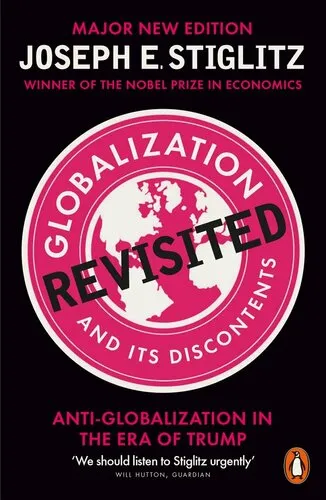
Introduction to 'Globalization and Its Discontents Revisited: Anti-Globalization in the Era of Trump' Written by Nobel Prize-winning economist Joseph Stiglitz, "Globalization and Its Discontents Revisited: Anti-Globalization in the Era of Trump" critically analyzes the effects
Before you read
Written by Nobel Prize-winning economist Joseph Stiglitz, "Globalization and Its Discontents Revisited: Anti-Globalization in the Era of Trump" critically analyzes the effects of globalization, which have become more pronounced and contentious in recent times, especially in the context of political shifts such as the election of Donald Trump.
In "Globalization and Its Discontents Revisited," Stiglitz revisits themes from his groundbreaking 2002 book, adding fresh insights into the economic and political forces shaping globalization today. Stiglitz explores the growing disillusionment with global economic policies, particularly those championed by institutions like the International Monetary Fund (IMF) and the World Bank. He delves into the disparity between promises and realities of globalization, emphasizing how policies often favor developed nations at the expense of poorer countries. This revised edition emphasizes the new wave of anti-globalization sentiment, highlighting how policies enacted in the Trump era have amplified discontent. Stiglitz critically examines the effects of tariffs, immigration policies, and nationalist economic agendas, arguing that rather than addressing the root issues of inequality and impoverishment, they exacerbate these problems.
Throughout the book, Stiglitz advocates for a form of globalization that is equitable and beneficial for all. He calls for reforms that prioritize sustainable development, greater transparency, and enhanced social protections. By analyzing case studies and providing a wealth of empirical evidence, Stiglitz presents a compelling case for revisiting and revising global economic policies to create an inclusive global economy.
"Globalization is supposed to be a means to an end—a way to promote economic prosperity and increase well-being. But in too many countries, it has become an end in itself."
"When globalization is made only to serve the interests of the few, it is bound to be resisted."
This book is crucial for understanding the evolving narrative of globalization, particularly in a rapidly changing political landscape. By providing a critical analysis of globalization, Stiglitz offers valuable insights for policy-makers, economists, and global leaders. The book underscores the importance of developing a more equitable global system, one that addresses the disparities and inequities that have fueled the anti-globalization movement. In "Globalization and Its Discontents Revisited," Stiglitz presents a clear roadmap for fostering responsible economic globalization in a way that benefits all segments of society, thus making an essential read for anyone interested in the future of global economic policy.
Your question is answered in the context of this title and author. Each answer uses 2 points.
0 reviews, 4.5 average out of 5
Sign in to publish a review.
Ask a focused question and learn from the community.
Related references that continue this learning path.
Theodore H. Moran

F. Gary Cunningham,Kenneth J. Leveno,Jodi S. Dashe,Barbara L. Hoffman,Catherine Y. Spong,Brian M. Casey


John E. Bennett &Raphael Dolin &Martin J. Blaser