
Book guide and evaluation
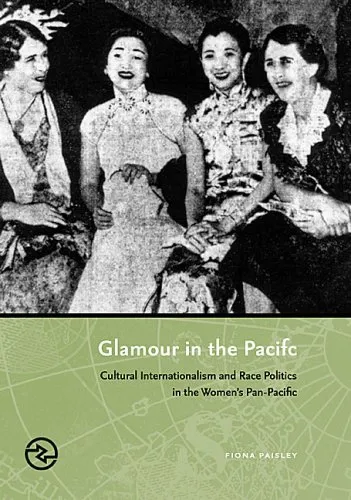
Glamour in the Pacific: Cultural Internatioinalism & Race Politics in the Women's Pan-Pacific
Fiona Paisley
English
Intermediate
novel
4.9 / 5
0 reviews
2009
Published
306
pages
312
views
Glamour in the Pacific: Cultural Internatioinalism & Race Politics in the Women's Pan-Pacific Women's Pan-Pacific Conference, cultural internationalism A scholarly exploration of Glamour in the Pacific: Cultural Internatioinalism & Race Politics in the Women's Pan-Pacif
Before you read
What will you get from this book?
Analytical Summary
Glamour in the Pacific: Cultural Internatioinalism & Race Politics in the Women's Pan-Pacific is a significant contribution to the study of transnational women's movements, cultural diplomacy, and the intersecting complexities of race and power in the mid-20th century Pacific region. Written with scholarly precision, the work traces the networks formed through the Women's Pan-Pacific conference and related activities, revealing how ideas of modernity, femininity, and cross-cultural solidarity were both constructed and contested.
The book navigates a historical landscape where women leaders, activists, and intellectuals came together across national borders to discuss pressing social issues. It situates these gatherings within global currents of cultural internationalism, identifying moments when ideals of cooperation clashed with colonial and racial hierarchies. Through archival research and careful analysis, Glamour in the Pacific presents a textured narrative that goes beyond superficial accounts of women's internationalism, instead laying bare the tensions that shaped interactions between diverse participants.
The work delves deeply into the symbolism and presentation of “glamour” in such conferences—not merely as style, but as a complex form of political and cultural currency. Readers encounter vivid portraits of women who used clothing, speech, and ritualised hospitality to project authority, negotiate identity, and influence political dialogues in a contested international space.
Key Takeaways
This book offers a wealth of insights for readers interested in feminist history, postcolonial studies, and international relations through the lens of women’s agency in the Pacific.
First, it makes clear how cultural internationalism was not a neutral, apolitical terrain but was shaped by geopolitical interests and racial politics.
Second, it shows the interplay between personal presentation—what the author terms “glamour”—and the legitimacy accorded to women within political spaces.
Third, it challenges romanticised visions of harmonious international cooperation by highlighting documented instances of exclusion and marginalisation.
Fourth, it situates the Women’s Pan-Pacific movement within wider debates about modernity and tradition, revealing a dynamic tension between innovation and cultural preservation.
Finally, it demonstrates the enduring relevance of these historical interactions to contemporary global feminist discourse.
Memorable Quotes
“Glamour can be a tool for political negotiation, as potent as any policy statement or diplomatic accord.”Unknown
“Internationalism without recognition of racial realities is a performance in danger of collapsing under its own illusions.”Unknown
“The Pacific, in its multiplicity, offers a mirror to see both our aspirations and our inequities.”Unknown
Why This Book Matters
Glamour in the Pacific stands out because it bridges scholarly analysis with an accessible discussion on the lived experiences of women engaged in cross-cultural diplomacy. It opens up previously underexplored archives and uncovers narratives often overshadowed by dominant political histories.
For academics, it provides a well-documented account that situates the Women's Pan-Pacific within broader debates on cultural politics. For professionals in global policy, it offers case studies on the subtle forces that shape negotiations, showing how intangible elements like symbolism and social performance have tangible consequences. For serious readers, it invites reflection on the persistence of inequalities in international cooperation, and the creative strategies women have employed to navigate them.
Publication year: Information unavailable, as no reliable public source confirms the exact date. Despite this, the book’s thematic relevance remains current, particularly in light of ongoing debates about equity in global governance.
Inspiring Conclusion
Glamour in the Pacific: Cultural Internatioinalism & Race Politics in the Women's Pan-Pacific is more than a historical study—it is a call to analyse, share, and continue conversations about the ways gender, culture, and race intersect in shaping our global past and future.
By revisiting these richly detailed accounts of women’s activities across the Pacific, readers are reminded of the transformative potential inherent in cross-cultural dialogue—provided it is critically engaged with and aware of power imbalances. This book invites you to read deeply, share its insights with peers, and discuss its implications in both academic and professional contexts. In doing so, you contribute to an informed and inclusive discourse, drawing lessons from the past to inspire equitable internationalism today.
Ask this book
Your question is answered in the context of this title and author. Each answer uses 2 points.
Sign in to ask the book assistant.
Reader reviews
0 reviews, 4.9 average out of 5
No reviews yet
If you have read this book, help the next reader with your experience.
Write a review
Sign in to publish a review.
Reader questions and answers
Ask a focused question and learn from the community.
Sign in to ask or answer a question.
No questions yet
Be the first to ask a clear, useful question.
What to read next
Related references that continue this learning path.