The Melting Stories
2025/06/29
5 / 5
This book got me started with Streamlit and I’ve never built data applications faster
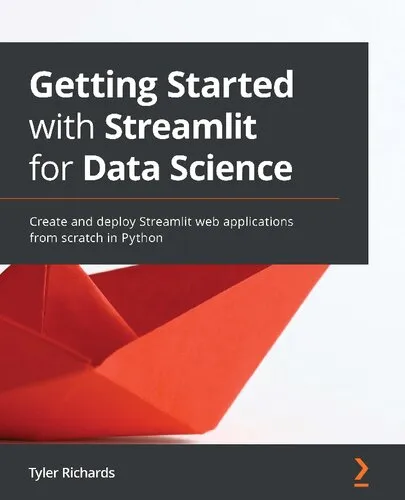
Book guide and evaluation
Tyler Richards
1 reviews
Published
pages
views
Introduction Welcome to a journey through the cutting-edge landscape of data science with Streamlit. Whether you're looking to streamline the development of web applications or enhance your data-driven decision-making process, you've come to the right place. "Getting Started w
Before you read
Welcome to a journey through the cutting-edge landscape of data science with Streamlit. Whether you're looking to streamline the development of web applications or enhance your data-driven decision-making process, you've come to the right place. "Getting Started with Streamlit for Data Science: Create and deploy Streamlit web applications from scratch in Python" is crafted to empower both beginners and seasoned developers to harness the power of Streamlit.
Streamlit, with its simplicity and robustness, has rapidly emerged as a favorite tool within the data science community. It fills the gap between data, analysis, and decision-makers by providing an intuitive interface to create live, interactive web apps. As organizations and individuals alike move towards a more data-centric approach, the relevance of tools like Streamlit has become indispensable. This book serves as a comprehensive guide to unlocking the full potential of Streamlit, from foundational concepts to advanced functionalities.
This book covers everything you need to know about Streamlit, meticulously structured to facilitate easy understanding and application.
The initial chapters familiarize you with the core principles of Streamlit. You'll learn how to install and set up your development environment, and get acquainted with Streamlit’s basic features, allowing you to create a simple web application with minimal effort. Progressing through the book, you'll explore the intricacies of laying out applications, managing state, and accepting user inputs. A rich variety of widgets and layout options are explained to ensure your apps are both functional and aesthetically pleasing.
The latter part of the book delves into more sophisticated aspects like integrating Streamlit with other libraries and APIs to further leverage your data science applications. You'll gain insights into deploying your applications so they can be accessed globally. Each chapter is paired with examples and code snippets, making your learning process practical and interactive.
Beyond technical prowess, the book emphasizes best practices in creating intuitive user interfaces and enriching the user experience. You'll also learn to debug applications efficiently, a necessary skill for any developer.
“Streamlit is less about crafting pages and more about sculpting data-driven experiences.”
“Empowerment in data science comes when barriers to visualization and deployment dissolve.”
In a world where data is the new currency, mastering a tool that simplifies the display and interaction of data is crucial.
"Getting Started with Streamlit for Data Science" isn't just about building applications; it’s about transforming how data-driven insights are communicated. As the demand for user-friendly and visually appealing data interfaces grows, Streamlit serves as a bridge to close the comprehension gap between technical experts and stakeholders. By democratizing data application creation, this book equips you to rapidly prototype and iterate your ideas in the real world.
Whether you are a data analyst, scientist, or a business executive looking to bring data to life, this book stands as an essential resource. Through its comprehensive coverage and practical approach, it promises to elevate your understanding and proficiency with Streamlit, positioning you at the forefront of the data science frontier.
Your question is answered in the context of this title and author. Each answer uses 2 points.
1 reviews, 5.0 average out of 5
2025/06/29
5 / 5
This book got me started with Streamlit and I’ve never built data applications faster
Sign in to publish a review.
Ask a focused question and learn from the community.
Related references that continue this learning path.
Chris Fregly,Antje Barth
Michael T. Goodrich,Roberto Tamassia,Michael H. Goldwasser
Kent Lee,Steve Hubbard