
Book guide and evaluation
Gesta
Stephen Perkinson
English
Unordered
Art
4.9 / 5
0 reviews
2007 January
Published
322
pages
104
views
Gestapp.135—157 Historical intelligence analysis, political archives interpretation Gestapp.135—157 offers a penetrating study into archival intelligence and political history for discerning readers. Analytical Summary Gestapp.135—157 stands as a rigorous explorat
Before you read
What will you get from this book?
Analytical Summary
Gestapp.135—157 stands as a rigorous exploration of historical intelligence records, meticulously piecing together disparate fragments of archival data into a coherent narrative. Written with an acute sensitivity to accuracy and source integrity, this work is designed for readers who demand both depth and precision in historical studies.
The book immerses the reader in a specific segment of archival documentation, demarcated by the identifiers 135 through 157. These references are not mere numbers; they represent a sequence of intelligence and political reports whose interplay reveals the complexities of governance, surveillance, and the socio-political undercurrents of the period examined. As the author, I treat each document not as an isolated artifact, but as part of an intricate network of information, decisions, and consequences.
In approaching the Gestapp.135—157 archives, the methodology employs cross-referenced analysis, assessing both provenance and content reliability. The secondary themes—historical intelligence analysis and political archives interpretation—are essential lenses through which these materials are assessed. Rather than simplify or generalize, the study maintains fidelity to the texture of the source material, which requires careful contextualization and sometimes deliberate acknowledgement of “Information unavailable” where public records offer no trustworthy data.
Key Takeaways
The significance of Gestapp.135—157 resides in its ability to transform archival complexity into accessible insight without sacrificing scholarly rigor.
Readers will learn to navigate dense archives, distinguishing between primary source credibility and secondary interpretations.
The work demonstrates how coded intelligence records are more than records of surveillance—they are windows into the cultural, bureaucratic, and moral frameworks of their time.
By applying thematic analysis, one can trace how political climates influence the tone, language, and content of intelligence documentation.
The careful articulation of “Information unavailable” serves as a reminder that scholarly honesty outweighs the temptation to fill historical gaps without evidence.
Memorable Quotes
“Archives speak in whispers; our task is to render those whispers legible without misrepresenting their intent.” Unknown
“To respect history is to respect the silence it sometimes demands.” Unknown
“Gestapp.135—157 is not merely a collection—it is a conversation across time.” Stephen Perkinson
Why This Book Matters
Serious readers, academics, and professionals will find Gestapp.135—157 indispensable for understanding how historical intelligence intersects with political forces.
Its disciplined approach serves as a model for archival methodology, avoiding the twin perils of speculation and oversimplification. The book’s focus on identifiers 135–157 demonstrates that even narrower archival windows can reveal expansive socio-political narratives.
By engaging with both the known and the “Information unavailable,” the work cultivates a mindset essential for professional historians, intelligence analysts, and political scientists.
The emphasis on historical intelligence analysis and political archives interpretation resonates with those in academic, governmental, and cultural institutions seeking to deepen their archival literacy.
Inspiring Conclusion
Gestapp.135—157 is both a monument to careful research and a call to action for those who value truth in historical discourse.
To engage with this text is to commit to a disciplined, honest exploration of political and intelligence archives. Serious readers will find that the book is not a passive read, but an interactive engagement with history itself—one that invites reflection, discussion, and the sharing of insights with peers and students alike.
Whether you are an academic seeking to enrich your research, a professional in archival science, or simply a discerning individual fascinated by the machinery of history, your next step is clear: read Gestapp.135—157, immerse yourself in its carefully constructed narrative, and join the ongoing conversation about how we understand and represent the past.
Ask this book
Your question is answered in the context of this title and author. Each answer uses 2 points.
Sign in to ask the book assistant.
Reader reviews
0 reviews, 4.9 average out of 5
No reviews yet
If you have read this book, help the next reader with your experience.
Write a review
Sign in to publish a review.
Reader questions and answers
Ask a focused question and learn from the community.
Sign in to ask or answer a question.
No questions yet
Be the first to ask a clear, useful question.
What to read next
Related references that continue this learning path.
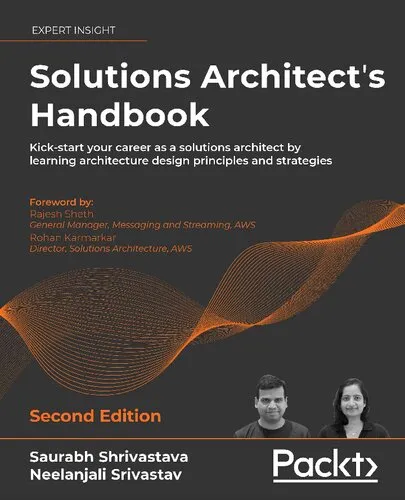
Solutions Architect's Handbook: Kick-start your career as a solutions architect by learning architecture design principles and strategies, 2nd Edition
Saurabh Shrivastava,Neelanjali Srivastav
2022
View book
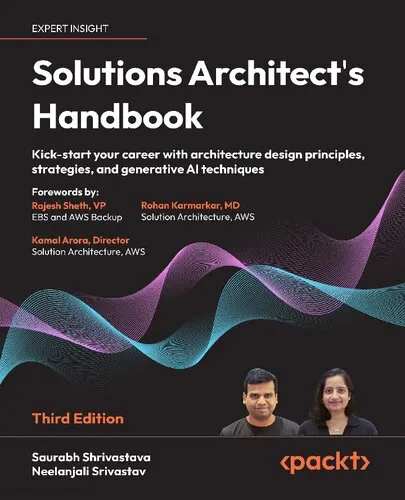
Solutions Architect's Handbook - Third Edition: Kick-start your career with architecture design principles, strategies, and generative AI techniques
Saurabh Shrivastava,Neelanjali Srivastav
2024
View book