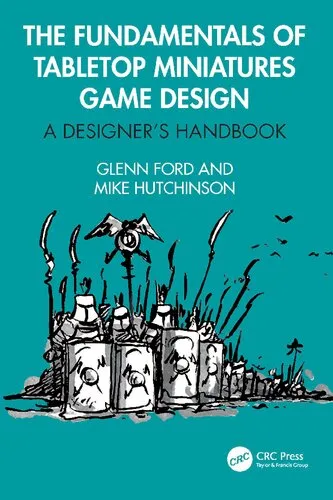
The Fundamentals of Tabletop Miniatures Game Design: A Designer’s Handbook
Glenn Ford,Mike Hutchinson
2024
View book
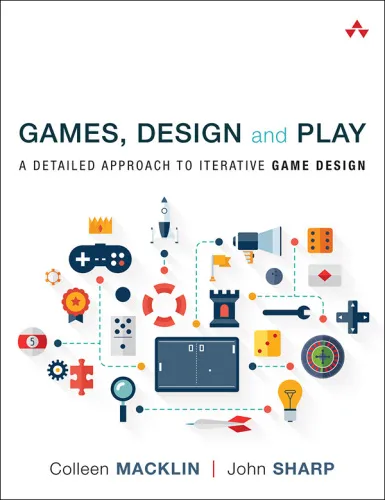
Book guide and evaluation
Macklin, Colleen &Sharp, John
0 reviews
Published
pages
views
Introduction to "Games, Design and Play: A Detailed Approach to Iterative Game Design" Creating engaging, meaningful, and impactful games isn't just about great ideas. It's about shaping those ideas through an iterative, systematic approach that ensures your game resonates wit
Before you read
Creating engaging, meaningful, and impactful games isn't just about great ideas. It's about shaping those ideas through an iterative, systematic approach that ensures your game resonates with its players. "Games, Design and Play: A Detailed Approach to Iterative Game Design" provides a step-by-step roadmap to designing better games by embracing the iterative process. Authored by Colleen Macklin and John Sharp, this book is an essential guide for aspiring game designers, educators, and professionals alike, offering both foundational concepts and practical methodologies to design games that matter.
The book is structured around the core concept of iterative game design—a process that encourages designers to prototype, playtest, refine, and repeat until a game achieves its full potential. Macklin and Sharp break down the art and science of game design into manageable chunks, emphasizing that game development is not a straight path but a loop of creation, evaluation, and improvement.
The book starts by exploring the basics of game design—what games are, why they matter, and how designers can approach them creatively and methodically. It delves into the principles of meaningful play, player interaction, and the role of feedback loops. Readers are introduced to tools and techniques for brainstorming game ideas, developing prototypes, and utilizing playtest data to evolve their games.
One of the standout aspects of this book is its detailed case studies. These real-world examples give readers a behind-the-scenes look at how iterative design works in practical scenarios. Whether it’s designing board games, digital games, or experimental interactive experiences, the book provides invaluable insights for every design context.
Furthermore, the book includes exercises, checklists, and frameworks that challenge readers to apply the iterative process themselves. By the end of the book, you'll gain a comprehensive understanding of how to balance creativity and structure, making your games not only fun to play but also deeply engaging and meaningful.
"Game design is not about following a recipe. It’s about finding the right recipe through iteration."
"The magic of games lies in their ability to create moments of meaningful play, where players see and feel the impact of their choices."
"Iteration is not failure—it’s the process of discovering what works and what doesn’t. It is how games become great."
"Games, Design and Play" stands out as more than just a guidebook for making games—it’s a manifesto for the power of iteration in creative work. In an industry where trial and error often lead to innovation, Macklin and Sharp demystify the process of tackling ambiguity and creating engaging experiences. For educators, the book offers an excellent framework to teach game design in an interactive, hands-on manner. For students and designers, it provides approachable, practical advice that inspires confidence in their creative abilities.
Moreover, the book emphasizes inclusivity and the importance of designing for diverse audiences. It challenges readers to push the boundaries of their creativity while grounding their ideas in thoughtful, player-focused design. In a world where games are increasingly shaping culture, this book equips designers with the tools to make something meaningful—whether for fun, education, or social impact.
If you're a game designer, aspiring or experienced, "Games, Design and Play" will not only revolutionize the way you approach your craft but also inspire you to create games that truly matter.
Your question is answered in the context of this title and author. Each answer uses 2 points.
0 reviews, 4.4 average out of 5
Sign in to publish a review.
Ask a focused question and learn from the community.
Related references that continue this learning path.
Glenn Ford,Mike Hutchinson