Book guide and evaluation
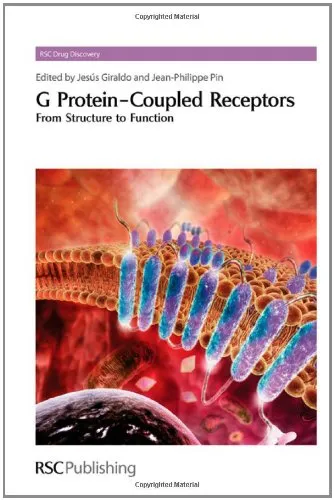
G Protein-Coupled Receptors: From Structure to Function
Jesús Giraldo,Jean-Philippe Pin
English
Intermediate
Cyber Security
4.4 / 5
0 reviews
2011
Published
549
pages
430
views
G protein-coupled receptors (GPCRs) are the largest family of cell-surface receptors, with more than 800 members identified thus far in the human genome. They regulate the function of most cells in the body, and represent approximately 3% of the genes in the human genome. These r
Before you read
What will you get from this book?
G protein-coupled receptors (GPCRs) are the largest family of cell-surface receptors, with more than 800 members identified thus far in the human genome. They regulate the function of most cells in the body, and represent approximately 3% of the genes in the human genome. These receptors respond to a wide variety of structurally diverse ligands, ranging from small molecules, such as biogenic amines, nucleotides and ions, to lipids, peptides, proteins, and even light. Ligands (agonists and antagonists) acting on GPCRs are important in the treatment of numerous diseases, including cardiovascular and mental disorders, retinal degeneration, cancer, and AIDS. It is estimated that these receptors represent about one third of the actual identified targets of clinically used drugs. The determination of rhodopsin crystal structure and, more recently, of opsin, 1 and 2 adrenergic and A2A adenosine receptors provides both academia and industry with extremely valuable data for a better understanding of the molecular determinants of receptor function and a more reliable rationale for drug design. GPCR structure and function constitutes a hot topic. The book, which lies between the fields of chemical biology, molecular pharmacology and medicinal chemistry, is divided into three parts. The first part considers what receptor structures tell us about the mechanism of receptor activation. Part II focuses on receptor function. It discusses what the data from biophysical and mutational studies, and the analysis of the interactions of the receptor with ligands and regulator proteins, tell us about the process of signal transduction. The final part, on modelling and simulation, details new insights on the link between structure and mechanism and their implications in drug design.
Ask this book
Your question is answered in the context of this title and author. Each answer uses 2 points.
Sign in to ask the book assistant.
Reader reviews
0 reviews, 4.4 average out of 5
No reviews yet
If you have read this book, help the next reader with your experience.
Write a review
Sign in to publish a review.
Reader questions and answers
Ask a focused question and learn from the community.
Sign in to ask or answer a question.
No questions yet
Be the first to ask a clear, useful question.
What to read next
Related references that continue this learning path.
The Android Malware Handbook: Detection and Analysis by Human and Machine
Qian Han;Salvador Mandujano;Sebastian Porst;V.S. Subrahmanian;Sai Deep Tetali;Yanhai Xiong
2024
View book