
Translational Neuroscience: Fundamental Approaches for Neurological Disorders
Mark H. Tuszynski (eds.)
2016
View book
Book guide and evaluation
Duane E. Haines
0 reviews
Published
pages
views
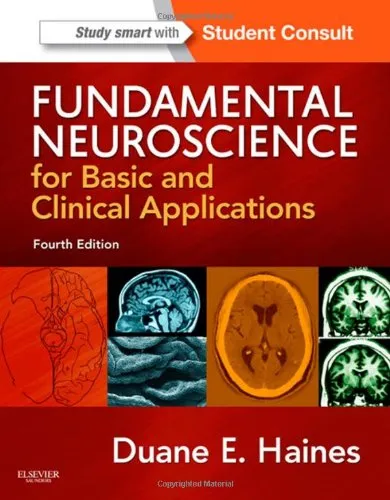
Introduction to 'Fundamental Neuroscience for Basic and Clinical Applications' Welcome to an exploration of one of the most fascinating and complex fields of science: neuroscience. 'Fundamental Neuroscience for Basic and Clinical Applications' offers an in-depth understa
Before you read
Welcome to an exploration of one of the most fascinating and complex fields of science: neuroscience. 'Fundamental Neuroscience for Basic and Clinical Applications' offers an in-depth understanding and a comprehensive look into the principles and applications that form the bedrock of this dynamic discipline.
This book is meticulously crafted to serve as both a fundamental reference book and an exceedingly practical guide for students, researchers, and clinicians involved in the field of neuroscience. It seamlessly blends basic and clinical neuroscience, offering insights into how our understanding of the nervous system applies to clinical practice.
The book is organized into sections that deftly integrate neuroscientific theories with real-world clinical applications. It starts by laying a strong foundation of basic neuroscience—covering critical areas such as neuronal structure, signaling, synaptic transmission, and neural development. As you progress through the text, you are introduced to more advanced topics, including sensory and motor systems, integrative functions, and neurological disorders.
Additionally, this book goes beyond merely presenting facts, as it encourages the cultivation of critical thinking skills through problem-solving exercises and a wealth of clinical case studies that demonstrate the relevance of neuroscience in medical practice.
Comprehensive coverage of both basic and clinical neuroscience principles.
Hands-on clinical applications with real-life scenarios to illustrate the importance of theoretical knowledge.
In-depth analysis of nervous system functioning, including sensory and motor systems, cognitive functions, and neural interactions.
Topics extend into current clinical techniques and innovations that shape modern neuroscience.
"Neuroscience is not just a subject; it's a key to understanding the essence of human existence."
"To comprehend the brain's complexity is not merely to glimpse into the past, but to pave the way for future therapeutic triumphs."
The significance of 'Fundamental Neuroscience for Basic and Clinical Applications' lies in its dual role as an educational resource and a catalyst for future academic and clinical advancements. It empowers readers with a robust understanding of fundamental principles, while simultaneously highlighting the importance of their application in clinical settings.
As a burgeoning or seasoned practitioner, investing time in this book will enhance your grasp of anatomic and molecular neuroscience. This knowledge not only nurtures academic growth but also directly impacts the quality of patient care, bridging the gap between bench research and bedside practice.
Moreover, the book's interdisciplinary approach is a treasure trove for anyone keen on collaborative endeavors within neuroscience, laying down pathways for innovation and discovery. Its relevance spans beyond academia, influencing diverse fields such as psychology, neurology, psychiatry, and the ever-evolving landscape of biotechnology.
Your question is answered in the context of this title and author. Each answer uses 2 points.
0 reviews, 4.7 average out of 5
Sign in to publish a review.
Ask a focused question and learn from the community.
Related references that continue this learning path.
Mark H. Tuszynski (eds.)
Naomi Goldblum,Shifra Glick
Martin Brüne,Hedda Ribbert,Wulf Schiefenhövel