
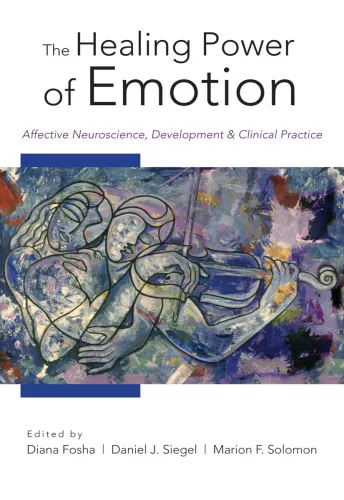
The healing power of emotion: affective neuroscience, development, and clinical practice
Fosha, Diana;Siegel, Daniel J.;Solomon, Marion Fried
2009
View book
Book guide and evaluation
Cook, Daniel J.; Patra, Biswanath; Kuttippurathu, Lakshmi; Hoek, Jan B.; Vadigepalli, Rajanikanth
0 reviews
Published
pages
views
Frontiers in Physiology Physiological research, systems biology Frontiers in Physiology offers deep insights into modern physiological research and systems biology for academics and professionals. Analytical Summary Frontiers in Physiology is a scholarly work auth
Before you read
Frontiers in Physiology is a scholarly work authored by Cook, Daniel J.; Patra, Biswanath; Kuttippurathu, Lakshmi; Hoek, Jan B.; and Vadigepalli, Rajanikanth. This volume examines critical concepts and recent advances in the broad field of physiology, with a particular focus on integrative and systems-level approaches to understanding human and animal biology. Written with precision and scientific rigor, it bridges traditional physiological paradigms with cutting-edge methodologies in molecular, cellular, and computational sciences.
The content interweaves emerging discoveries with established theoretical frameworks, offering readers a coherent narrative to comprehend complex biological systems. Each chapter delves into specific aspects of physiology—from organ-level mechanisms to whole-body homeostasis—while emphasizing mechanistic understanding and data-driven analysis. In its presentation, Frontiers in Physiology underscores the importance of multidisciplinary strategies, pulling from biochemistry, bioinformatics, and quantitative modeling to provide a holistic vision of living systems.
Information such as the exact publication year and any affiliated awards is unavailable due to a lack of reliable public sources. Nevertheless, the depth of discussion and the caliber of expertise point to its value as an authoritative text in physiological research and systems biology, meeting the needs of academics, researchers, postgraduate students, and practicing professionals alike.
Readers will gain not only an in-depth understanding of core physiological principles but also the analytical tools necessary to connect these principles to current research challenges. This focus on applicability strengthens the book’s relevance in both academic and professional contexts.
Key insights include: the integration of molecular and systemic perspectives; the importance of computational modeling in deciphering dynamic biological processes; the role of cross-disciplinary collaboration in advancing physiological knowledge; and the critical evaluation of experimental data with systems-level thinking.
Frontiers in Physiology empowers the reader to appreciate the complexity of life processes while equipping them with conceptual and practical frameworks to drive new research directions.
"Understanding physiology requires a dialogue between experimental observation and theoretical modeling." Unknown
"Systems biology does not replace traditional physiology—it extends it into dimensions we could barely imagine decades ago." Unknown
"The frontier of physiology lies at the intersection of multi-scale data, computational insight, and human curiosity." Unknown
In an era where the boundaries between disciplines are increasingly blurred, Frontiers in Physiology stands as a beacon that guides readers through the interconnected world of biological science.
Its emphasis on systems biology makes it a valuable resource for projects that demand an integrative perspective. This relevance spans from bench research to translational applications in medicine, public health, and biotechnology. By meticulously synthesizing knowledge across scales—from molecular details to organism-wide dynamics—it reflects the evolving nature of physiological inquiry.
The book’s applicability extends beyond academia, offering professionals in healthcare, biomedical engineering, and environmental physiology practical insights for tackling real-world challenges. Its careful balance of foundational science and innovative thinking keeps it at the forefront of physiological literature.
Frontiers in Physiology is more than a title—it is a call to explore, to question, and to expand the boundaries of human understanding in physiology.
By traversing the rich landscape of physiological research and systems biology, readers will come away with a renewed appreciation for the unity and complexity of life. The book invites its audience to engage actively with the material: to read deeply, share insights with colleagues, and discuss the implications for future science.
Whether you're seeking to enhance your research repertoire or to integrate cutting-edge physiological concepts into your professional practice, this work offers the theoretical grounding and visionary inspiration needed to drive meaningful progress. Take the next step—immerse yourself in Frontiers in Physiology, and contribute to shaping the science of tomorrow.
Your question is answered in the context of this title and author. Each answer uses 2 points.
0 reviews, 4.2 average out of 5
Sign in to publish a review.
Ask a focused question and learn from the community.
Related references that continue this learning path.
Fosha, Diana;Siegel, Daniel J.;Solomon, Marion Fried
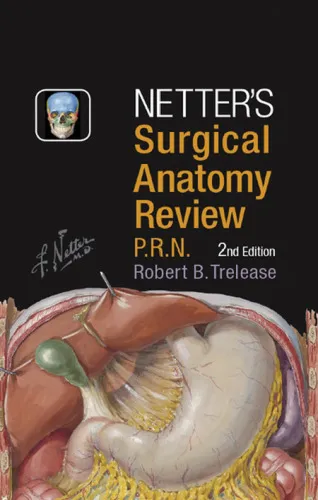
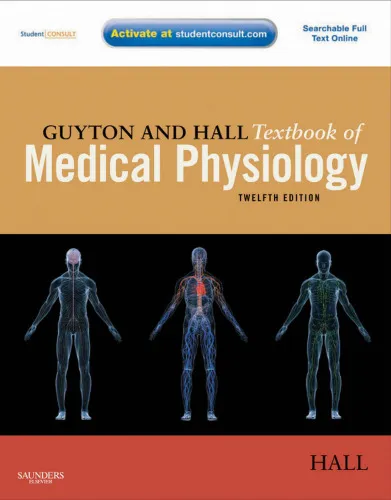
Guyton, Arthur C.; Hall, John Edward