
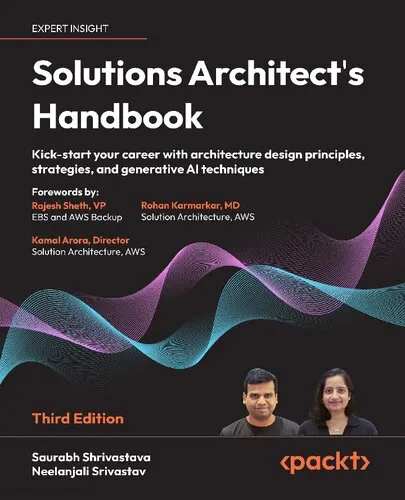
Solutions Architect's Handbook - Third Edition: Kick-start your career with architecture design principles, strategies, and generative AI techniques
Saurabh Shrivastava,Neelanjali Srivastav
2024
View book
Book guide and evaluation
Jens-Uwe Hartmann (editor)
0 reviews
Published
pages
views
Welcome to From Birch Bark to Digital Data: Recent Advances in Buddhist Manuscript Research, an exceptional scholarly work that delves into the evolution of Buddhist manuscripts, the methodologies employed in their study, and the profound insights they provide into Bu
Before you read
Welcome to From Birch Bark to Digital Data: Recent Advances in Buddhist Manuscript Research, an exceptional scholarly work that delves into the evolution of Buddhist manuscripts, the methodologies employed in their study, and the profound insights they provide into Buddhist textual traditions. This book comprises a collection of papers presented at the prestigious conference Indic Buddhist Manuscripts: The State of the Field, offering a comprehensive overview of the latest advancements in Buddhist manuscript research. It is the 80th volume in the esteemed series Beiträge zur Kultur- und Geistesgeschichte Asiens, reflecting meticulous academic rigor and interdisciplinary approaches.
The manuscript traditions of Buddhism, dating back millennia, represent a vital aspect of the religious, philosophical, and cultural history of South and Central Asia. The essays in this volume span a variety of topics, focusing on the materiality of Buddhist manuscripts—ranging from ancient birch-bark and palm-leaf scrolls to modern digitized documents. Each contribution in the book explores critical aspects of manuscript preservation, textual criticism, paleography, and the transition into digital technologies.
Scholars from various disciplines discuss the challenges of working with fragile and fragmentary manuscripts recovered from archaeological sites such as Gandhara and Bamiyan. Special attention is paid to how these discoveries illuminate historical contexts and produce new textual variants, altering our understanding of canonical Buddhist literature. Another key focus is the role of cutting-edge tools, such as digital imaging and computational linguistics, in preserving and analyzing manuscripts, thus broadening access to this rich cultural heritage.
Furthermore, this volume situates the study of Buddhist manuscripts within global academic conversations. It emphasizes collaboration across fields such as history, philology, art history, and computer science. By doing so, it showcases the transformative potential of integrating newer technologies with traditional humanities research.
"The careful study of a single manuscript is not merely an act of preservation but a journey across time, shedding light on centuries of textual transmission."
"Digital technologies do not replace the tactile essence of manuscripts; instead, they enhance our ability to explore them in ways unimaginable just decades ago."
"Manuscripts are windows into the past. To examine their margins, corrections, and notes is to witness how literature was both received and transformed."
This book is a landmark contribution to the field of Buddhist studies and manuscript research. It not only presents cutting-edge methodologies but also addresses the broader cultural and historical implications of Buddhist textual traditions. By covering a spectrum of themes from archeological discoveries to technological innovations, it serves as a vital resource for both seasoned scholars and newcomers to the field.
Furthermore, this volume underscores the importance of interdisciplinary collaboration, particularly in an era where cultural heritage is increasingly endangered. It emphasizes the value of preserving these artifacts for future generations, ensuring that the wisdom enshrined in Buddhist manuscripts continues to inspire global audiences.
Anyone interested in the intersection of religion, history, and technology will find this work invaluable. It is a testament to how ancient texts can still hold profound relevance in the digital age, fostering a deeper connection to the intellectual and spiritual traditions of the past.
Your question is answered in the context of this title and author. Each answer uses 2 points.
0 reviews, 4.5 average out of 5
Sign in to publish a review.
Ask a focused question and learn from the community.
Related references that continue this learning path.
Saurabh Shrivastava,Neelanjali Srivastav



J. A. Osborn (auth.),J. A. Osborn (eds.)