

Book guide and evaluation
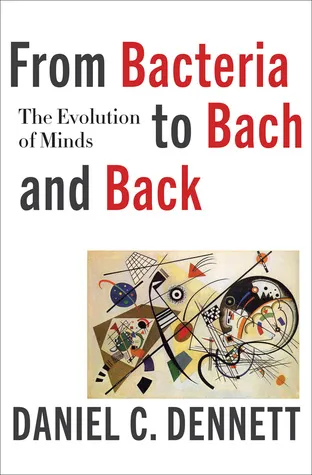
From Bacteria to Bach and Back: The Evolution of Minds
Daniel C. Dennett
English
Advanced
Artificial Intelligence (AI)
4.5 / 5
0 reviews
2017
Published
453
pages
472
views
Introduction to 'From Bacteria to Bach and Back: The Evolution of Minds' In "From Bacteria to Bach and Back: The Evolution of Minds", Daniel C. Dennett explores the remarkable journey of evolution and cognition. This seminal work delves into the nature of thought, creativity,
Before you read
What will you get from this book?
Introduction to 'From Bacteria to Bach and Back: The Evolution of Minds'
In "From Bacteria to Bach and Back: The Evolution of Minds", Daniel C. Dennett explores the remarkable journey of evolution and cognition. This seminal work delves into the nature of thought, creativity, and cultural innovation, tracing back from the simplest forms of life to the complex infrastructure of human intellect.
Detailed Summary of the Book
Dennett dissects the progression from simple biological organisms to complex, culture-bearing humans. He presents a broad examination of how the mind has evolved, focusing on the development from microorganisms to the advanced intelligence capable of Bach’s compositions. The book is segmented into three major parts, covering the transition through evolutionary biology, cultural transmission, and the growth of cognition.
The first segment delves into natural selection, explaining how simple organisms, like bacteria, have fundamental survival strategies that form the basis of intelligent behavior. Dennett elaborates on how evolutionary mechanisms set the groundwork for more sophisticated nervous systems.
In the subsequent part, Dennett focuses on memes, cultural analogs to genes, and their role in shaping human cognition. Memes, he argues, have a significant influence on cognitive development, propagating ideas through cultural evolution, akin to how genes transmit biological traits.
Finally, Dennett explores the emergence of the conscious mind and the inception of human culture. He portrays a future imbued with artificial intelligence and robotic consciousness, contemplating the ethical dimensions and the future of human evolution.
Key Takeaways
- The brain's development follows a complex evolutionary trajectory, rooted in simpler life forms like bacteria.
- Cultural evolution, through memes, influences the cognitive development matching genetic evolution.
- The interplay between biological instincts and cultural advancements has given rise to human consciousness.
- Dennett emphasizes that understanding the evolution of the mind is crucial for navigating future challenges in artificial intelligence.
Famous Quotes from the Book
"Evolution is cleverer than you are."
"A mind is not some otherworldly nonphysical substance; it is a product of evolution."
Why This Book Matters
The importance of "From Bacteria to Bach and Back" lies in its profound exploration of the underlying mechanisms behind cognitive development. It sketches a vivid timeline from rudimentary life to advanced human intellect—dispelling myths surrounding human exceptionalism and showcasing our interconnectedness with other life forms.
Dennett provides a cogent framework for understanding how biological and cultural constructs influence our thought processes. It holds particular relevance as we face burgeoning challenges in artificial intelligence and biotechnology. Given the rapid technological advancements, understanding our cognitive mechanics is crucial for ethical progress.
Ask this book
Your question is answered in the context of this title and author. Each answer uses 2 points.
Sign in to ask the book assistant.
Reader reviews
0 reviews, 4.5 average out of 5
No reviews yet
If you have read this book, help the next reader with your experience.
Write a review
Sign in to publish a review.
Reader questions and answers
Ask a focused question and learn from the community.
Sign in to ask or answer a question.
No questions yet
Be the first to ask a clear, useful question.
What to read next
Related references that continue this learning path.
Ambient Intelligence and Future Trends-International Symposium on Ambient Intelligence (ISAmI 2010)
Jeong Seok Oh,Jang Sik Park,Jeong Rock Kwon (auth.),Juan Carlos Augusto,Juan M. Corchado,Paulo Novais,Cesar Analide (eds.)
2010
View book
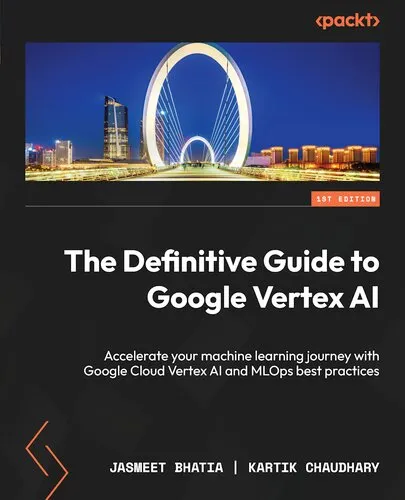
The Definitive Guide to Google Vertex AI: Accelerate your machine learning journey with Google Cloud Vertex AI and MLOps
Jasmeet Bhatia | Kartik Chaudhary
2023
View book