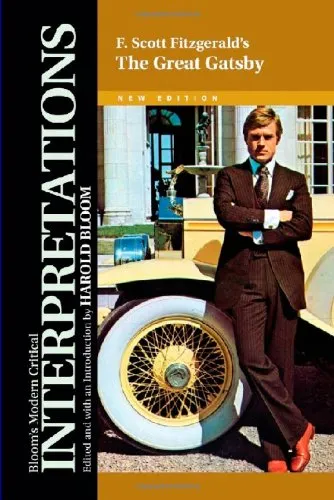
F. Scott Fitzgerald's The Great Gatsby (Bloom's Modern Critical Interpretations)
Harold Bloom (ed)
2010
View book
Book guide and evaluation
Molly Haskell
0 reviews
Published
pages
views
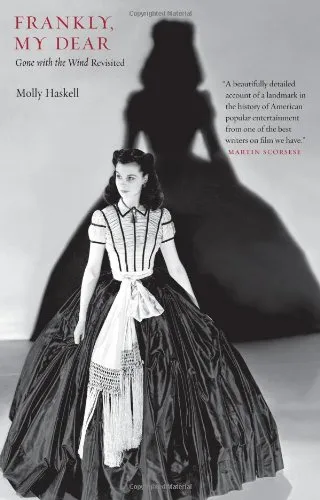
Introduction to "Frankly, My Dear: 'Gone with the Wind' Revisited" Molly Haskell's "Frankly, My Dear: 'Gone with the Wind' Revisited" offers an insightful and thorough analysis of one of America’s most iconic and controversial films—"Gone with the Wind." This book dives de
Before you read
Molly Haskell's "Frankly, My Dear: 'Gone with the Wind' Revisited" offers an insightful and thorough analysis of one of America’s most iconic and controversial films—"Gone with the Wind." This book dives deep into the cultural, historical, and personal implications of the film and the novel it was based upon, providing readers with a nuanced perspective on its enduring legacy.
In "Frankly, My Dear: 'Gone with the Wind' Revisited," Molly Haskell embarks on an exploration of the staggering impact and the mythical stature of both the 1936 novel by Margaret Mitchell and its 1939 cinematic adaptation. She delves into the contextual backdrop of the American South during the Civil War era and the transformative identity undergoings—specifically through the microcosm of Scarlett O'Hara's journey from Southern belle to a strong-willed individualist.
Haskell approaches "Gone with the Wind" with both reverence and critical scrutiny. She examines the work's racial and gender politics, exploring the dichotomy between its romanticized depiction of the Old South and the harsh realities it represented. Additionally, Haskell assesses the personal stories and controversies of the filmmakers and actors, which are crucial to understanding the complexities surrounding its production and cultural reception.
"Scarlett O'Hara remains a fascinating paradox: a personal success against the backdrop of a collapsed world."
"To revisit 'Gone with the Wind' is to confront both its brilliance and its blindness."
"Frankly, My Dear: 'Gone with the Wind' Revisited" holds immense significance as it not only offers an academic critique but also revives the conversation about how we view historical narratives and their cinematic portrayals. Haskell's work is critical for understanding the dynamics of how films shape and are shaped by societal attitudes over time. Particularly in a modern context, where discussions about race and representation in media are more pertinent than ever, her analysis offers valuable insights into the ongoing debate about cultural artifacts from our past and how they should be viewed in the present.
For fans and critics of "Gone with the Wind" alike, Haskell's book serves as an essential guide to unpacking the reasons behind the film's lasting influence and the myriad interpretations it allows. Her balanced approach encourages readers to think critically about the media they consume and the historical contexts informing their narratives.
Your question is answered in the context of this title and author. Each answer uses 2 points.
0 reviews, 3.5 average out of 5
Sign in to publish a review.
Ask a focused question and learn from the community.
Related references that continue this learning path.
Harold Bloom (ed)