
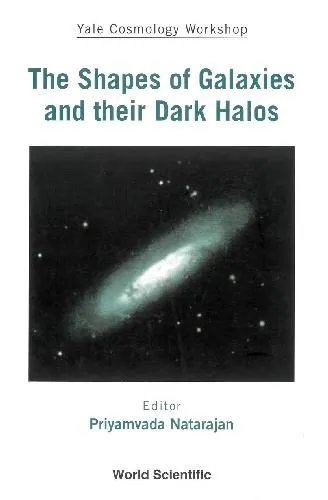
Shapes of Galaxies and Their Dark Halos: The Proceedings of the Yale Cosmology Workshop
Natarajan P. (Ed)
2002
View book
Book guide and evaluation
Barbara Ryden,Bradley Peterson
0 reviews
Published
pages
views
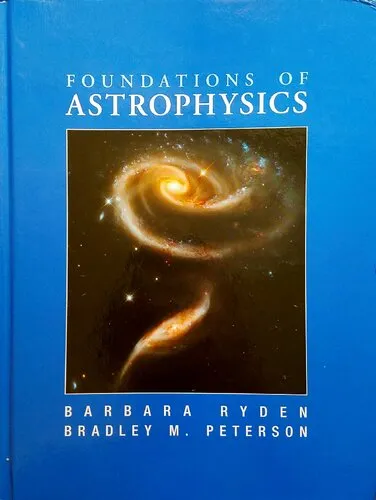
Introduction to Foundations of Astrophysics Welcome to the world of astrophysics, where the universe is our laboratory. "Foundations of Astrophysics" by Barbara Ryden and Bradley Peterson provides a comprehensive exploration of the cosmos, detailing the underlying principl
Before you read
Welcome to the world of astrophysics, where the universe is our laboratory. "Foundations of Astrophysics" by Barbara Ryden and Bradley Peterson provides a comprehensive exploration of the cosmos, detailing the underlying principles that govern the astronomical phenomena we observe.
This book is meticulously crafted to serve as both a textbook for university students and a valuable resource for anyone fascinated by the vastness of space. It covers a wide range of topics that lay the groundwork for understanding astrophysics and its applications. The text begins with an introduction to the basic principles of physics as they apply to astronomy, setting a solid foundation for more complex concepts.
Readers are guided through the various methods and tools used in observational astronomy, including telescopes and detectors, which are crucial for the evaluation of astronomical data. The book also dives into the nature of light and radiation, providing insights into how we can decipher information about distant celestial objects through their emitted light.
Star formation, stellar evolution, and the lifecycle of stars are discussed in-depth, highlighting the processes that drive these cosmic phenomena. The text explores the structure of our galaxy, the Milky Way, as well as other galaxies and large-scale structures in the universe. Finally, it tackles engaging topics such as cosmology, the study of the universe as a whole, encompassing theories about its origin, evolution, and ultimate fate.
“Astrophysics takes us to the boundaries of human knowledge and understanding, exploring the mechanisms that underlie the very existence of the universe.”
“The story of the cosmos is not only one of gas, dust, stars, and galaxies; it is the saga of human curiosity and an unending quest to comprehend our place in the universe.”
"Foundations of Astrophysics" stands out in the field of astronomy and astrophysics education due to its clear exposition and comprehensive coverage of fundamental concepts. Professors Ryden and Peterson offer the reader a balanced perspective that intertwines theoretical aspects with observational practices, making it an essential text for aspiring astronomers and astrophysicists.
The book's significance also lies in its ability to convey complex material in a manner that is accessible to beginners while being sufficiently detailed for more advanced learners. It has become a defining resource that supports the cultivation of a deep understanding of the universe among students and enthusiasts alike.
Your question is answered in the context of this title and author. Each answer uses 2 points.
0 reviews, 4.6 average out of 5
Sign in to publish a review.
Ask a focused question and learn from the community.
Related references that continue this learning path.
Natarajan P. (Ed)


Joel R. Primack (auth.),David B. Cline (eds.)