Introduction to the Book
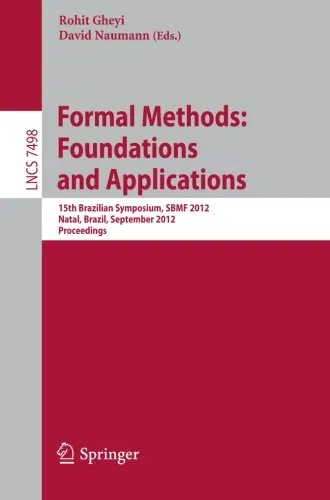
Formal methods represent a cornerstone in the engineering of high-assurance systems, and their relevance continues to grow as software systems become increasingly complex. In this context, the book "Formal Methods: Foundations and Applications" provides a comprehensive exploration of advances in formal techniques and their practical applications. Compiled from the proceedings of the 15th Brazilian Symposium on Formal Methods (SBMF 2012) held in Natal, Brazil, this book is essential for scholars, practitioners, and anyone keen to deepen their understanding of formal methods in software engineering.
Detailed Summary of the Book
The book encapsulates a collection of peer-reviewed papers and lectures from renowned researchers who gathered at SBMF 2012. Each contribution addresses different facets of formal methods, ranging from theoretical advancements to practical implementations. Central topics include model checking, theorem proving, formal verification, and the application of formal methods in software development processes. This symposium acts as a platform to disseminate state-of-the-art research and offers insights into the integration of these methods into real-world applications. The content spans both foundational theories and application techniques, providing a well-rounded view of the field.
Noteworthy contributions include advancements in automata theory, refinement techniques, and new paradigms for software verification and validation. The rich scholarly discourse presented in this volume showcases both the evolution and the future trajectory of formal methods in software engineering.
Key Takeaways
- Formal methods are indispensable in guaranteeing the reliability and robustness of complex systems.
- The intersection of theory and practice in formal methods exemplifies how these techniques can effectively facilitate the development of software systems.
- Innovations in model checking and automated theorem proving continue to expand the horizons of what formal methods can achieve.
- Emerging trends and challenges are well-addressed, offering readers insights into future research and application domains.
- The contributions emphasize the critical role that formal engineering plays in the context of ever-evolving technological demands.
Famous Quotes from the Book
"The essence of formal methods is not only to detect errors but to guide the construction of correct and reliable software." - Excerpt from SBMF 2012 Keynote.
"In the realm of software complexity, formal methods serve as both a compass and a beacon, illuminating paths toward system assurance." - SBMF 2012 Proceedings.
Why This Book Matters
The importance of "Formal Methods: Foundations and Applications" lies in its ability to bridge the gap between academic research and practical implementation. As systems grow more complex, traditional testing and assurance methods frequently fall short in ensuring system correctness. This book advocates for a shift in perspective, emphasizing the proven efficacy of formal methods in delivering high-assurance software solutions.
By documenting the proceedings of SBMF 2012, the book encapsulates a moment in the ongoing evolution of formal methodologies, providing a crucial reference point for academic researchers and industry professionals alike. With ongoing contributions to the field, this volume helps direct future research and informs best practices in software engineering, underscoring the enduring relevance and necessity of formal methods.
Overall, this book is a testament to the vibrant and continually evolving field of formal methods, reflecting the community's relentless pursuit of methods that ensure the development of fault-free, high-assurance systems that are robust, secure, and reliable.