Sturdevant's Art and Science of Operative Dentistry
Harald O. Heymann,Edward J. Swift,Jr.,Andre V. Ritter
2012
View book
Book guide and evaluation
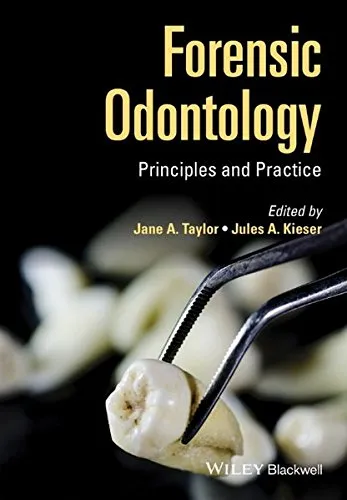
Jane Taylor,Jules Kieser
0 reviews
Published
pages
views
Introduction to Forensic Odontology: Principles and Practice Forensic odontology plays a pivotal role in the modern investigative process, bridging the domains of science, justice, and human identification. "Forensic Odontology: Principles and Practice" serves as a definitive
Before you read
Forensic odontology plays a pivotal role in the modern investigative process, bridging the domains of science, justice, and human identification. "Forensic Odontology: Principles and Practice" serves as a definitive guide for students, professionals, and enthusiasts who wish to delve deeply into this specialized field. Combining scientific rigor, practical application, and real-case insights, this book is an indispensable resource for both budding odontologists and seasoned forensic experts looking to expand their expertise.
The book explores the intricate world of forensic odontology, a field that applies dental science to legal investigations. It begins by introducing the foundational principles, such as the physiological characteristics of teeth, dental anatomy, and their role in personal identification. The authors explain how dental records, bite marks, jaw structures, and oral tissues are analyzed in forensic contexts to solve crimes, identify victims, and deliver justice. The book strikes a balance between theory and practice, ensuring readers grasp the scientific concepts while also understanding how they are applied in real-world scenarios.
Divided into logical sections, the text covers various core themes such as dental profiling, age estimation, bite-mark analysis, and mass disaster victim identification. Special emphasis is placed on technological advancements in the field, from digital odontology to 3D imaging and DNA applications. Through case studies pulled from real-life investigations, readers gain insight into the practical challenges and solutions professionals face.
The book also addresses the medico-legal aspects of forensic odontology, touching upon ethical considerations, courtroom roles, and the importance of maintaining scientific integrity. Whether you are an aspiring forensic scientist or someone engaged in legal and healthcare professions, this comprehensive text offers invaluable knowledge and practical tools that are rooted in scientific research and modern applications.
"Teeth are like fingerprints—they are unique to every individual, impervious to time, and hold stories that go beyond words."
"Forensic odontology is not just a field of science; it is the art of giving a voice to the silent evidence left behind."
"In every tooth lies an archive of one’s life, a personalized roadmap that forensic science can read with precision and clarity."
"Forensic Odontology: Principles and Practice" is not just another textbook; it is a critical resource for anyone involved in the fields of forensic science, legal proceedings, or healthcare. Its relevance extends beyond the confines of the lab or courtroom. Identifying victims in mass disasters, solving heinous crimes, and providing closure to grieving families are tasks that hinge on the meticulous work of forensic odontologists.
The book matters because it fosters an appreciation for the science of identification, emphasizes the responsibilities of ethical practices, and equips readers with the tools necessary to navigate the complexities of modern forensic challenges. Furthermore, by highlighting innovative advancements in technology and methodology, it positions forensic odontology as a significant contributor to global justice systems.
In today’s world, where forensic evidence increasingly holds sway in judicial outcomes, this book empowers professionals with the knowledge and expertise needed to ensure that science acts as an instrument of justice. It is a must-read for those who want to merge scientific inquiry with humanitarian service.
Your question is answered in the context of this title and author. Each answer uses 2 points.
0 reviews, 4.3 average out of 5
Sign in to publish a review.
Ask a focused question and learn from the community.
Related references that continue this learning path.
Harald O. Heymann,Edward J. Swift,Jr.,Andre V. Ritter
Kenneth M. Hargreaves DDS PhD FICD FACD,Stephen Cohen MA DDS FICD FACD