
Book guide and evaluation
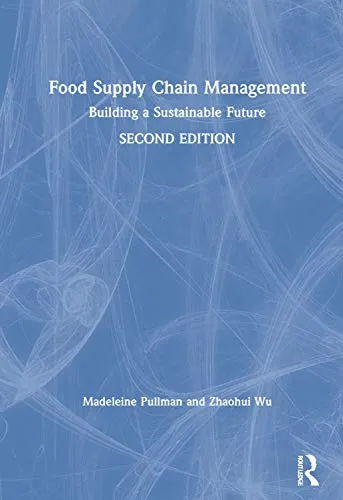
Food Supply Chain Management: Building a Sustainable Future
Madeleine Pullman,Zhaohui Wu
English
Beginner
Economics
4.7 / 5
0 reviews
2021
Published
642
pages
286
views
Introduction to Food Supply Chain Management: Building a Sustainable Future The global food supply chain is an intricate web of stakeholders, decisions, and impacts that influence not only the availability and quality of food but also the sustainability of our planet. Food
Before you read
What will you get from this book?
Introduction to Food Supply Chain Management: Building a Sustainable Future
The global food supply chain is an intricate web of stakeholders, decisions, and impacts that influence not only the availability and quality of food but also the sustainability of our planet. Food Supply Chain Management: Building a Sustainable Future delves deep into the complexities of modern food supply chains, addressing the critical need for sustainable practices in an era marked by climate change, food scarcity, and economic uncertainty. Written by Madeleine Pullman and Zhaohui Wu, this insightful book combines academic rigor with practical knowledge to equip professionals, researchers, and students with the tools they need to transform food systems for the better.
At its core, the book champions a future-focused vision of sustainability in food supply chains—addressing pressing challenges such as resource optimization, ethical sourcing, environmental stewardship, and waste reduction. By integrating examples, case studies, and actionable strategies, this resource serves as an invaluable guide for those who aspire to balance profitability with ecological and social responsibility.
Detailed Summary of the Book
Food Supply Chain Management: Building a Sustainable Future is structured to provide a thorough understanding of both foundational concepts and advanced strategies for building sustainable food supply chains. The book opens by examining the traditional supply chain models and the pressing global issues that necessitate sustainable reforms. It then explores concepts such as the circular economy, green logistics, and climate-resilient food systems, offering fresh insights into how these ideas can be implemented across various sectors.
Throughout the chapters, readers are introduced to tools for measuring sustainability, frameworks for sustainable supply chain design, and collaborative approaches to engage stakeholders from farmers to consumers. The authors also highlight success stories from businesses that have revolutionized their practices, thereby inspiring readers to take actionable steps.
A significant portion of the book focuses on examining the triple bottom line—economic, environmental, and social—and how balancing these dimensions can lead to long-term resilience in food supply chains. From urban farming innovations to digital technologies like blockchain, the book emphasizes cutting-edge approaches to traceability, transparency, and efficiency.
Key Takeaways
- Understand the environmental, social, and economic challenges facing global food supply chains and why sustainability is essential.
- Explore frameworks and tools to design and manage sustainable supply chains.
- Learn about real-world case studies featuring companies that have successfully adopted sustainability initiatives.
- Analyze the role of emerging technologies, such as blockchain and AI, in creating more efficient and transparent food systems.
- Gain insight into key metrics and measurement tools for sustainability performance assessment.
- Discover collaborative approaches to engage stakeholders across the supply chain, from farmers and manufacturers to consumers.
- Integrate the principles of the circular economy to minimize waste and optimize resource use.
Famous Quotes from the Book
"The food supply chain is not just a system of production and consumption—it’s a reflection of how we value the planet and its people."
"Sustainability does not mean sacrificing profitability; it means envisioning a future where utilities, ecosystems, and economies thrive in harmony."
Why This Book Matters
In an increasingly interconnected world, food supply chains hold the potential to address some of the most significant challenges our society faces. From feeding a growing population to reducing environmental degradation, the decisions made within these systems carry global implications. Food Supply Chain Management: Building a Sustainable Future matters because it not only highlights the urgent need for reform but also provides a comprehensive roadmap for achieving it.
The book’s emphasis on sustainability, innovation, and collaboration resonates with modern priorities, urging businesses and individuals alike to transition from linear models to more sustainable systems. It bridges the gap between theory and practice, making it a vital resource for academicians, policymakers, and practitioners who seek to make a meaningful impact.
Ultimately, this book is a call to action—an invitation to rethink and reshape the food systems we depend on. It showcases that sustainable food supply chains are not just an aspiration but an attainable reality when strategic decisions align with a commitment to long-term progress.
Ask this book
Your question is answered in the context of this title and author. Each answer uses 2 points.
Sign in to ask the book assistant.
Reader reviews
0 reviews, 4.7 average out of 5
No reviews yet
If you have read this book, help the next reader with your experience.
Write a review
Sign in to publish a review.
Reader questions and answers
Ask a focused question and learn from the community.
Sign in to ask or answer a question.
No questions yet
Be the first to ask a clear, useful question.
What to read next
Related references that continue this learning path.


Modern Computer Vision with PyTorch: A Practical Roadmap From Deep Learning Fundamentals to Advanced Applications and Generative AI, 2nd Edition
V Kishore Ayyadevara,Yeshwanth Reddy
2023
View book