Book guide and evaluation
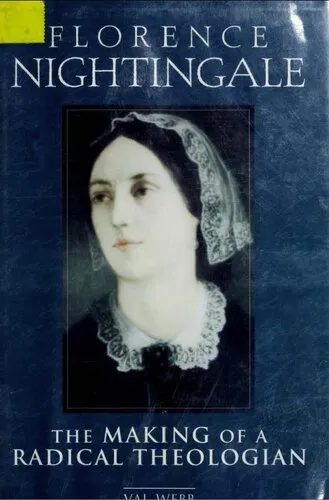
Florence Nightingale: The Making of a Radical Theologian
Val Webb
English
Intermediate
novel
4.3 / 5
0 reviews
2002
Published
393
pages
502
views
Introduction Welcome to the world of one of the pioneering figures in both the fields of nursing and theological thought, Florence Nightingale. In "Florence Nightingale: The Making of a Radical Theologian," I delve deep into the overlooked aspect of Nightingale's life: her spi
Before you read
What will you get from this book?
Introduction
Welcome to the world of one of the pioneering figures in both the fields of nursing and theological thought, Florence Nightingale. In "Florence Nightingale: The Making of a Radical Theologian," I delve deep into the overlooked aspect of Nightingale's life: her spiritual journey and theological contributions. This book is not just an examination of her religious beliefs; it is a narrative that uncovers how Nightingale's revolutionary ideas about faith and spirituality were integral to her humanitarian work, challenging conventional Christian doctrines of her time.
Detailed Summary of the Book
Florence Nightingale is widely celebrated as the founder of modern nursing, but her influence extends far beyond the realm of medicine. This book explores her lesser-known identity as a radical theologian. Starting with her upbringing in an affluent Victorian family, I explore how intellectual curiosity and a profound sense of calling catalyzed Nightingale's complex relationship with organized religion. The book tracks her theological evolution across three significant phases: her early struggles with conventional Christianity, her embrace of a pantheistic view of God inclusive of science and reason, and her later reflections that advocated for a reformed understanding of Christianity.
Nightingale's keen observation of nature and its systems informed her belief in a God who operates through detailed laws of nature, driving her to merge religious thought with empirical science. Her spiritual journey was not just personal; it influenced her rigorous methods in hospital reforms and the holistic approach to patient care. This book brings to light a collection of personal writings, letters, and unpublished notes that document her theological inquiries and spiritual convictions.
Key Takeaways
- Florence Nightingale was not only a nurse and a social reformer but also an innovative theologian.
- Her theological beliefs were characterized by an embrace of science, a rejection of an intervening deity, and a focus on practical Christianity.
- Her spiritual journey was marked by a quest for truth that transcended the dogmas of her time, reflecting a belief in a God synonymous with the rational laws of nature.
- Nightingale's theology had a direct impact on her approach to healthcare and social reform, advocating for compassion as an active, societal duty.
Famous Quotes from the Book
"To understand Nightingale’s spirituality is to see a mind that dared to reconcile the divine with the laws of the universe, making her spiritual insights as progressive as her medical practice."
"Her life was a testimony to a faith that saw God’s work in every patient’s recovery, in every reform achieved, and in every voice raised for those who could not speak."
Why This Book Matters
This book is crucial for anyone interested in the multi-faceted life of Florence Nightingale, as it sheds light on her significant yet underexplored theological contributions. It challenges traditional perceptions by presenting Nightingale as a visionary who harmonized faith with reason and service to humanity. Given today’s often polarized views on science and religion, Nightingale's synthesis of the two provides a timeless model of thoughtful engagement with both domains. For students of theology, history, and healthcare, understanding her theological perspectives offers rich insights into how deeply held convictions can fuel social change.
By the end of this journey through her theological musings, readers will gain a greater appreciation of how Florence Nightingale, the radical theologian, shaped the ethos of compassionate care that is still celebrated in modern nursing practice today.
Ask this book
Your question is answered in the context of this title and author. Each answer uses 2 points.
Sign in to ask the book assistant.
Reader reviews
0 reviews, 4.3 average out of 5
No reviews yet
If you have read this book, help the next reader with your experience.
Write a review
Sign in to publish a review.
Reader questions and answers
Ask a focused question and learn from the community.
Sign in to ask or answer a question.
No questions yet
Be the first to ask a clear, useful question.
What to read next
Related references that continue this learning path.