
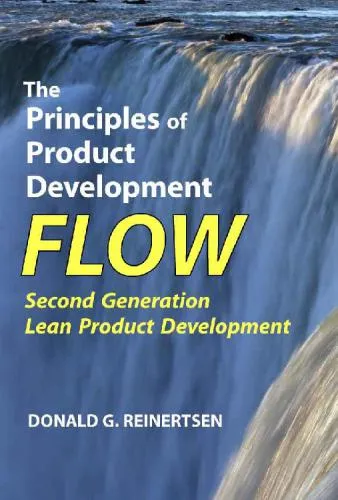
The Principles of Product Development Flow: Second Generation Lean Product Development
Donald G Reinertsen
2016
View book
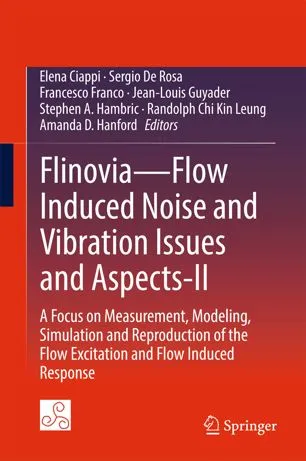
Book guide and evaluation
Elena Ciappi,Sergio De Rosa,Francesco Franco,Jean-Louis Guyader,Stephen A. Hambric,Randolph Chi Kin Leung,Amanda D. Hanford
0 reviews
Published
pages
views
Introduction to "Flinovia—Flow Induced Noise and Vibration Issues and Aspects-II" "Flinovia—Flow Induced Noise and Vibration Issues and Aspects-II" represents a comprehensive dive into the intricate world of flow-induced noise and vibrations. Co-authored by esteemed resear
Before you read
"Flinovia—Flow Induced Noise and Vibration Issues and Aspects-II" represents a comprehensive dive into the intricate world of flow-induced noise and vibrations. Co-authored by esteemed researchers and practitioners Elena Ciappi, Sergio De Rosa, Francesco Franco, Jean-Louis Guyader, Stephen A. Hambric, Randolph Chi Kin Leung, and Amanda D. Hanford, this book is a crucial resource for professionals, engineers, and academics seeking a profound understanding of the phenomena affecting industries reliant on fluid dynamics. Whether you are new to the field of vibro-acoustics or a seasoned expert tackling modern engineering challenges, this second volume in the Flinovia series bridges foundational theory with cutting-edge applications in a truly interdisciplinary approach.
The book unravels complex mechanisms of flow-excited noise and structural vibrations, which play pivotal roles across various sectors like aerospace, marine engineering, automotive design, and civil engineering projects. With contributions derived from international conferences and collaborative research, this book evaluates emerging trends, advanced modeling techniques, experimental frameworks, and real-world solutions. The authors have meticulously synthesized their expertise, offering readers pathways to mitigate impacts of noise pollution and structural integrity crises brought by fluctuating fluid flows.
In recent years, as industries pursue innovations to optimize energy efficiency and sustainability, understanding flow-induced phenomena is more vital than ever. The insights and methodologies presented here serve as both a reference and practical guide for tackling environmental and societal challenges tied to noise regulation and structural safety.
This book builds upon its predecessor with a deeper exploration of flow-induced noise (aerodynamic noise, hydrodynamic noise) and vibration analysis. The comprehensive chapters cover theoretical foundations, numerical simulations, experimental methodologies, and case-specific applications that define the nuanced relationship between fluid-structure interactions.
Each chapter is carefully curated to align with evolving industry requirements. Topics include advancements in acoustic modeling for modern propulsion systems, damping mechanisms in underwater structures, innovations in noise control for wind turbines, and the implications of turbulence-acoustic interactions in industrial pipelines. The book integrates these explorations with contributions from multi-disciplinary experts, ensuring its profound relevance to readers with engineering, physics, and mathematical backgrounds.
"The interplay between noise and vibration is a dynamic language, spoken fluently by fluids and structures alike, and deciphered by the engineers of tomorrow."
"To innovate, we must not only predict flow behavior but transform it into opportunities for quieter and more resilient designs."
The significance of this book lies in its ability to synthesize complex research into practical solutions that address real-world challenges. As industries face increasing regulatory pressures on noise pollution and safety assurances, "Flinovia—Flow Induced Noise and Vibration Issues and Aspects-II" offers a reliable resource to guide solutions-driven innovation.
Furthermore, the book promotes not just technical knowledge but a mindset geared toward sustainability. It encourages engineers and policymakers alike to think beyond immediate problems and embrace longer-term environmental impacts, fostering cleaner technology and sounder designs.
In bridging academic theories with practical insights, this book inspires readers to explore the untapped potential of fluid dynamics while pushing the boundaries of vibro-acoustic engineering.
Your question is answered in the context of this title and author. Each answer uses 2 points.
0 reviews, 4.0 average out of 5
Sign in to publish a review.
Ask a focused question and learn from the community.
Related references that continue this learning path.
Donald G Reinertsen
Yasuhiro Monden Ph.D. (auth.)

Michel Planat (auth.),Michel Planat (eds.)
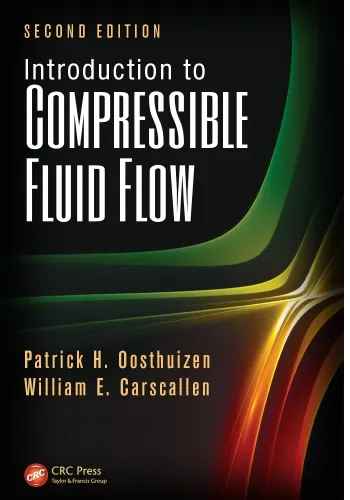
Carscallen, William E.;Oosthuizen, Patrick H